Why Europe Fears a Trump-Xi-Putin Summit
Why Europe Fears a Trump-Xi-Putin Summit
A Summit Europe Cannot Control
Europe’s central fear is not simply that Donald Trump, Xi Jinping and Vladimir Putin could reach an agreement. It is that the three leaders might discuss Ukraine, European security and the wider international order without European representatives in the room.
Trump would represent the United States, which remains central to Europe’s defense and transatlantic security system. Xi would represent China, an economic and diplomatic power with expanding global influence and a close, though not unlimited, relationship with Moscow. Putin would represent Russia, whose war against Ukraine has transformed Europe’s security environment.
A private meeting involving Washington, Beijing and Moscow would therefore carry significance beyond the leaders’ personal relationships. It could signal that major powers intend to manage international crises through direct bargaining while countries most affected by those decisions remain outside the main conversation. Reports from CNN, Axios, RBC-Ukraine and EUobserver describe allied unease about the potential consequences of such a meeting Source 1 Source 3.
The comparison with the 1945 Yalta settlement has intensified these fears. The analogy does not prove that a territorial deal is planned. It reflects anxiety that powerful states could make decisions affecting smaller countries and entire regions without their participation.
Europe’s concern is therefore about agency. A private bargain could weaken Ukraine, reduce European influence and reshape the continent’s security order around the preferences of larger powers.
Why Europe Is Watching the China Meeting
Three Major Power Centers
A meeting between the leaders of the United States, China and Russia would bring together three of the world’s most influential power centers. Each could approach the discussion with different objectives.
Trump might seek a visible diplomatic achievement, leverage over other governments or a broader strategic arrangement involving China and Russia. Xi might pursue stability, diplomatic influence and a stronger role for Beijing in global crisis management. Putin might seek recognition of Russian interests, relief from strategic pressure and a discussion of Europe’s security architecture.
These goals could overlap in some areas while sharply conflicting in others. The meeting’s significance would not depend on complete agreement. Even a limited understanding, joint statement or change in diplomatic tone could alter expectations in Europe and Ukraine.
The summit could also project an image of major powers deciding international outcomes through direct negotiation. European governments would be concerned because that image could suggest that institutions, alliances and affected states matter less than the preferences of the largest countries.
Europe’s Absence Is the Core Concern
European governments could feel exposed if their security were discussed without their direct participation. Formal exclusion would mean that no European representative took part in negotiations. Informal exclusion could be equally important if leaders made decisions privately and presented Europe with a completed framework afterward.
A third possibility is that European governments would be invited to comment only after the main terms had been established. That would provide consultation without meaningful influence.
Receiving information is not the same as shaping an agreement. Being allowed to respond is not the same as being able to reject or revise its central provisions. If Europe had to implement an arrangement designed elsewhere, its governments would face a difficult choice: accept terms they did not negotiate or risk being blamed for obstructing peace.
The concern extends beyond diplomatic protocol. European states would likely have to manage the military, economic and humanitarian consequences of any settlement involving Ukraine or Russia.
Why Closed-Door Diplomacy Creates Uncertainty
Private negotiations intensify speculation because no public record captures every discussion. After a meeting, participating governments could use different language to describe the same exchange. One side might call a proposal a commitment, while another might describe it as only an idea.
Ambiguous statements could generate conflicting interpretations. Leaks might reveal selected details to build support or undermine other participants. Governments could disclose information strategically while withholding the most controversial parts.
Concern about closed-door diplomacy does not establish that a secret agreement exists. It shows why European governments would demand clarity about any outcome and seek direct communication with Washington, Beijing, Moscow and Kyiv.
Ukraine: Europe’s Most Immediate Fear
Could Ukraine’s Future Be Discussed Without Ukraine?
The most serious concern in reporting is that major powers could discuss Ukraine’s territory, sovereignty or political future without the Ukrainian government at the table. EUobserver’s reported comparison with Yalta captures this fear of great-power bargaining over the heads of affected countries Source 9.
Such a possibility would be diplomatically and politically contentious. Decisions about Ukraine’s future would affect its sovereignty, territorial control, security arrangements and reconstruction. Kyiv would have to live with the consequences of any ceasefire or settlement, while European countries would help finance and enforce parts of it.
This concern does not establish that Trump, Xi and Putin intend to divide Ukraine. It identifies a feared scenario in which outside powers treat Ukraine’s future as a bargaining issue rather than a matter requiring Ukraine’s consent.
The Yalta Comparison and Its Limits
The Yalta comparison refers to the 1945 negotiations in which major Allied powers discussed the postwar order. In European political debate, the episode has become a symbol of powerful states shaping the fate of smaller countries and regions.
The analogy resonates because it evokes spheres of influence and bloc-based diplomacy. It suggests that major powers might trade political outcomes over the heads of countries whose borders, governments and security would be affected.
The current situation differs substantially from 1945. Ukraine is an independent state with its own government, armed forces and international relationships. Any modern settlement would face legal, political and military obstacles. Europe is also not a collection of powerless states awaiting decisions by three external leaders; it includes major economies, NATO members and institutions with substantial diplomatic and financial influence.
“Another Yalta” should therefore be understood as a warning, not a confirmed forecast. The phrase expresses Europe’s fear that great-power politics could return to the center of the continent.
Possible Areas of Bargaining
If Ukraine became part of a wider discussion, possible subjects could include:
- Ceasefire conditions and monitoring.
- Territorial control and future borders.
- Security guarantees for Ukraine.
- Restrictions on military alliances or deployments.
- Sanctions relief.
- Reconstruction funding.
- Prisoner exchanges.
- Humanitarian access and the return of displaced people.
Every issue would affect European governments directly. A ceasefire might reduce immediate violence but leave territorial disputes unresolved. Security guarantees might deter renewed attacks, but only if they included credible enforcement. Sanctions relief could create incentives for diplomacy while weakening leverage over Russia.
An agreement that ended active fighting would not automatically produce a stable peace. Vague territorial language, weak monitoring or limited guarantees could freeze the conflict rather than resolve it.
What Trump, Xi and Putin Could Seek
Donald Trump
Trump could seek a visible diplomatic achievement, reduced pressure surrounding the Ukraine war or greater burden-sharing from European allies. A summit with Xi and Putin could also serve a broader strategy involving trade, competition with China, relations with Russia or the future role of the United States in global security.
European governments may worry about an approach that prioritizes a rapid agreement over long-term security. A deal that produces an immediate political result but leaves Ukraine vulnerable could transfer risk from diplomacy to Europe’s eastern flank.
These are possible objectives, not confirmed plans. Available reporting establishes allied unease surrounding the meeting rather than a definitive negotiating agenda Source 3.
Xi Jinping
China could use the meeting to present itself as a central diplomatic power. Beijing may want to support negotiations while preserving its relationship with Moscow, limit instability that damages global trade and challenge the idea that Washington alone can manage major international crises.
A summit could also strengthen China’s position in future reconstruction or economic arrangements. If Beijing were seen as indispensable to negotiations, it could gain diplomatic influence without accepting every Russian or American proposal.
China’s participation would not necessarily mean agreement with either Washington or Moscow. Beijing could support dialogue while protecting its own interests, including its relationship with Russia, its competition with the United States and its global economic ambitions.
Vladimir Putin
Moscow could seek recognition of Russian influence, acceptance of battlefield realities, reduced sanctions and limits on Western military support for Ukraine. Putin might also prefer a broader discussion of European security that places NATO deployments, alliance expansion and U.S. commitments on the agenda.
European governments would treat such concessions as direct security concerns. Any arrangement that rewarded territorial aggression or restricted the defense choices of neighboring states could affect the entire eastern flank.
The important distinction is between what Russia might seek and what the United States or China might accept. A list of possible Russian goals is not evidence that the other leaders support them.
Europe’s Security Order at Risk
NATO and U.S. Commitments
European officials would examine any summit outcome for signs about the durability of American commitments. Even an informal shift in Washington’s priorities could affect defense planning, procurement, troop deployments and assumptions about future crises.
Possible concerns include reduced American involvement in European defense, pressure on European states to assume greater military responsibility and new limits on deployments or defense cooperation. Governments would also want to know how Washington might respond if Russia pressured another neighboring country.
Strategic uncertainty can have consequences before any formal policy changes occur. Military planners may revise assumptions, markets may react to perceived instability and governments may accelerate defense spending.
The Return of Spheres of Influence
A sphere of influence is an area where a powerful state claims special authority over the political or security decisions of neighboring countries. Europe’s concern is that Russia or another major power could seek such authority over states near its borders.
This would directly affect Eastern European security, the sovereignty of countries in the region and the future of NATO and the European Union’s eastern neighborhood. Smaller states may view great-power bargaining as threatening even when the resulting agreement is described as a peace framework.
A settlement that limits the choices of countries outside the negotiating room could create a dangerous precedent. It could imply that military strength gives large states the right to determine the alliances, borders or defense policies of smaller neighbors.
Strategic Ambiguity
Vague commitments can create instability rather than resolve it. A summit statement might mention security guarantees without explaining who would enforce them, refer to territorial questions without defining borders or promise sanctions discussions without specifying conditions.
Washington, Moscow, Beijing, European capitals and Kyiv could then interpret the same language differently. The result could be immediate headlines followed by prolonged disputes over implementation.
For Europe, the credibility of any agreement would depend on details: monitoring, enforcement, timelines, legal commitments and Ukraine’s participation.
Why U.S. Allies Are Uneasy
Consultation May Come Too Late
Axios reports allied unease as Trump prepares for a summit with Xi and Putin Source 3. The concern is that consultation after a major-power discussion may not provide meaningful influence.
European leaders would distinguish between receiving information, being invited to comment and having the ability to shape the outcome. Only the third provides genuine diplomatic agency.
That is why European governments would seek early coordination with Washington. They would want to define issues that cannot be negotiated without them, especially Ukraine’s sovereignty, NATO’s defense choices and the security of Europe’s eastern members.
A Transactional Approach to Alliances
European governments may also worry that security relationships could become bargaining instruments. They could face pressure to increase financial or military contributions, accept a settlement designed elsewhere or support conditions that conflict with their assessment of long-term security.
This concern does not establish that Trump will adopt a specific policy. It explains why allies would examine the summit for evidence that U.S. commitments are being treated as durable alliances or negotiable assets.
Divisions Within Europe
European governments would not necessarily respond uniformly. They could disagree over negotiations, defense spending, sanctions, the acceptable terms of a ceasefire and the desired role of the United States.
External pressure could expose disagreements within the European Union and among NATO members. A divided response would reduce Europe’s influence. A coordinated position would give individual governments greater leverage than separate national reactions.
Economic and Diplomatic Consequences
Sanctions and Economic Relief
A private discussion could affect expectations about sanctions policy. European governments would ask whether sanctions relief might be linked to a ceasefire, whether Europe would be expected to follow a U.S.-Russia arrangement and whether China could gain a larger economic role.
They would also seek conditions and monitoring mechanisms. Immediate and unconditional relief could weaken leverage, while a gradual process tied to verifiable steps might create incentives for compliance.
Reconstruction and Ukraine’s Economic Future
Reconstruction could become part of a wider diplomatic package. Questions would include who pays, how frozen assets are handled, which institutions supervise funding and how investors and aid workers are protected.
These are not merely financial issues. Reconstruction decisions would affect Ukraine’s sovereignty and Europe’s long-term commitments. A settlement designed without Ukraine could determine who controls infrastructure, resources and strategic investment.
Europe’s Global Position
A major-power agreement excluding European actors could encourage other governments to bypass European institutions. It could weaken confidence in European diplomacy and increase pressure for a common foreign and defense policy.
The effect would depend on the summit’s substance and Europe’s response. Exclusion would matter more if European governments reacted separately. A unified response could demonstrate that Europe remains an essential actor rather than a passive implementer.
Europe’s Possible Response
European governments could insist that Ukraine participate in any negotiations, coordinate positions, seek direct communication with Washington and clarify their non-negotiable security interests.
They could also increase defense spending, expand ammunition and weapons production, strengthen eastern-flank defenses and improve intelligence and logistics. Greater European capacity would reduce vulnerability if U.S. support declined, although strategic autonomy would not necessarily mean abandoning NATO or transatlantic cooperation.
Preparation should cover several scenarios:
- No substantive agreement.
- A temporary ceasefire proposal.
- A broad settlement affecting Ukraine.
- A U.S.-Russia understanding that pressures Europe.
- A China-backed diplomatic initiative.
Scenario planning matters because uncertainty itself affects markets, military planning and alliance cohesion.
What to Watch After the Summit
Official statements from Washington, Beijing and Moscow would require close comparison. Key questions would include:
- Did the leaders mention Ukraine?
- Did they refer to European security?
- Did they affirm sovereignty and territorial integrity?
- Did they discuss sanctions?
- Did they mention NATO or security guarantees?
Omissions could matter, but they should not be overinterpreted. Silence may reflect disagreement, diplomacy or a decision to keep negotiations private.
European reactions would also be significant. Statements from European Union institutions, NATO leadership, major European capitals, Eastern European governments and Ukraine would show whether Europe responded with unity or competing national positions.
Practical action would reveal more than broad summit language. Analysts would need to track military deployments, aid packages, sanctions changes, diplomatic appointments, negotiation formats and reconstruction commitments.
Conclusion: Europe’s Fear Is About Power
Europe fears that a private conversation among Trump, Xi and Putin could produce decisions with consequences for Ukraine and the continent. The concern is not proof that the leaders plan to divide Ukraine or Europe. Available reporting describes possibilities, warnings and allied anxiety rather than a confirmed agreement Source 1 Source 7.
The risks are clear: Ukraine could be excluded from decisions about its future; European security could become a bargaining issue; spheres-of-influence politics could return; and uncertainty about U.S. commitments could deepen.
The decisive test will be what happens afterward. Are Ukraine and Europe included in the diplomacy that follows, or are they left to implement an arrangement created elsewhere?
FAQ
Why is Europe worried about a meeting between Trump, Xi and Putin?
Europe fears that the three leaders could discuss Ukraine, European security or the wider international order without European governments participating directly. A major-power agreement could create obligations or risks for Europe without its consent.
Could the leaders divide Ukraine?
Available source summaries report fears that such an outcome could be discussed, particularly through comparisons with the Yalta settlement. They do not establish that Trump, Xi and Putin plan to divide Ukraine or that any agreement exists. The possibility remains conditional.
What does the Yalta comparison mean?
The comparison refers to the 1945 negotiations in which major Allied powers shaped the postwar order. European commentators use it to warn against powerful states deciding the future of smaller countries through private bargaining. The current situation differs significantly, so the comparison is political rather than literal.
Why would China be involved in European security discussions?
China has strong relations with Russia, major economic influence and growing diplomatic ambitions. Its participation could allow Beijing to present itself as a global mediator while pursuing its own strategic interests.
What could the summit mean for NATO?
The consequences would depend on any commitments involving Ukraine, Russia or U.S. military engagement in Europe. A deal that reduced American involvement or restricted European defense choices could create uncertainty within NATO. No specific impact is confirmed without official details.
How could Europe respond?
European governments could coordinate their negotiating position, insist that Ukraine participate in any settlement, strengthen defense capabilities and prepare for several possible outcomes. A unified response would give Europe greater influence over the diplomacy that follows.
Related Articles
-
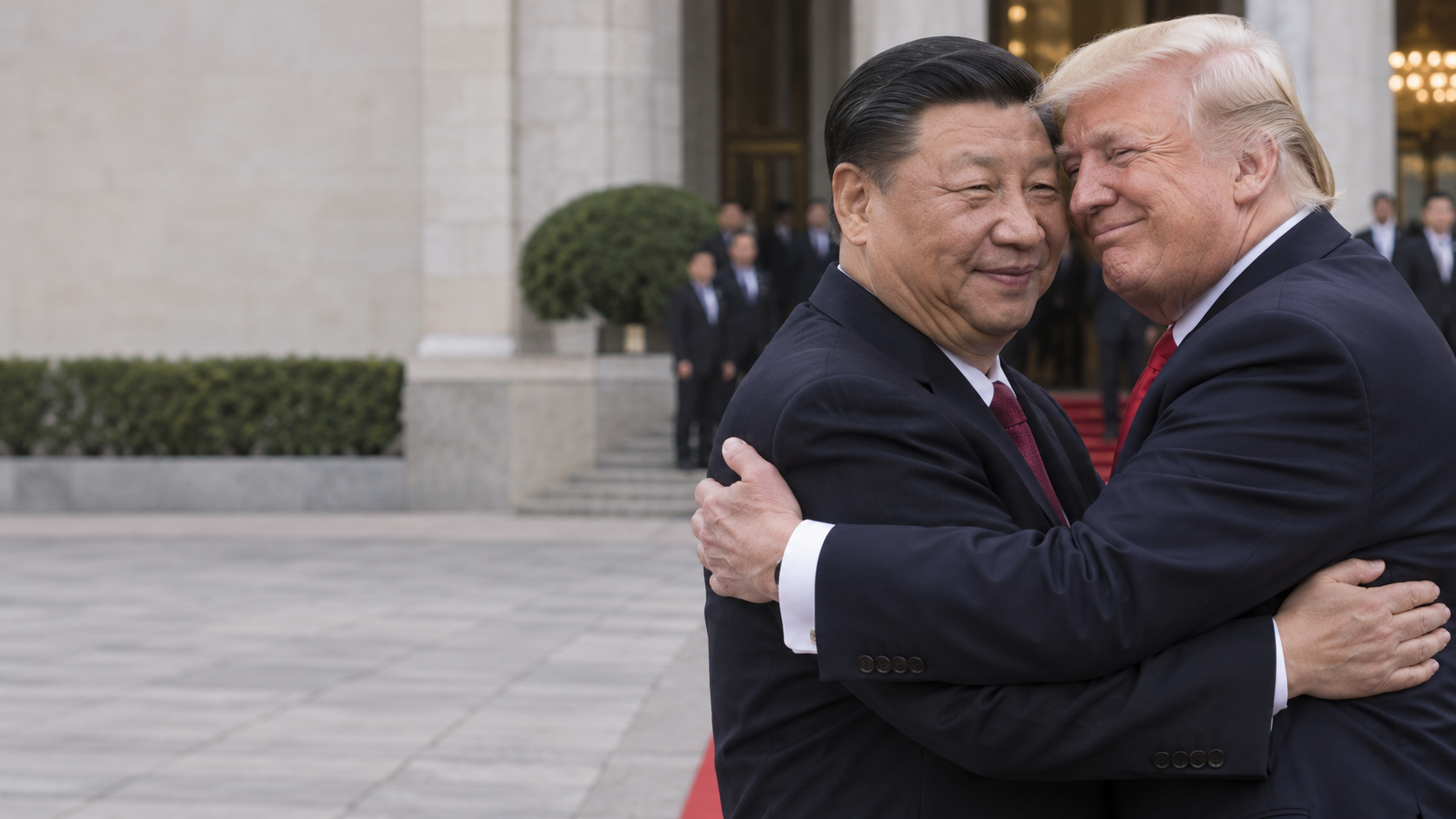 Xi Jinping Reportedly Hugs Trump Ahead of Summit
-
 Trump Projects Strength on China as Tech Failures Raise Concerns
-
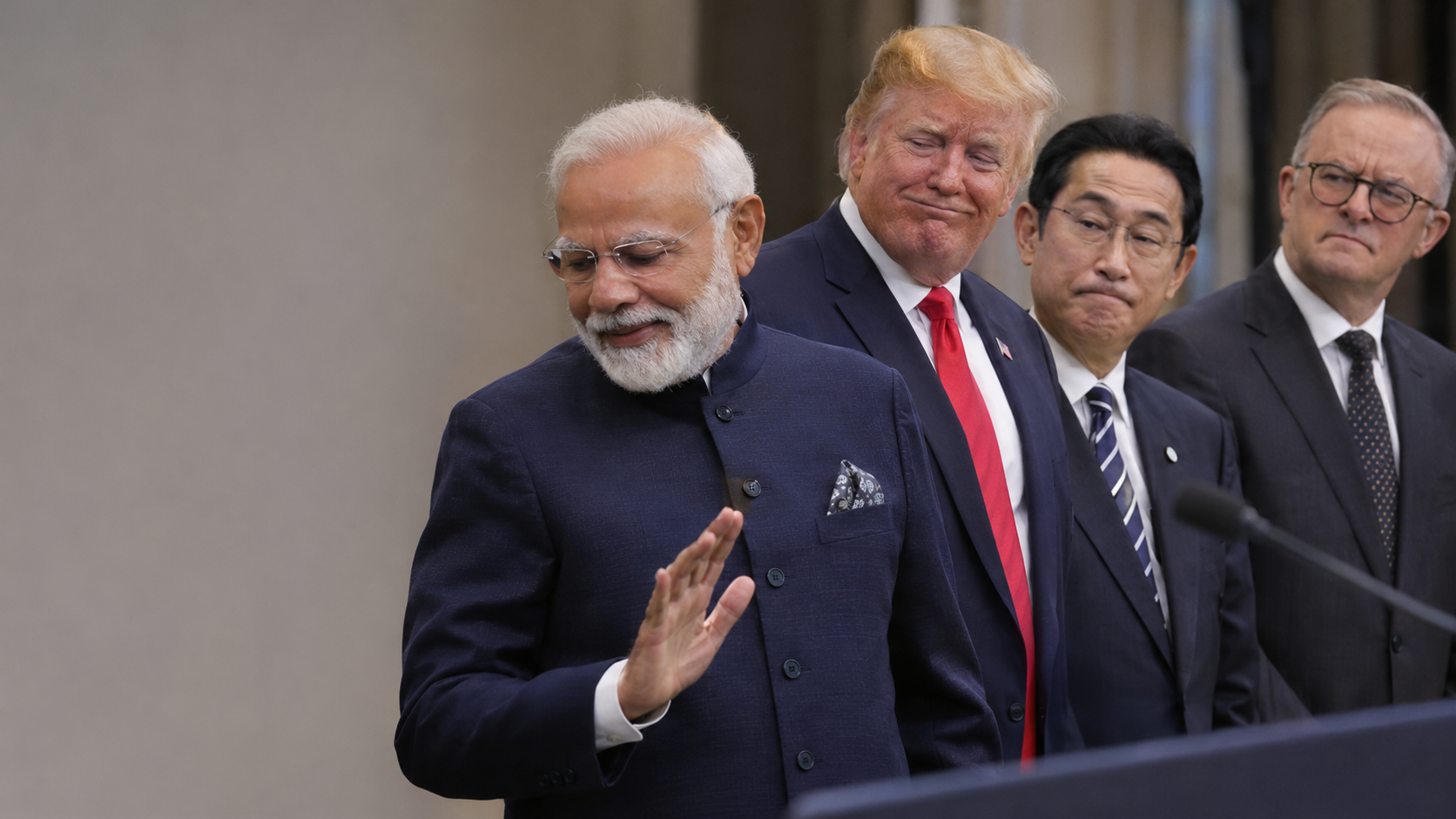 Modi, Trump Awkward Quad Photo-Op: What Footage Shows
-
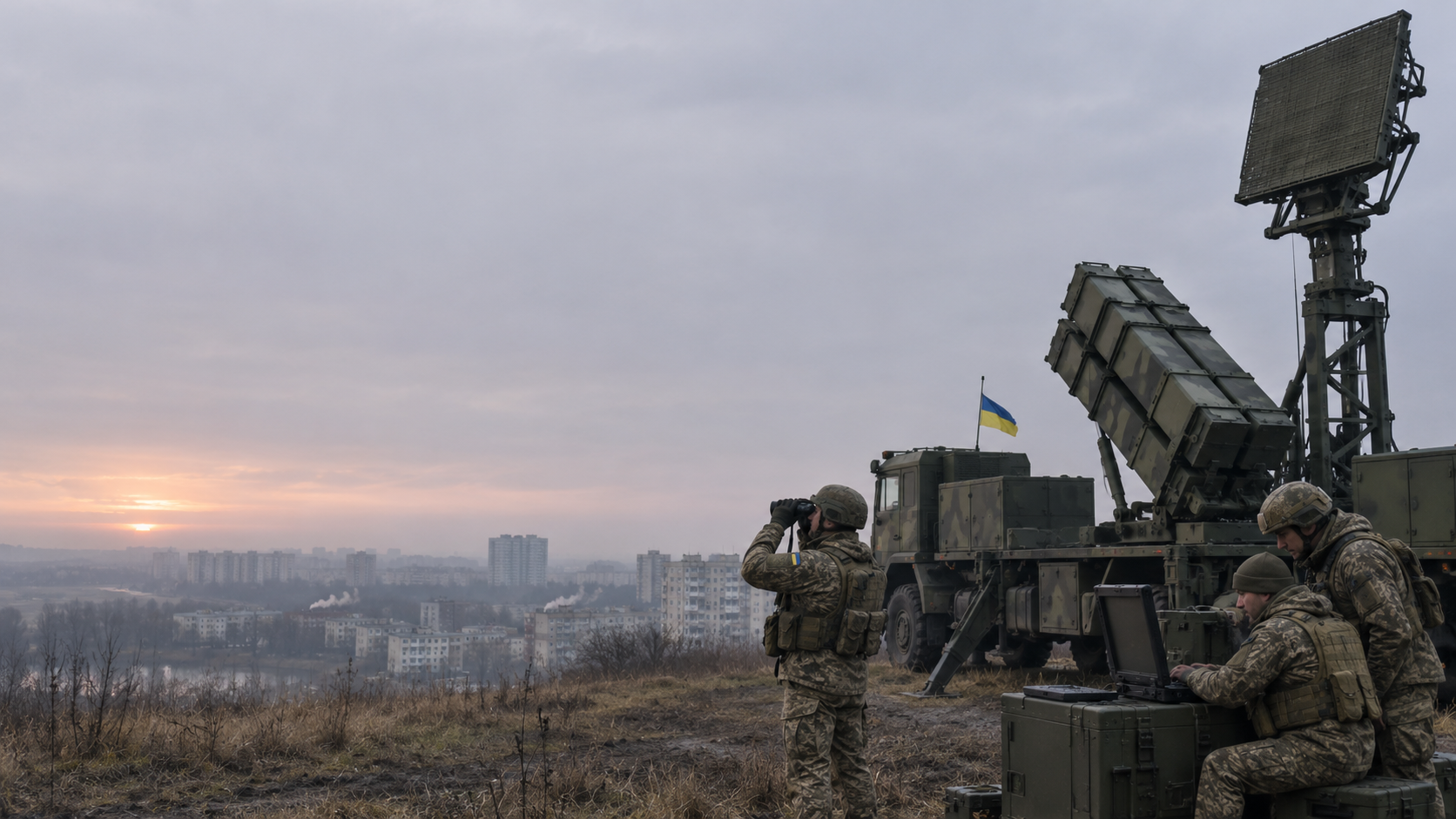 Ukraine Seeks Air Defense as Peace Talks Narrow
-
 Oversight Democrats Signal Scrutiny of Trump Allies
-
 Chiquita Canyon Landfill Trash Geyser Raises Health Concerns
-
 Mary Peltola and Alaska's Senate Balance: Fact-Check
-
 Rubio Says No Evidence Links Recent Tech Outages
-
 Reported Iran Attacks on Kuwait and Bahrain Escalate Gulf Crisis
-
 APEC Summit: Xi-Putin Talks and Trump-Kim Signals
-
 Ukraine’s Reported Strike on the Kerch Bridge
-
 American Soldier in UK Taken Into US Military Custody
-
 Mary Peltola Did Not Defeat Dan Sullivan
-
 Rubio: No Evidence Linking U.S. Outages to Malign Actor
-
 Kelly Challenges Hun Cao’s Navy-Ship Food Analogy
-
 White House Withdraws Heidi Overton FDA Nomination