Leonid Meteor Shower 2026: Peak Dates and Viewing Guide
Leonid Meteor Shower 2026: Peak Dates and Viewing Guide
Why the Leonids Are Worth Watching
The Leonid meteor shower is one of the most reliable annual meteor displays. Its meteors move exceptionally quickly, producing sharp streaks that can flash across the sky in an instant. Some are bright enough to remain visible under moderate light pollution, while occasional fireballs create dramatic, persistent trails.
The next expected peak is around November 17–18, 2026. Reports about the Leonids in 2022 or 2023 describe past viewing conditions and should not be treated as current forecasts. Source 1
Your view will depend on your location, cloud cover, moonlight, light pollution, and the time you spend watching. The best conditions usually occur at a dark, open site after midnight, when the radiant is higher in the sky.
What Is the Leonid Meteor Shower?
A meteor is the visible streak created when a small particle enters Earth’s atmosphere at high speed. Friction and compression heat the surrounding air, causing the particle’s path to glow. The particle itself is often no larger than a grain of sand or a pebble.
The Leonids come from debris released by Comet 55P/Tempel-Tuttle. As the comet travels around the Sun, it leaves dust and small rocky particles along its orbit. Earth crosses this debris stream each November, producing the Leonid meteor shower.
The Leonids are among the fastest major meteor showers. Their particles enter the atmosphere at approximately 71 kilometers per second, creating brief, sharp streaks. Some become fireballs, and a few leave persistent trains—faint glowing or ionized trails that remain visible for several seconds or longer.
The annual Leonid shower is normally a moderate display, not a meteor storm. A storm occurs when Earth passes through a particularly dense trail of comet debris. A peak date alone does not guarantee hundreds of meteors per hour.
Why the Leonids Sometimes Produce Meteor Storms
The Leonids have a famous history of meteor storms, including the spectacular 1833 event that produced thousands of meteors across parts of North America. These outbursts occur when Earth encounters concentrated debris recently released by Comet Tempel-Tuttle.
Debris concentrations vary along the comet’s orbit, so some years are more active than others. Reliable forecasts require careful modeling. Reports about unusually strong displays in 2022 or earlier years describe those specific events, not every future Leonid peak. Source 9
For November 17–18, 2026, plan for a notable meteor shower rather than assuming a meteor storm.
When Does the Leonid Meteor Shower Peak?
The expected Leonid maximum occurs around November 17–18, 2026. The shower remains active for several days before and after the peak, so clouds on the peak night do not eliminate your opportunity to observe it.
The maximum date indicates when Earth is expected to encounter the highest concentration of Leonid particles. It does not identify the best viewing hour for every location. The ideal time varies with time zone, moonrise, weather, the radiant’s position, and the year’s forecast.
Check a current astronomy calendar or meteor-shower forecast for the predicted maximum in Universal Time. Then compare it with a local weather forecast and current moonrise and moonset times.
Best Time of Night to Watch
Meteor activity generally improves after midnight. The hours before dawn are often strongest because your location faces more directly into Earth’s direction of travel. The Leonid radiant also rises higher as the night progresses.
Evening viewing remains worthwhile. A bright fireball can appear at any time, and early-night observing may be more practical for families and people who cannot stay outside until dawn.
Arrive before the main viewing period and allow at least 30 minutes for your eyes to adjust to darkness. Avoid bright phone screens and white flashlights during this period.
Where to See the Leonids
Choose a location far from city lights. Rural fields, dark-sky parks, open beaches, elevated viewpoints, and other sites with unobstructed horizons can reveal many more meteors than an urban courtyard.
Light pollution does not stop meteors from occurring; it hides the fainter ones. A bright city sky may reveal only the strongest streaks, while a dark site can show many more short and faint meteors.
Inspect the site before settling in. Trees, buildings, mountains, and nearby lamps can block large areas of sky. Face away from direct artificial light, and place a bright Moon behind a building, hill, or other safe obstruction when possible.
Leonid meteors can appear anywhere across the sky. Their radiant—the apparent point from which they seem to originate—is in or near Leo. You do not need to stare directly at Leo. A broad view usually provides better results.
Meteors near the radiant often appear shorter because their paths point more toward you. Meteors farther from the radiant can cross a larger section of sky and leave longer, more noticeable trails.
How to Find the Leonid Radiant
A radiant is a perspective effect. The meteors travel along roughly parallel paths, but their streaks appear to diverge from one point, much as railway tracks seem to meet in the distance.
Use a stargazing app, planisphere, or constellation guide to locate Leo. Finding it helps you understand the shower’s orientation, but it is not essential for casual viewing. A broad view of the sky matters more than precise alignment.
How Many Leonid Meteors Could You See?
Astronomy forecasts often use the zenithal hourly rate, or ZHR. This estimates the maximum number of meteors per hour under ideal conditions: a perfectly dark sky, a clear horizon, the radiant directly overhead, and an observer able to see the entire sky continuously.
An individual observer usually sees fewer meteors. Clouds, moonlight, light pollution, trees, buildings, and fatigue all reduce the count. The radiant may also remain low above the horizon for part of the night.
Expect fast meteors and occasional bright fireballs, but do not expect a meteor every few seconds. Activity often arrives in bursts separated by quiet periods. Watching continuously for an hour or more gives you a better chance of seeing the shower’s changing rhythm.
How to Watch the Leonids
- Check the forecast. Review cloud cover, rain, wind, temperature, and visibility. Confirm the predicted maximum in your time zone, then check moonrise and moonset times. Prepare an alternative date because a clear night before or after the peak may provide better viewing.
- Choose a dark, safe location. Select a site with a wide view, stable ground, legal access, and reliable communication. Avoid roadsides, unstable slopes, private property, flood-prone areas, and places with poor mobile access.
- Arrive early. Allow time to park, walk to the viewing area, and set up. Use a red flashlight or cover a normal flashlight with a red filter. Keep phone brightness low and use a red-light setting if available.
- Watch a broad area of sky. Use a reclining chair, ground mat, sleeping bag, or blanket. Keep the radiant outside the center of your view to increase your chance of seeing longer trails.
- Give the shower time. Plan to observe for at least one hour. Avoid checking your phone repeatedly because bright screens reduce night vision.
If you record observations, note the start and end times, sky conditions, cloud cover, approximate brightness, and number of meteors seen. These details can help compare your experience with official activity reports.
What Equipment Do You Need?
You do not need a telescope or binoculars. Meteors move quickly and can cross a wide area of sky, making the unaided eye the most effective tool.
Bring:
- A reclining chair or ground mat
- Warm clothing and extra layers
- Blankets, a sleeping bag, and gloves
- Water and snacks
- A red flashlight
- A fully charged phone
- An offline map or navigation backup
Telescopes have narrow fields of view and make it difficult to follow fast meteors. Binoculars are optional for viewing star fields or the Milky Way between meteors, but they are not useful for monitoring the whole shower.
How to Photograph the Leonids
Meteor photography requires patience. Individual meteors appear unpredictably, so a single exposure may show only stars. The most effective approach is to capture many consecutive images and review them afterward.
DSLR or Mirrorless Camera Settings
Use a wide-angle lens on a stable tripod. Set the camera to manual focus and focus on a bright star or distant light at infinity. Use the widest practical aperture, then begin with a high ISO and adjust it for local sky brightness.
Start with exposures lasting several seconds to several tens of seconds. Longer exposures collect more light but can brighten the sky or create star trails. Use an interval timer or remote shutter release to reduce vibration and capture a continuous sequence.
Shoot in RAW format when available. RAW files preserve more information for adjusting exposure, contrast, color, and highlights. Keep spare batteries warm because cold temperatures reduce battery life.
Smartphone Photography
Use the phone’s night mode or a manual camera application. Stabilize the phone on a tripod, select the widest available lens, and use a timer to prevent movement when pressing the shutter.
Move away from nearby lamps and reduce screen brightness. Many phones require very dark conditions and a completely stable mount to record faint meteors. Take numerous exposures because a meteor’s appearance cannot be predicted.
Photographing the Radiant and Meteor Trails
Frame an area near—but not directly at—the radiant. Include a foreground tree, building, mountain, or landscape feature for scale. A composition containing both sky and landscape often looks more natural than a frame filled only with stars.
You can combine multiple exposures during editing to show several meteor trails in one image, provided the editing is clearly identified. Do not assume every photograph will contain a meteor.
Weather, Moonlight, and Light Pollution
Clear skies matter more than a high predicted activity rate. Clouds can block every meteor, even when the shower is active overhead. Check a current, location-specific weather service before traveling; general information cannot provide a reliable forecast for every observing site.
Moonlight reduces contrast and hides faint meteors. If the Moon is above the horizon, position yourself so that a building, hill, or other safe obstruction blocks direct moonlight. Do not choose an unsafe location simply to hide the Moon.
Postpone travel if storms, ice, flooding, high winds, extreme cold, or poor visibility create unsafe conditions. A clear forecast is not enough if the journey to the viewing site is dangerous.
Safety Tips for Overnight Stargazing
Choose a legal, accessible viewing site and tell someone where you are going. Observe with a partner when possible, especially in isolated areas.
Wear clothing suitable for several hours outdoors. Bring water, food, a charged phone, navigation backup, and basic emergency supplies. Stay away from traffic, unstable terrain, cliffs, fast-moving water, and poorly marked paths.
Keep tripods, chairs, and camera bags away from roads and walkways. Follow local rules for parks, beaches, protected areas, and campgrounds.
If prolonged darkness affects your vision, allow your eyes to readjust before driving. Meteor watching does not require special eye protection because it does not involve direct solar viewing. Never look at the Sun through binoculars, a telescope, or a camera.
Common Leonid Meteor Shower Mistakes
- Watching from a brightly lit city center
- Arriving after the best viewing period
- Looking only at Leo
- Using a telescope with a narrow field of view
- Giving up after a few quiet minutes
- Repeatedly checking a bright phone screen
- Relying on an old forecast
- Confusing an airplane, satellite, or reentering object with a meteor
- Expecting a meteor storm every year
- Ignoring cold, wind, wet ground, or poor visibility
The peak date is only one part of the experience. A dark, comfortable, safe location and enough time outdoors often matter more than small differences in predicted activity.
How to Identify a Leonid Meteor
A typical Leonid appears as a brief, fast streak that suddenly flashes into view and disappears within a moment. Its apparent path can be traced backward toward Leo, the shower’s radiant.
Airplanes move steadily, often blink, and remain visible much longer. Satellites travel smoothly and slowly without a sudden flash. Fireworks are usually lower, brighter, more fragmented, and often accompanied by sound.
Sporadic meteors come from unrelated debris and do not trace back toward the Leonid radiant. A bright Leonid fireball may leave a persistent glowing trail after the main streak vanishes.
The apparent direction provides useful evidence, but one meteor may not be enough for certain identification. Several fast streaks appearing to radiate from Leo provide stronger confirmation.
Key Takeaways for November 17–18, 2026
The Leonid meteor shower is expected to peak around November 17–18, 2026. The most favorable viewing often occurs after midnight and before dawn, when Leo is higher and your location faces more directly into Earth’s direction of travel.
Dark, open locations provide the best chance of seeing meteors. No specialized equipment is required. Clear skies, moonlight, light pollution, and the amount of time spent watching will determine your results.
Activity continues outside the exact peak, so check the relevant year’s forecast, local time, Moon conditions, and weather before traveling. Dress warmly, bring a reclining chair, and plan to watch for at least an hour.
Frequently Asked Questions
When is the Leonid meteor shower peak?
The expected peak occurs around November 17–18, 2026. The best viewing time depends on the location, time zone, moonlight, weather, and the year’s forecast. Earlier reports about the 2023 or 2022 Leonids describe past conditions, not the 2026 forecast. Source 3
What time is best for viewing the Leonids?
The hours after midnight and before dawn are generally most favorable. The radiant rises higher later at night, and your observing location faces more directly into Earth’s direction of travel.
Do I need a telescope?
No. The unaided eye is best because meteors can cross a large area of sky. A reclining chair, warm clothing, and a dark location are more useful than a telescope.
Where should I look?
Look across a broad section of dark sky rather than directly at Leo. The radiant is in Leo, but meteors can appear anywhere and often leave longer trails farther from the radiant.
How many meteors will I see?
The number varies with light pollution, moonlight, cloud cover, the radiant’s height, and the time spent watching. Published hourly rates represent ideal conditions and are usually higher than what an individual observer sees.
Can I photograph the Leonids with a phone?
Yes, if the phone supports a suitable night or manual mode. Stabilize it on a tripod, use the widest lens, reduce nearby light, and take many exposures because meteors appear unpredictably. Continuous image capture and stable equipment are also recommended for the 2026 event. Source 3
Related Articles
-
 Thinkers of Cernavodă: Stone Age Figurines
-
 Why NASA Wants You to Shine a Light for Voyager 1
-
 Stephen Hawking’s Private Life Reexamined
-
 Ebola Is Survivable: Why Prompt Treatment Matters
-
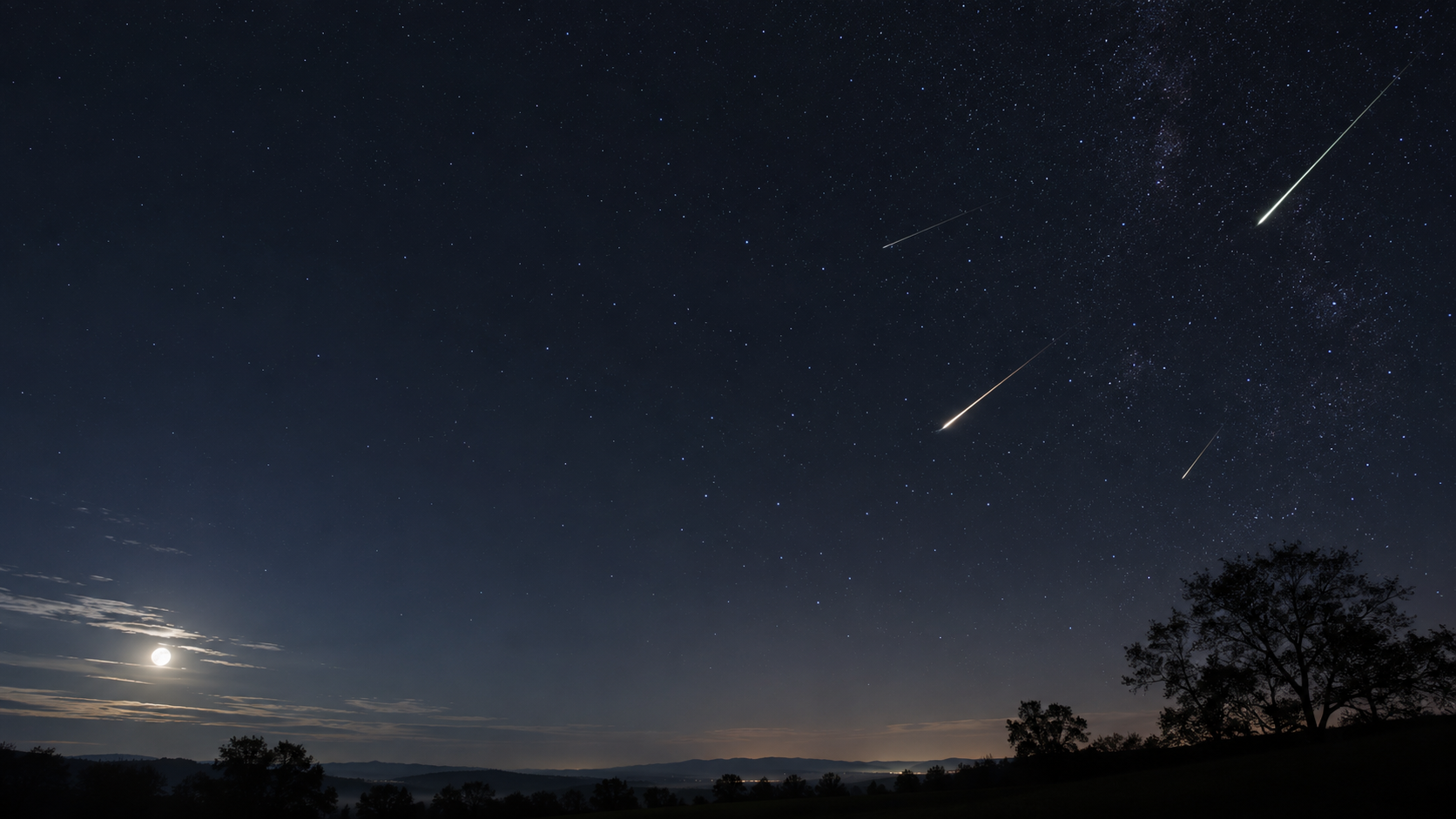 Leonid Meteor Shower Peaks Tonight: Viewing Guide
-
 Hayabusa2 and 1998 KY26: What the Target Change Means
-
 Starship Flight 15, Tesla Merger, and $74B AI Bet
-
 Voyager 1 Approaches One Light-Day From Earth
-
 ʻOumuamua: The Mysterious Interstellar Visitor
-
 Curiosity Finds Bright Yellow Elemental Sulfur on Mars
-
 Victor Glover’s Toughest Artemis II Challenge Explained
-
 What Makes Up the Cosmos? Evidence of Missing Physics
-
 Northern Lights Alert: 12 States May See Aurora
-
 Metal Potatoes May Host Dark-Oxygen Ecosystems
-
 SpaceX Booster Catch Could Cut Launch Costs by 77%
-
 Strange Radio Signals Repeat Every Eight Minutes