Iowa Lead Azide Detonation: Middletown Evacuation Guidance
Iowa Lead Azide Detonation: Middletown Evacuation Guidance
The U.S. Army plans to destroy a stockpile of lead azide in Iowa through a controlled detonation. Reports identify Middletown as the affected community, and authorities have urged some nearby residents to evacuate.
The operation is intended to reduce the risks associated with storing or transporting a highly sensitive explosive material. Residents inside the designated safety area should follow official evacuation orders, avoid the disposal site, and wait for authorities to announce when reentry is permitted.
The exact detonation date, time, disposal quantity, site, evacuation boundaries, road closures, and reentry procedures require confirmation through current Army, county, city, and emergency-management notices.
What Is Happening in Iowa?
The Army is preparing to dispose of lead azide, an explosive compound used in some initiating systems and ammunition-related applications. Because the material can be sensitive to shock, friction, heat, impact, and other disturbances, it must be handled only by trained specialists.
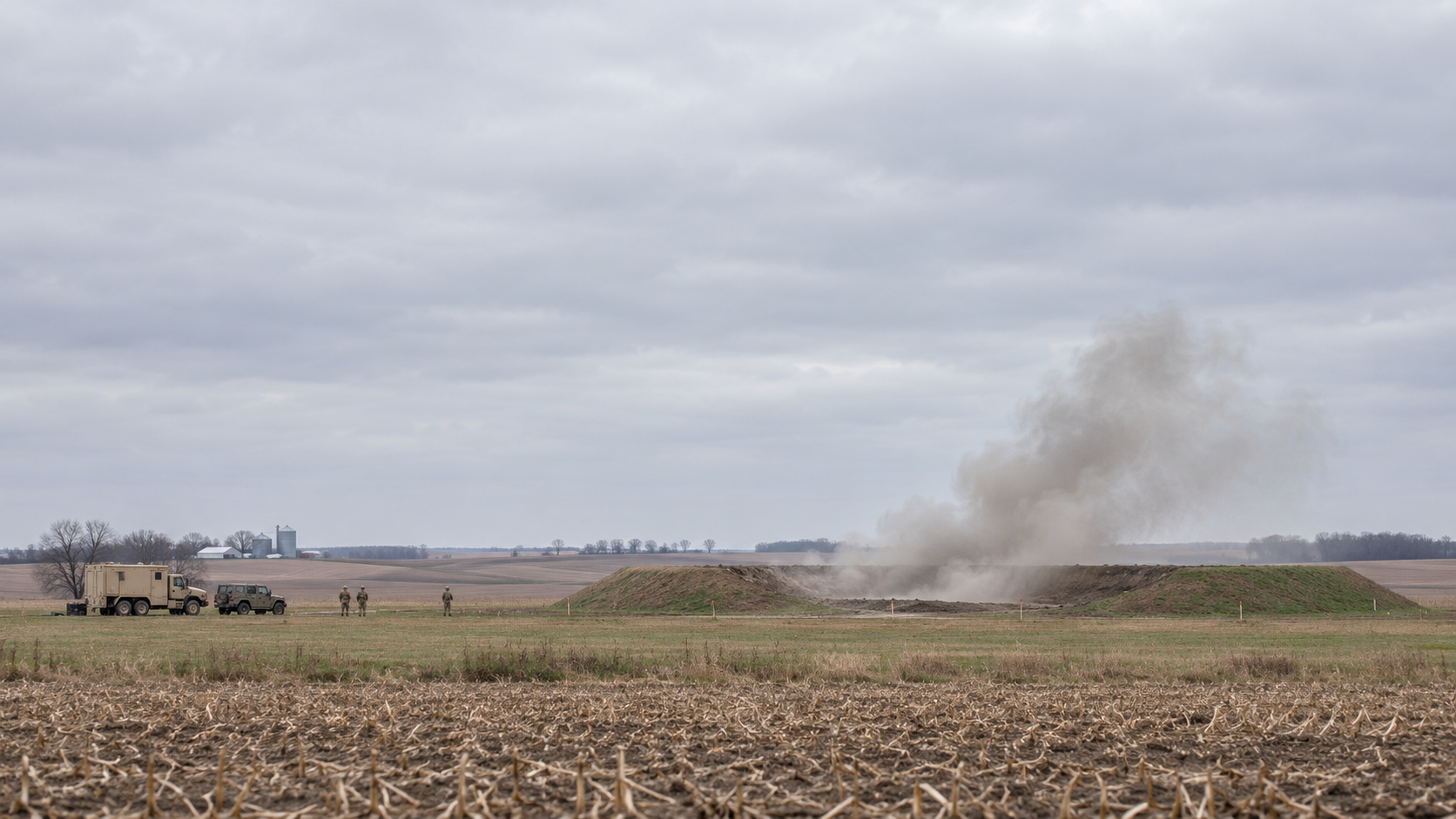
Reports describe the disposal as a planned, controlled detonation rather than an uncontrolled explosion. Such operations generally involve restricted access, safety zones, emergency coordination, traffic controls, and procedures to confirm that the site is safe afterward.
KGAN identifies Middletown as the Iowa community connected to the operation. The supplied reports do not independently establish the exact disposal site or the full list of affected streets, properties, roads, workplaces, or schools. Source 9
When Will the Detonation Take Place?
One supplied report says the operation was planned for Wednesday. The report summaries do not provide enough current information to confirm the exact calendar date or time. The operation may be delayed or rescheduled because of weather, site conditions, equipment issues, access problems, or a revised safety assessment.
Residents should monitor:
- County emergency-management alerts.
- City and county government announcements.
- Local law-enforcement updates.
- Army or military installation notices.
- Official road-closure information.
- Local emergency alert systems.
The latest official instruction takes priority over an earlier media report. Source 3
Why Are Residents Being Asked to Evacuate?
An evacuation creates a buffer between civilians and potential blast effects, debris, noise, ground vibration, or other hazards. The warning applies to people inside the area designated by authorities; it does not mean that every Iowa resident must leave. Source 7
Authorities may issue different instructions based on an address, road, workplace, school, or distance from the site. Some people may be ordered to evacuate, while others may receive shelter-in-place instructions, traffic restrictions, or no-action notices.
Residents should look for information about:
- Affected addresses and streets.
- Evacuation deadlines.
- Approved departure routes.
- Road closures and checkpoints.
- Shelters or temporary relocation sites.
- Assistance for people with disabilities or medical needs.
- Pet and livestock guidance.
- Reentry procedures.
An evacuation order is a preventive safety measure. The Army’s reported reassurance that the public has no reason to panic does not replace instructions from local emergency officials. Source 5
What Residents Should Do
Residents who receive an evacuation order should:
- Leave by the stated deadline.
- Use designated routes and avoid closed roads.
- Take essential medication, identification, phones, chargers, and necessary supplies.
- Keep children, pets, and dependent household members together.
- Follow instructions from law enforcement and emergency personnel.
- Wait for an official reentry announcement before returning.
People who need transportation or medical assistance should contact the emergency number or local authority listed in the official notice.
Do not approach the disposal area to watch, photograph, record, or investigate the operation. Stay behind barricades and respect checkpoints, restricted areas, road closures, and law-enforcement instructions. Do not fly drones near the operation because they could interfere with emergency procedures.
What to Do About Suspicious Objects
Do not touch, move, open, transport, or store suspected explosive material. If it is safe, move away, warn others without approaching the object, and call 911 or the designated local authority from a safe location.
Provide the object’s location and a description without returning to inspect or photograph it. Old, damaged, or apparently inactive material may remain dangerous.
What People Outside the Evacuation Area Should Expect
A controlled detonation may produce loud noise or ground vibration, depending on distance and site conditions. The supplied reports do not provide verified sound-level or vibration estimates.
People outside the evacuation zone should still avoid traveling toward the disposal site. Road closures, checkpoints, emergency vehicles, and temporary access restrictions may affect nearby communities. Drivers should use alternate routes announced by local authorities, while businesses, schools, and public facilities should follow municipal or county guidance.
Claims about injuries, damage, cancellation, or an unofficial blast time should be verified through government alerts and established local news organizations.
What Is Known and What Remains Unconfirmed?
The supplied reports indicate that:
- The U.S. Army plans to destroy lead azide in Iowa.
- The disposal involves a controlled detonation.
- Some nearby residents were urged to evacuate.
- KGAN identifies Middletown as the affected community.
- One report refers to a planned Wednesday operation.
- The Army said the public had no reason to panic.
The following details require confirmation through current official notices:
- Exact detonation date and time.
- Quantity of lead azide.
- Exact disposal site.
- Evacuation radius and affected addresses.
- Road closures and alternate routes.
- Shelter locations.
- Reentry procedures.
- Whether the operation has been completed, delayed, or rescheduled.
- Any injuries, property damage, or environmental monitoring results.
Conclusion
The Army plans a controlled lead azide detonation in Iowa, with reports identifying Middletown as the affected community. Some nearby residents have been urged to evacuate, while the Army says the public has no reason to panic.
Residents should follow current official alerts rather than old reports or social-media speculation. Stay away from the disposal site, do not cross barricades or use drones, and never touch or move suspected explosive material. Wait for authorities to confirm that reentry is safe.
Frequently Asked Questions
What is lead azide?
Lead azide is a sensitive explosive compound used in some initiating systems. Suspected material must be handled only by trained specialists.
Why is the Army detonating lead azide in Iowa?
The Army plans to destroy the material through a controlled disposal operation. The supplied reports do not establish the stockpile’s full history or every reason this method was selected.
Where is the detonation planned?
A KGAN report identifies Middletown. The exact disposal site and affected boundaries should be confirmed through current Army, city, county, or emergency-management notices. Source 9
Do all Iowa residents need to evacuate?
No. The evacuation warning applies to people inside or near the designated safety area. Residents should follow address-specific instructions from local authorities.
When will the detonation happen?
One supplied report says the operation was planned for Wednesday. The exact date and time require confirmation from current official announcements.
What should residents do if they see suspected explosive material?
Do not touch, move, open, or approach it. Move away if safe, call 911 or the designated authority, and provide its location and description from a safe distance.
Related Articles
-
 Over 700,000 Russian Soldiers Reportedly Killed in Ukraine War
-
 Nasdaq Falls 4% as AI Stocks and Tariffs Rattle Markets
-
 Inside the Scramble to Prevent Conflict in the Baltic
-
 Young Britons’ Sex Lives: What the Evidence Shows
-
 Army Says 5 Tons of Lead Azide Destroyed in Iowa
-
 Thanksgiving Storm Threatens Northeast Travel
-
 Kilmar Abrego Garcia Arrives in Spain: What We Know
-
 California’s Tides Enter “Uncharted Territory” as Seas Rise
-
 Libya Threatens Retaliation After Benghazi Drone Strike
-
 Chen Jining Investigation: What It Means for China
-
 North Korea Expels Swiss Diplomat Amid Sanctions Dispute
-
 Cartagena Supermarket Siege: All Hostages Rescued
-
 Kilmar Ábrego García Arrives in Spain After Deportation Fight
-
 Six Dead After Plane Crashes Off Mississippi Coast
-
 Thanksgiving Travel Forecast 2026: Coast-to-Coast Storm Risk
-
 Iowa Town Prepares for Lead Azide Detonation