Thanksgiving Storm Threatens Northeast Travel
Thanksgiving Storm Threatens Northeast and Mid-Atlantic Travel
A major Thanksgiving storm could disrupt travel and outdoor plans across the Northeast and mid-Atlantic. Forecast coverage points to heavy rain, strong winds, and coastal flooding during one of the busiest travel periods of the year.
WJAR reports the potential for heavy rain, high winds, and coastal flooding in Rhode Island and surrounding areas Source 1. The Weather Channel also describes a significant Thanksgiving storm threat for the Northeast and mid-Atlantic Source 3.
The forecast remains subject to change. The storm’s track, timing, and intensity will determine which communities experience the heaviest rain, strongest winds, and greatest flooding risk. Travelers should confirm local conditions before leaving and continue monitoring official alerts.
Main Hazards
Heavy Rain
Prolonged rain can reduce visibility, create standing water, slow traffic, and overwhelm drainage systems. The most serious travel problems often occur beneath the heaviest rain bands, particularly on highways, local streets, underpasses, low-lying roads, and areas with poor drainage.
Airports may space arrivals and departures more widely as visibility declines. Rail operators may face water on tracks, signal problems, or speed restrictions, while buses may encounter congestion, crashes, and flooded roads.
Rainfall totals and the timing of the heaviest bands should be taken from updated forecasts before publication or travel. Current reports do not provide reliable location-specific totals.
Strong Winds
Strong winds may create additional hazards along the coast, on bridges, beside open fields, and on elevated roads. High-profile vehicles, including trucks, buses, and recreational vehicles, can become difficult to control during powerful crosswinds.
Wind may also affect airport operations, outdoor structures, holiday decorations, and temporary event equipment. Downed branches could block roads or interrupt service, and isolated power outages are possible where trees and utility lines are vulnerable.
Conditions will vary across the region. Coastal communities, hills, bridges, and exposed roads may experience stronger or more hazardous gusts. Drivers should check National Weather Service alerts for local advisories or warnings.
Coastal Flooding
Coastal flooding is a major concern in the reported forecast coverage. WJAR highlights possible coastal flooding in Rhode Island and nearby areas Source 1. CT Insider reports similar concerns for Connecticut, including heavy rain, strong winds, and coastal flooding Source 9.
Flooding severity depends on rainfall, onshore winds, high tides, storm surge, and water levels in tidal rivers and bays. Low-lying neighborhoods, waterfront roads, ferry terminals, parking areas, and coastal highways may become unsafe.
Never drive through water covering a roadway. Depth can be difficult to judge, and moving water can sweep away vehicles.
Regional Concerns
New England and Connecticut
Connecticut and nearby New England communities may face heavy rain, strong winds, and coastal flooding. Interstate travel could slow if rainfall becomes intense or visibility falls. Shoreline communities may experience water over roads, restrictions near vulnerable areas, or temporary closures.
Ferry and coastal transportation services may adjust schedules if winds or water levels become unsafe. Residents should monitor town, county, and state emergency-management notices for road closures, parking restrictions, evacuation guidance, and instructions to move vehicles.
Rhode Island and Southern New England
Inland areas may primarily face heavy rain, reduced visibility, ponding, and traffic delays. Coastal locations could experience added flooding from onshore winds, high tides, and rising water levels.
The Providence area, coastal highways, bridges, causeways, and waterfront neighborhoods could see travel complications if the storm arrives during a busy holiday period. WJAR identifies heavy rain, high winds, and coastal flooding as the main concerns Source 1.
New York City and the Mid-Atlantic
The storm may affect New York City, the surrounding metropolitan area, and parts of the mid-Atlantic. Potential problems include wet and congested roads, slower airport operations, commuter and intercity rail delays, and wind-related restrictions on bridges or elevated roads.
The Weather Channel describes the system as a major Thanksgiving storm threat for the Northeast and mid-Atlantic Source 3. Travelers should use the latest city, county, and National Weather Service forecasts.
Charlotte and Southern Travel Corridors
Charlotte travelers could face disruption even if local weather is less severe than conditions farther north. Airlines depend on aircraft and crews arriving from other airports, so a Northeast storm can cause delays, missed connections, rebookings, and baggage problems across the national network.
The Charlotte Observer reports that storms could threaten Thanksgiving travel in the region, with possible widespread airport delays Source 7.
Thanksgiving Travel Advice
Air Travel
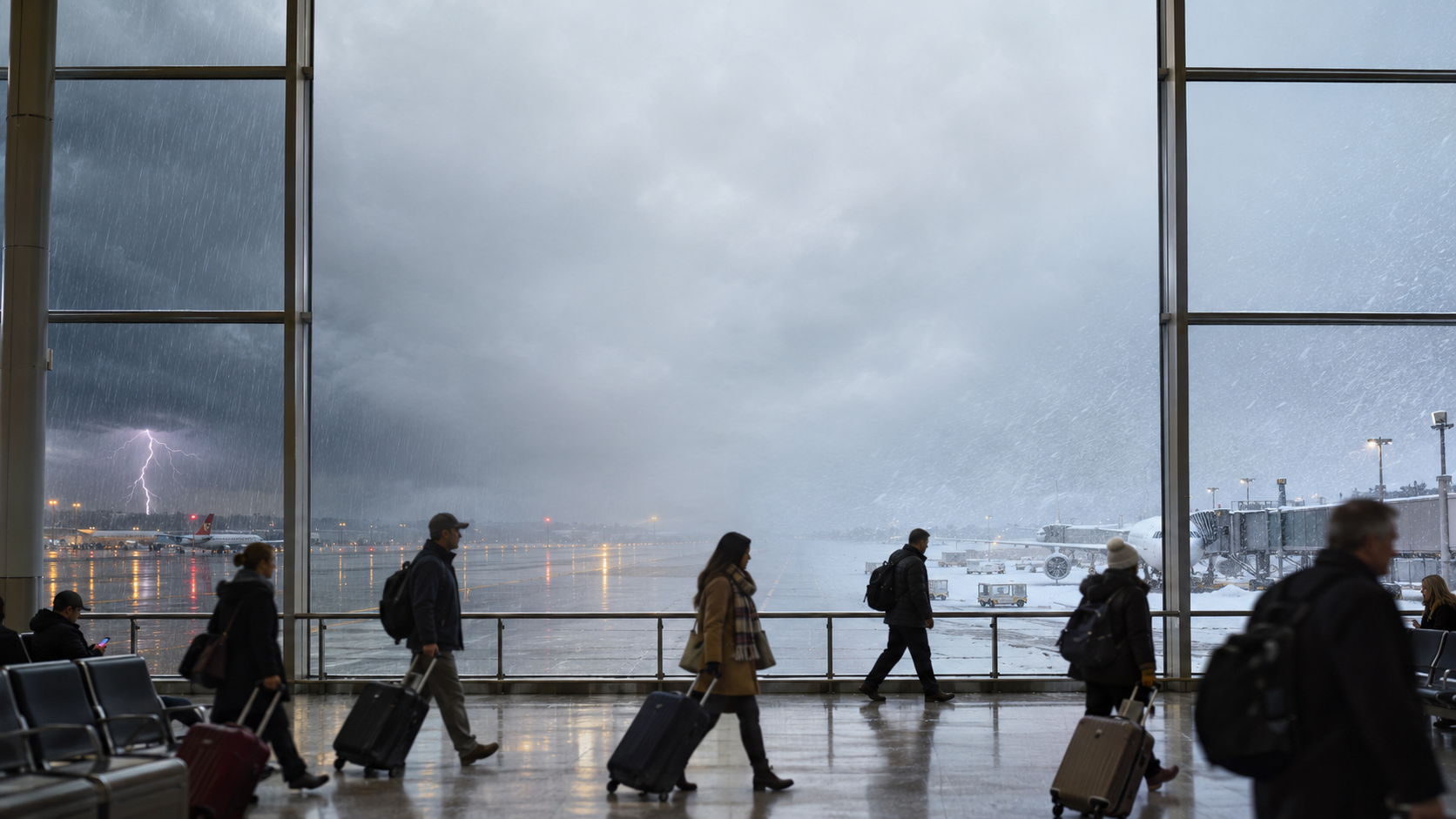
Heavy rain, strong winds, and reduced visibility can cause departure delays, arrival spacing, ground stops, diversions, and cancellations. Travelers should:
- Check the airline app before leaving for the airport.
- Confirm departure times, gates, and connections.
- Allow extra time for parking, security, and crowded terminals.
- Keep medication, identification, chargers, and essential items in carry-on luggage.
- Review rebooking and cancellation policies.
- Prepare for longer waits at customer-service desks.
A flight listed as on time can change later, so continue checking updates.
Road Travel
Driving hazards may include poor visibility, hydroplaning, standing water, slower traffic, strong crosswinds, and flooded roads. Check state transportation agencies for closures, crash reports, bridge restrictions, and local flooding information. Use headlights, reduce speed, and increase following distance.
Never drive around a barricade or enter a flooded road. If authorities warn against travel, delaying the trip may be safer.
Rail, Bus, and Ferry Service
Rail and bus service may face delays from flooded tracks, signal problems, fallen branches, power interruptions, and road congestion. Ferry service may also be affected by high winds, flooding, or unsafe dock conditions. Check directly with transportation providers and keep booking confirmations, identification, medications, and chargers accessible.
Macy’s Thanksgiving Day Parade
Storms and strong winds could affect Macy’s Thanksgiving Day Parade plans, according to NBC News coverage Source 5. Decisions will depend on wind speed and direction, rainfall timing, visibility, and safety along the route.
The available reports do not confirm a cancellation, delay, or route change. Parade organizers and New York City officials will provide definitive guidance. Spectators should monitor official parade updates, emergency alerts, transit advisories, and local weather warnings.
If the event proceeds, prepare for wet conditions, slippery sidewalks, crowded transit platforms, and prolonged exposure to wind and rain. Outdoor plans should remain flexible, especially for people with medical conditions, young children, or limited mobility.
Preparing for Thanksgiving
Hosts should share parking information, alternate routes, indoor arrival areas, and emergency contacts. When possible, schedule arrivals and departures outside the heaviest expected weather period. Keep food, medication, and other essentials available if guests face delays.
Households should prepare flashlights, charged phones, battery packs, necessary medications, portable radios, food, and water. Secure outdoor furniture, trash containers, decorations, tools, and other loose objects. Residents in flood-prone locations should move vehicles to higher ground if officials recommend it and follow evacuation instructions promptly.
Following the Forecast
The National Weather Service and local forecast offices provide the most useful warnings for specific communities:
- Watch: Conditions are possible; residents should prepare.
- Warning: Hazardous conditions are occurring or expected soon.
- Advisory: Conditions may cause inconvenience, travel problems, or localized hazards.
Enable local emergency notifications and monitor county, municipal, and transportation-agency alerts. Check conditions the day before departure, on the morning of travel, and immediately before leaving for the airport, station, or highway.
Key Takeaways
- A major storm threat could affect the Northeast and mid-Atlantic during Thanksgiving.
- Heavy rain, strong winds, and coastal flooding are the primary concerns.
- Connecticut, Rhode Island, New York, and other coastal areas may face different combinations of hazards.
- Charlotte and other airports could experience network-wide delays.
- Roads, rail lines, buses, bridges, and ferries may also be disrupted.
- Macy’s Thanksgiving Day Parade plans depend on official safety decisions.
- Travelers should monitor official alerts, check transportation status, and prepare for schedule changes.
FAQ
How severe is the Thanksgiving storm expected to be?
Available reports describe a potentially significant storm with heavy rain, strong winds, and coastal flooding concerns Source 3. Final severity will depend on the track, timing, and intensity. Use updated National Weather Service forecasts for local information.
Could the storm cause flight delays?
Yes. Heavy rain, strong winds, reduced visibility, and air-traffic restrictions could cause delays, diversions, or cancellations. Disruptions may spread through airline networks, including Charlotte Source 7. Check directly with the airline before leaving.
Which areas face the greatest coastal flooding risk?
Low-lying coastal communities, waterfront roads, tidal waterways, ferry terminals, and areas exposed to onshore winds face the greatest risk. Connecticut, Rhode Island, and other parts of the Northeast are included in the reported concerns Source 9. Follow local flood advisories and road-closure notices.
Will the parade be canceled?
The available sources indicate that weather could affect parade plans, but they do not confirm a cancellation. Organizers and New York City authorities will decide based on wind, rain, visibility, and public safety.
What should drivers do?
Check road and weather conditions before departure. Slow down, increase following distance, and use headlights in heavy rain. Avoid flooded roads, never drive around barricades, and delay travel if officials warn against driving.
How can travelers prepare?
Build extra time into travel plans, keep essential medication and identification in carry-on luggage, and monitor airline, rail, bus, ferry, and highway updates. Prepare for cancellations, missed connections, and temporary power outages. Follow local emergency-management instructions.
Related Articles
-
 Over 700,000 Russian Soldiers Reportedly Killed in Ukraine War
-
 Nasdaq Falls 4% as AI Stocks and Tariffs Rattle Markets
-
 Inside the Scramble to Prevent Conflict in the Baltic
-
 Young Britons’ Sex Lives: What the Evidence Shows
-
 Army Says 5 Tons of Lead Azide Destroyed in Iowa
-
 Kilmar Abrego Garcia Arrives in Spain: What We Know
-
 California’s Tides Enter “Uncharted Territory” as Seas Rise
-
 Libya Threatens Retaliation After Benghazi Drone Strike
-
 Chen Jining Investigation: What It Means for China
-
 North Korea Expels Swiss Diplomat Amid Sanctions Dispute
-
 Cartagena Supermarket Siege: All Hostages Rescued
-
 Kilmar Ábrego García Arrives in Spain After Deportation Fight
-
 Six Dead After Plane Crashes Off Mississippi Coast
-
 Thanksgiving Travel Forecast 2026: Coast-to-Coast Storm Risk
-
 Iowa Town Prepares for Lead Azide Detonation
-
 Shenzhou 24: Pakistan’s Reported First Astronaut