ICJ Has Not Yet Ruled Myanmar Committed Genocide
ICJ Has Not Yet Ruled That Myanmar Committed Genocide Against the Rohingya
Latest update: The International Court of Justice (ICJ) has not issued a final judgment determining that Myanmar committed genocide against the Rohingya. Reports claiming that the court has already made that finding are inaccurate or unverified.
The case, The Gambia v. Myanmar, remains pending under the Convention on the Prevention and Punishment of the Crime of Genocide. The ICJ has ordered provisional measures requiring Myanmar to protect the Rohingya and preserve evidence, but those interim orders are not a final genocide judgment. ICJ case record
Verified Legal Position
- The ICJ has not delivered a final judgment on whether Myanmar violated the Genocide Convention.
- The court issued provisional measures in January 2020.
- In July 2022, it rejected Myanmar’s preliminary objections to jurisdiction and admissibility, allowing the case to proceed.
- The supplied reports do not provide an official judgment date, vote count, operative orders, or final legal text.
- The case concerns state responsibility, not criminal convictions of individual Myanmar officials.
Several summaries claim that the court found Myanmar responsible for genocide. However, those summaries link to Google News redirect pages rather than an official ICJ judgment and provide no verifiable legal details. They should not be treated as confirmation of a final ruling.
What the Court Has Decided
Provisional measures in 2020
On January 23, 2020, the ICJ ordered Myanmar to take provisional measures to protect the Rohingya from acts covered by the Genocide Convention. It also ordered Myanmar to prevent the destruction of evidence and to report on the measures taken.
The orders were issued while the case was pending. They did not decide whether genocide occurred. Myanmar was required to:
- Prevent acts within the scope of the Genocide Convention.
- Ensure that its military and other forces do not commit genocidal acts.
- Prevent the destruction of relevant evidence.
- Submit reports on compliance.
The court found that the rights claimed by The Gambia were plausible and that there was a risk of irreparable harm. The measures were not a criminal conviction or a final finding of state responsibility. ICJ provisional-measures order
Jurisdiction decision in 2022
On July 22, 2022, the ICJ rejected Myanmar’s preliminary objections. It held that it had jurisdiction to hear the dispute and that The Gambia’s application was admissible.
That decision allowed the merits phase to continue. It did not determine whether Myanmar committed genocide. The court also confirmed that The Gambia could invoke obligations under the Genocide Convention even though it was not the state where the alleged abuses occurred.
Why a Final Judgment Matters
A final judgment could become a major international legal finding concerning Myanmar’s treatment of the Rohingya. It could determine whether Myanmar violated obligations to prevent genocide, punish direct and public incitement, investigate or punish genocidal conduct, or otherwise comply with the convention.
The legal conclusions would depend on the wording of the judgment, including findings concerning prohibited acts, intent, causation, and state responsibility.
A final judgment could strengthen demands for protection, reparations, investigations, and political action. It would not, by itself, compensate victims or imprison individual perpetrators. Amnesty International
What the ICJ Case Does Not Do
The ICJ resolves disputes between states. It does not prosecute individual military commanders or government officials. An ICJ judgment would not automatically:
- Arrest Myanmar officials.
- Issue criminal convictions or arrest warrants.
- Return Rohingya refugees to Myanmar.
- End armed conflict or persecution.
- Guarantee financial compensation.
- Resolve every criminal investigation concerning Myanmar.
Individual criminal responsibility requires separate proceedings, which may involve domestic courts, international criminal proceedings, or courts exercising universal jurisdiction.
The International Criminal Court is examining the situation concerning the alleged deportation of the Rohingya from Myanmar to Bangladesh. That process is separate from the ICJ case. The ICJ addresses state responsibility, while the ICC prosecutes individuals for crimes within its jurisdiction. International Criminal Court
The Rohingya and the Humanitarian Crisis
The Rohingya are a predominantly Muslim ethnic minority historically associated with Myanmar’s Rakhine State. Many have faced restrictions on citizenship, movement, education, healthcare, and political participation.
The community has experienced decades of discrimination, violence, and displacement. The crisis intensified after military operations in northern Rakhine State in 2017, when more than 700,000 Rohingya fled to Bangladesh.
Bangladesh now hosts approximately one million Rohingya refugees, most living in densely populated camps in Cox’s Bazar. Refugees depend heavily on international assistance for food, shelter, healthcare, education, sanitation, and protection. They also face fires, disease risks, criminal violence, trafficking, movement restrictions, and limited educational and economic opportunities. UNHCR Bangladesh
The United Nations has warned that conditions in Myanmar do not currently provide the safety and rights required for large-scale voluntary returns. Any return must be safe, dignified, voluntary, and sustainable. United Nations in Bangladesh
Allegations Underlying the Case
The Gambia’s case concerns alleged acts against the Rohingya, including killings, serious bodily and mental harm, sexual violence, destruction of homes and villages, forced displacement, conditions intended to destroy the group in whole or in part, and measures affecting births within the group.
International investigators and human rights organizations have documented allegations of mass abuses. The U.N. Independent International Fact-Finding Mission on Myanmar reported that the 2017 military operations involved serious violations of international law and said there were reasonable grounds to believe genocidal acts had occurred. U.N. Human Rights Council fact-finding mission
Those reports are evidence and expert assessments. They are not substitutes for the ICJ’s final legal analysis.
The Legal Meaning of Genocide
The Genocide Convention defines genocide as specified prohibited acts committed with intent to destroy, in whole or in part, a national, ethnical, racial, or religious group.
Two elements are central:
- A prohibited act: This may include killing group members, causing serious bodily or mental harm, deliberately inflicting destructive conditions, imposing measures intended to prevent births, or forcibly transferring children.
- Specific intent: The conduct must be committed with the intent to destroy the protected group, in whole or in part.
Mass displacement alone does not automatically prove genocide. Courts examine the overall pattern of conduct, the scale and nature of attacks, official statements, targeting, treatment of survivors, and other evidence relevant to intent.
Genocide differs from related concepts. Ethnic cleansing generally describes the forced removal of an ethnic or religious population from a territory. Crimes against humanity involve widespread or systematic attacks against civilians. War crimes are serious violations committed in connection with an armed conflict. One act can potentially fall within more than one legal category.
What Happens Next?
If the ICJ issues a final judgment, Myanmar would be legally required to comply with the court’s operative orders under the U.N. Charter and the ICJ Statute. Practical enforcement could remain difficult and may depend on Myanmar’s cooperation, diplomatic pressure, reporting requirements, international monitoring, and action through relevant U.N. bodies.
A judgment would not guarantee immediate implementation. Separate investigations or prosecutions of individual commanders and officials would require their own jurisdictional basis, evidence, and procedural safeguards.
A court ruling would also not automatically authorize or organize refugee returns. Safe return would require physical security, legal recognition and citizenship rights, freedom of movement, access to homes and land, education and healthcare, protection from discrimination, independent monitoring, and accountability for abuses.
Timeline
- 2017: More than 700,000 Rohingya flee Myanmar for Bangladesh following a military campaign in Rakhine State.
- November 2019: The Gambia files proceedings against Myanmar at the ICJ under the Genocide Convention.
- December 2019: Myanmar State Counsellor Aung San Suu Kyi appears before the court and rejects allegations of genocidal intent.
- January 23, 2020: The ICJ issues provisional measures requiring Myanmar to protect the Rohingya and preserve evidence.
- July 22, 2022: The court rejects Myanmar’s preliminary objections and allows the case to proceed.
Judgment status
No verified final ICJ judgment date is provided in the supplied material. Reports claiming that the court has already ruled that Myanmar committed genocide should be checked against the official ICJ case page and judgment database before publication.
Frequently Asked Questions
What did the ICJ rule about Myanmar?
The verified record confirms provisional measures in 2020 and the rejection of Myanmar’s preliminary objections in 2022. A final ruling that Myanmar committed genocide has not been confirmed by the official ICJ materials cited here.
Does the ICJ prosecute Myanmar’s military leaders?
No. The ICJ decides disputes between states. It does not issue criminal convictions or arrest warrants against individuals.
What is the difference between genocide and ethnic cleansing?
Genocide requires prohibited acts committed with specific intent to destroy a protected group, in whole or in part. Ethnic cleansing generally refers to the forced removal of a population from a territory and does not automatically establish genocidal intent.
Will an ICJ ruling allow Rohingya refugees to return?
No. Return depends on safety, citizenship or legal status, freedom of movement, access to homes and services, and credible protection against renewed persecution.
Can the ICJ enforce its decisions?
ICJ judgments are legally binding on the parties, but enforcement can be politically difficult. Compliance may require diplomatic pressure, international monitoring, and action through relevant U.N. mechanisms.
Why is the case important?
The case provides an international legal forum for examining alleged abuses against the Rohingya. A final judgment could strengthen accountability and recognition efforts, but it would not by itself provide compensation, prosecute individuals, or end the humanitarian crisis.
Related Articles
-
 Trump, Putin and Xi Reportedly Issue Peace Declaration
-
 Third Ukrainian Strike Disrupts Rail Traffic on Kerch Bridge
-
 PIF Headquarters in Riyadh Reportedly Damaged
-
 Elon Musk Distances Himself From Trump’s MAGA Brand
-
 Mamdani’s Central Park Horse-Carriage Ban Explained
-
 Kirkland Reportedly Provided $11.8M in Free Legal Work
-
 Republican Trifecta Loses Momentum in Final Days
-
 Google Reportedly Rejects UK Request to Remove Russell Brand Video
-
 Trump Departs China After Reported Xi-Putin Summit
-
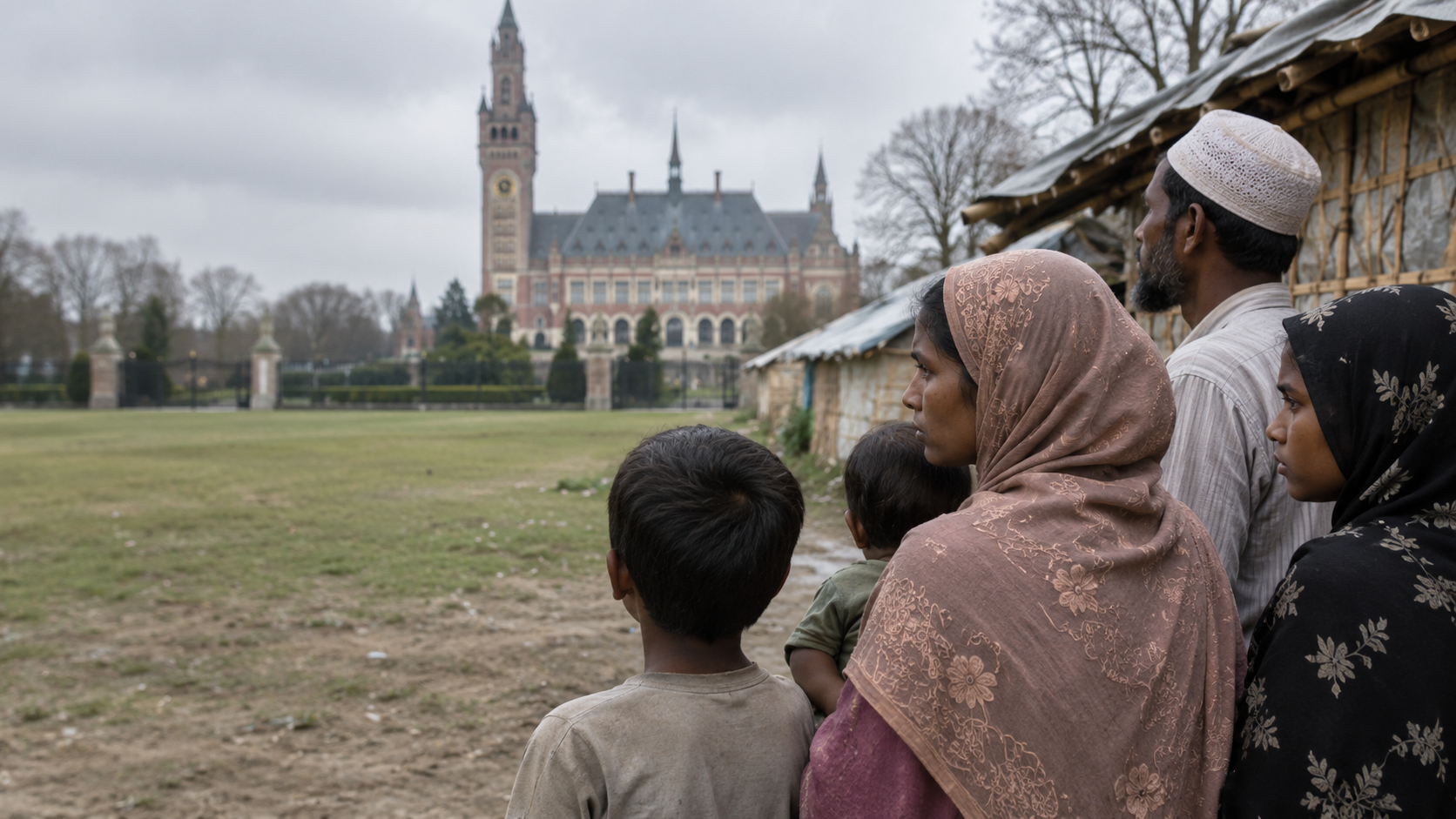 ICJ Myanmar Rohingya Genocide Case: What Comes Next
-
 Kerch Bridge Attack: What Is Confirmed and Unknown
-
 Musk Calls $446 Million Midterm Spending "Pretty Foolish"
-
 Central Florida Flash Flooding Threatens Residents
-
 Alsobrooks, Van Hollen Senate Leadership Dispute
-
 Arrest Reported in Costa Rica Killing of American
-
 Over a Foot of Rain Floods South Florida