Duffy’s $50 Billion FAA Plan Faces a Resilience Test
Duffy’s $50 Billion FAA Plan Faces a Resilience Test
Transportation Secretary Sean Duffy is seeking $50 billion for aviation infrastructure after a nationwide Federal Aviation Administration (FAA) ground stop disrupted air travel. The proposal could support long-delayed modernization, but the incident raised a larger question: Was the disruption mainly a funding problem, or did it expose weaknesses in management, staffing, maintenance, and operational resilience?
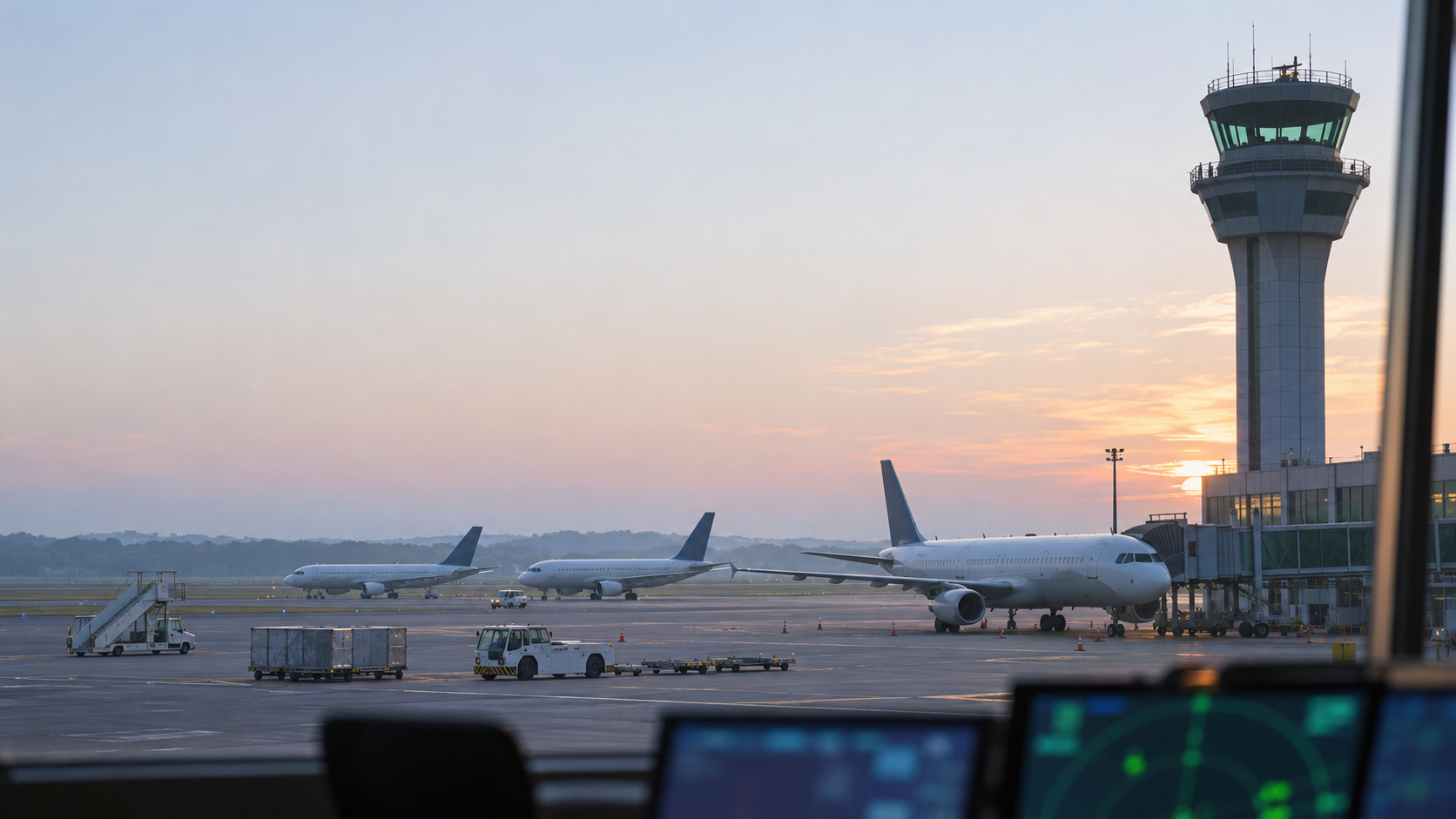
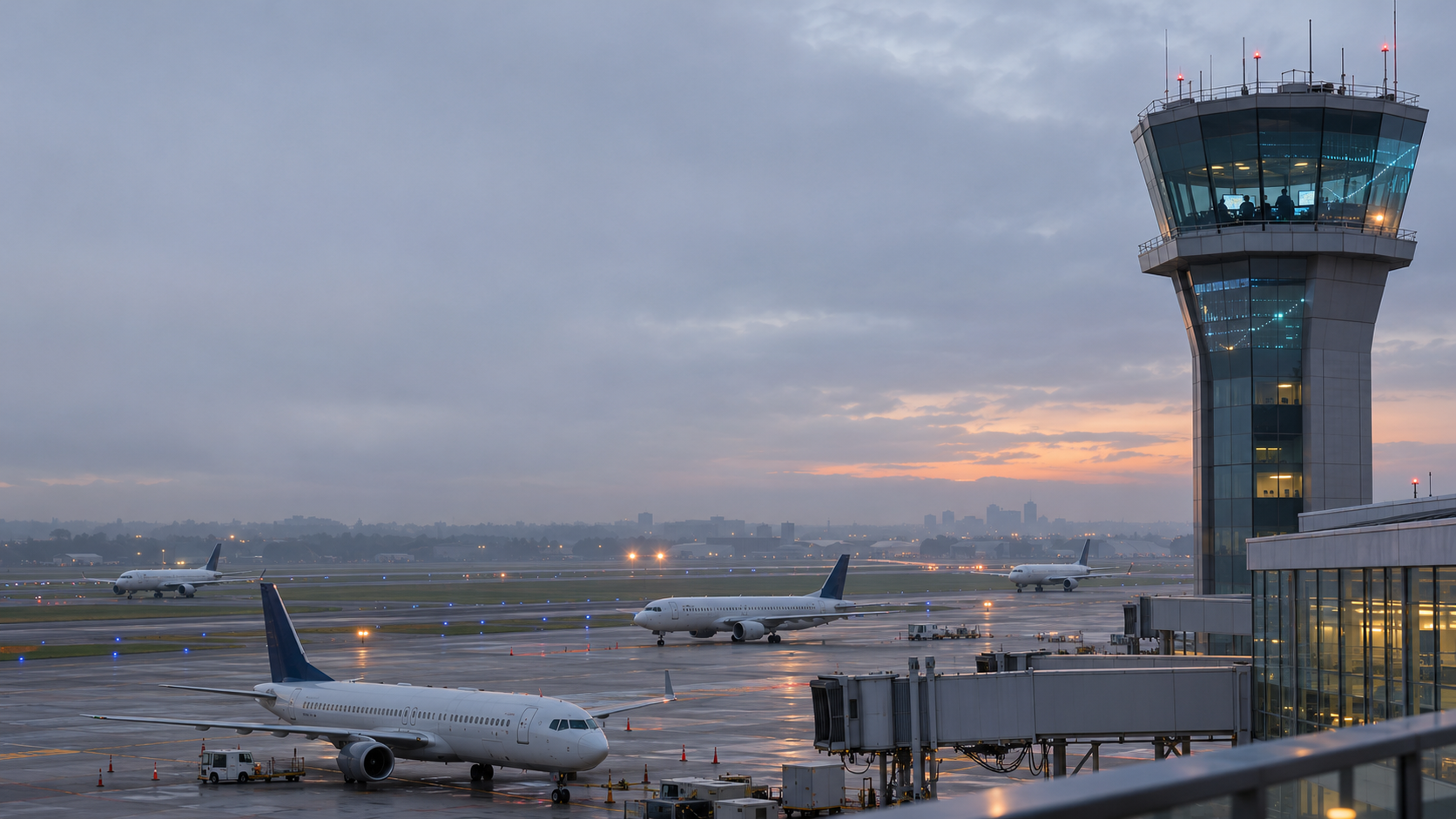
The FAA halted flights for several hours after aviation systems experienced serious problems. Thousands of flights were delayed, many passengers were stranded, and additional cancellations followed after the ground stop ended. Although the restriction was lifted, aircraft, crews, and passengers remained out of position, allowing the disruption to spread through the airline network. Source 3
What Happened During the Ground Stop?
A nationwide ground stop prevents aircraft from departing for affected destinations or operating under normal conditions. Unlike an isolated airport delay, it can affect airline schedules across the country at the same time.
During the disruption, aircraft were held on the ground, departures were delayed, and airlines had to reroute or reschedule flights. Lifting the restriction did not immediately restore normal operations. Airlines still had to coordinate aircraft, crews, gates, baggage, fuel, and passenger connections. Source 9
Duffy said outdated equipment became overloaded and began failing. That statement identifies a reported immediate trigger, but it does not establish the full cause. A complete investigation must determine which systems failed, why they became overloaded, whether warnings existed, and whether backup capabilities worked as designed. Source 5
The distinction matters:
- Immediate technical trigger: Reported equipment overload and failures.
- Underlying vulnerability: Aging infrastructure, limited redundancy, maintenance concerns, or insufficient capacity.
- Systemwide impact: An inability to isolate the problem without disrupting national air travel.
Why Duffy Is Seeking $50 Billion
The proposal is intended to strengthen aviation infrastructure and reduce the risk of another nationwide ground stop. Potential investment areas include:
- Air traffic control technology.
- Communications and surveillance systems.
- Data networks and software.
- Replacement of aging equipment.
- Backup facilities and power systems.
- Cybersecurity.
- Technical staffing and training.
- Emergency response and recovery capabilities.
The final allocation should be confirmed through official agency documents or legislative text. A headline funding figure does not show how much would go to equipment, staffing, facilities, cybersecurity, or oversight.
The case for significant investment is strong. Aviation is national infrastructure, and outdated systems can create consequences far beyond the facility where a failure begins. Preventing repeated ground stops could cost less than managing disruptions involving airlines, airports, businesses, and passengers.
Modernization, however, requires more than purchasing hardware. It also requires compatible software, secure communications, integrated data, testing, certification, training, maintenance, and replacement planning. New systems must work with existing technology during the transition, while controllers and technicians receive adequate training.
That creates a difference between authorizing money and delivering reliability. Operational improvements depend on project management, procurement speed, technical requirements, vendor performance, and agency oversight.
Why Money Alone Is Not Enough
Aging Infrastructure Is Also a Management Challenge
Outdated equipment demonstrates the need for investment, but it may also indicate long-term problems in maintenance, replacement planning, procurement, and oversight. Potential weaknesses include delayed acquisitions, fragmented responsibility, slow approvals, poor project prioritization, and inadequate contingency planning.
Additional funding helps only when those structural problems are addressed. A system may remain vulnerable if an agency cannot replace equipment quickly, fails to rank projects by national risk, or lacks clear ownership when critical systems reach the end of their useful life.
Technology Does Not Create Resilience by Itself
Modern infrastructure and resilient infrastructure are not identical. Modern systems use newer technology; resilient systems can detect problems, contain their effects, continue essential operations, and recover quickly.
Resilience requires layers of protection, including:
- Backup communications.
- Failover systems.
- Independent power sources.
- Alternative control facilities.
- Manual operating procedures.
- Real-time monitoring.
- Trained technical personnel.
- Tested escalation protocols.
A new primary system can still create a single point of failure if it lacks independent backup. A backup system is not useful if it has not been tested under realistic conditions.
Staffing and Expertise Matter
Air traffic systems depend on controllers, engineers, technicians, cybersecurity specialists, managers, and maintenance personnel. These employees monitor performance, identify warning signs, repair failures, manage upgrades, and coordinate emergency responses.
Funding could support recruitment, technical training, controller development, retention, shift coverage, succession planning, and specialized engineering expertise. Hiring alone will not solve the problem. Employees also need clear responsibilities, reliable tools, and managers who act on operational warnings.
Workforce shortages can delay maintenance and modernization because the same specialists may have to keep aging systems operating while installing new ones.
Procurement Can Delay Results
A $50 billion program would likely take years to produce its full effect. The FAA would need to define requirements, select vendors, test and integrate systems, train personnel, and deploy equipment without interrupting daily operations.
Large technology programs can encounter delays when requirements change, systems cannot integrate, vendors underperform, or agencies lack enough staff to oversee contracts. Spending can also become fragmented across projects that do not reduce the most serious risks.
A phased approach would provide stronger control. Each phase should identify a specific risk, a responsible owner, a delivery date, a testing requirement, and a public performance report.
What the Ground Stop Revealed
A Local Failure Can Become a National Crisis
The aviation system operates as a network. Airports, airlines, air traffic facilities, crews, aircraft, and passenger connections depend on one another. When one part loses capacity, other parts absorb the disruption until the network reaches its limits.
That network effect can affect airports in several regions, passenger and cargo operations, aircraft positioning, crew availability, connecting passengers, and baggage delivery. The incident therefore revealed more than a problem with one piece of equipment. It showed how quickly a localized failure can become a national crisis when the system lacks separation, spare capacity, or alternative operating paths.
Communication Is Part of Reliability
Officials must communicate clearly during a ground stop. Passengers need accurate information, airlines need operational instructions, airports need congestion guidance, and Congress needs a reliable timeline.
Changing explanations can create confusion, especially when travelers are deciding whether to go to an airport or rebook a trip. A strong communication framework should explain:
- What failed.
- Which areas remain affected.
- What actions are underway.
- When officials will provide the next update.
Initial explanations may change as investigators learn more, but officials should identify what is confirmed, what remains under review, and why new information changes the assessment.
Recovery Must Address the Aftershock
Lifting a ground stop restores permission to resume operations. It does not instantly restore the schedule. Aircraft may be in the wrong cities, crews may exceed duty limits, gates may remain occupied, and passengers may need new itineraries.
A complete recovery plan should address delayed-flight backlogs, aircraft and crew repositioning, passenger rebooking, baggage recovery, gate and terminal congestion, overnight travelers, ground transportation, and schedule stabilization.
Reports indicated that thousands more flights were canceled Saturday after the initial disruption. Officials also updated their explanation of the national stoppage, adding to questions about the timeline and precise cause. Source 7
How the Funding Could Be Used Effectively
The FAA should prioritize systems whose failure would have the greatest national impact. Projects should be ranked by safety significance, passenger and cargo impact, failure probability, replacement urgency, age and condition, backup availability, and recovery difficulty.
Investment should also build redundancy through backup communications, alternative control facilities, independent power supplies, disaster recovery sites, duplicate network pathways, manual procedures, and geographically separated critical systems.
The government should publish performance measures such as equipment replacement timelines, system availability, mean time to detect failures, mean time to recover, unresolved critical vulnerabilities, emergency-drill completion rates, training completion, and the number and duration of major outages.
Major spending should include independent audits, congressional reporting, public progress updates, clear agency ownership, and corrective plans for missed milestones.
The Central Debate: Investment Versus Reform
The strongest case for Duffy’s proposal is straightforward: critical aviation systems are aging, and replacement cannot be postponed indefinitely. Air traffic control is essential national infrastructure, and repeated failures could impose greater costs than preventive investment.
The strongest argument against treating funding as the complete solution is equally clear: money does not automatically produce better management. New systems can fail if they are poorly integrated, inadequately tested, or unsupported by trained personnel. Procurement delays and weak oversight can leave existing vulnerabilities in place.
The policy question is not simply whether to spend $50 billion. It is whether the government can connect spending to reduced risk, faster recovery, and measurable operational improvements. Funding supplies resources; operational discipline determines whether those resources make the system safer and more reliable.
Conclusion
The FAA halted flights nationwide after a reported failure involving overloaded, outdated equipment. Thousands of flights were delayed, many passengers were stranded, and additional cancellations followed after the ground stop ended. The restriction was lifted, but the airline network needed additional time to recover. Source 9
Sean Duffy’s $50 billion request addresses a real need if the aviation system requires modernization. Replacing aging infrastructure may be essential. But the investment will not prevent another FAA ground stop without better planning, stronger redundancy, adequate staffing, faster procurement, tested recovery procedures, and transparent accountability.
The next aviation crisis will be prevented by reliable systems and effective management together. Spending is necessary. Spending alone is not enough.
Frequently Asked Questions
Why is Sean Duffy seeking $50 billion?
Duffy is seeking $50 billion to strengthen aviation infrastructure and reduce the risk of another nationwide ground stop. The proposal is associated with modernizing outdated equipment and improving FAA operational resilience. The final allocation should be confirmed through official agency or legislative documents. Source 1
What caused the nationwide ground stop?
Duffy said outdated equipment became overloaded and began failing. Reports also indicated that officials updated their explanation of the stoppage. A complete investigation must distinguish the immediate equipment problem from broader issues involving maintenance, capacity, staffing, and redundancy. Source 5
How many flights were affected?
Available reports state that thousands of flights were delayed and that thousands more were canceled Saturday. Final totals can change as airlines update their records, so official FAA and airline figures should be used for a definitive count. Source 7
Why do experts say money is not the main issue?
Experts argue that funding cannot solve management, procurement, staffing, maintenance, emergency planning, and accountability problems by itself. New technology will not prevent another ground stop if the system lacks backup capacity, trained personnel, or effective oversight.
How could the FAA prevent another nationwide ground stop?
The FAA could reduce the risk through targeted equipment replacement, redundant systems, stronger maintenance, workforce investment, tested emergency procedures, rapid communication, and transparent performance reporting.
Will the $50 billion request immediately fix aviation disruptions?
No. Large-scale modernization requires planning, procurement, testing, installation, and training. Its effectiveness will depend on how funds are prioritized and whether the FAA meets measurable implementation and resilience targets.
Related Articles
-
 Jensen Huang Reportedly Open to Nvidia CEO Return
-
 Nvidia Earnings Test AI Demand as Wall Street Retreats
-
 Nvidia Earnings Live: What Wall Street Is Watching
-
 Disney Earnings: What Investors Should Watch
-
 Global Stocks Slide Ahead of Nvidia Earnings
-
 United Airlines Outage Delays Departing Flights
-
 Home Depot Names Richard McPhail CEO After Earnings Beat
-
 What Caused the FAA’s Nationwide Ground Stop?
-
 United Airlines System Outage Resolved, Delays May Continue
-
 Trump Backs Calls to Reinstate Jensen Huang at Nvidia
-
 Chase Banking Outage: Services, Branches, and Safety
-
 US Flight Delays Return to Normal After Travel Chaos
-
 Trump and the Unverified “Bring Jensen Back” Campaign
-
 Trump Weighs Closing AI Chip Loophole Before China Trip
-
 Dow Falls 450 Points as Nvidia Leads AI Stocks Lower
-
 FAA SMART AI and the Ground Stop: What We Know