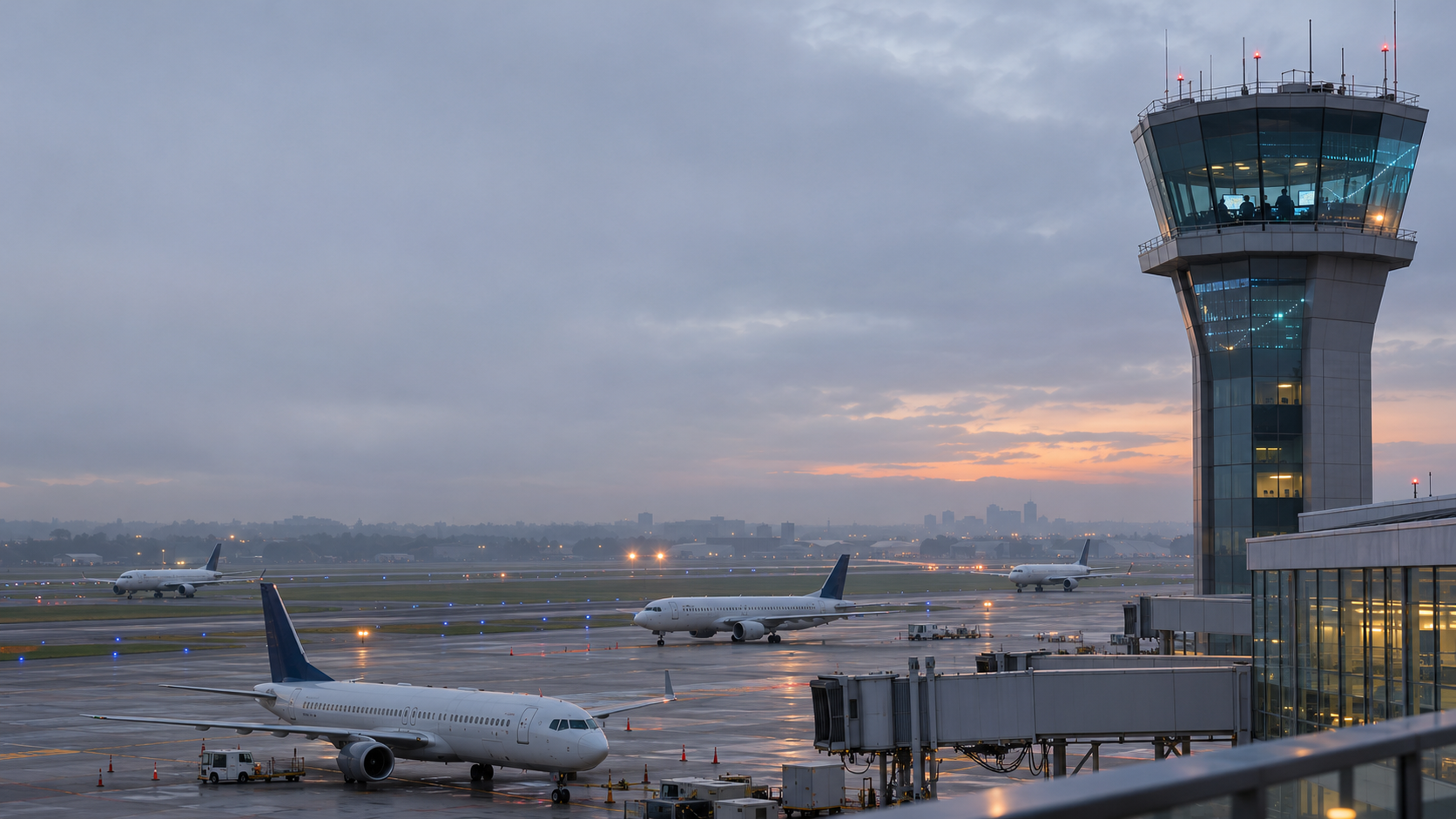
US Flight Delays Return to Normal After Travel Chaos
US Flight Delays Return to Normal After Weekend Disruption
Flight delays and cancellations have returned to more typical levels after a weekend of widespread travel disruption across the United States. The disruption affected airline schedules, airport operations, air traffic management and thousands of passengers.
More than 2,300 flights were canceled during the period covered by USA Today, while many more experienced significant delays (Source 1). The Federal Aviation Administration said airline schedules were returning to normal after a nationwide ground stop and advised travelers to check current flight information (Source 7).
A return to normal does not mean every passenger has reached a destination or every flight is operating on time. Aircraft, crews and travelers can remain out of position after the original disruption ends, creating delays for the rest of the day or into the following day.
What Happened?
More Than 2,300 Flights Were Canceled
USA Today reported more than 2,300 cancellations during the disruption (Source 1). The figure describes cancellations reported during that period and may change as airlines revise records or additional cancellations are counted.
A cancellation removes a flight from the operating schedule. A delay means the flight remains scheduled but departs or arrives later than planned. Cancellations generally create more complex problems because passengers need a new itinerary.
One canceled flight can affect several later flights. Airlines often use the same aircraft and crew for multiple routes. If either cannot reach the next airport, later flights may be delayed, combined or canceled.
A Nationwide Ground Stop Disrupted Schedules
The FAA said schedules were returning to normal after a nationwide ground stop (Source 7).
A ground stop temporarily prevents aircraft from departing, often within a defined area or during a specified period. It can shift arrival times, occupy gates for longer and prevent aircraft and crews from making their next scheduled assignments.
When restrictions are lifted, airlines must still rebuild their schedules and clear the backlog.
High Travel Demand Increased the Impact
Busy travel periods amplify disruptions because flights operate near capacity, airports have fewer open gates and airlines have limited spare aircraft and reserve crews. Later flights can fill quickly, leaving passengers with fewer same-day rebooking options.
High demand did not necessarily cause the original problem, but it increased its consequences. Crowded terminals, customer-service queues and limited hotel availability also made recovery more difficult.
Why Were Flights Delayed or Canceled?
Telecommunications and Aviation-System Failures
The FAA attributed Dallas-area delays to telecommunications failures and outdated aviation systems, highlighting the need for infrastructure modernization (Source 3).
Telecommunications systems support coordination among air traffic facilities, controllers, airports and airlines. When part of the network fails, personnel may need slower backup procedures, and restrictions may remain until reliable communications and traffic-management capabilities are restored.
The Dallas report does not establish that the same problem caused every delay or cancellation nationwide.
A Reported Arkansas Router Failure
The Independent reported that a router in Arkansas disrupted national air traffic systems before operations returned to normal (Source 9).
That explanation remains a reported claim, not independent confirmation that the router was the sole cause of the wider disruption. A localized failure can have broader effects when systems are interconnected or backup capacity is limited.
Aging Infrastructure Increased Operational Risk
Legacy aviation systems can complicate prevention and recovery. They may require specialized maintenance, integrate poorly with newer technology or depend on limited replacement parts. Modernization can involve network architecture, software, monitoring, cybersecurity, staffing, testing, maintenance and geographically separate backup systems.
The weekend disruption may have involved several interacting factors, including traffic restrictions, aircraft positioning, crew availability, maintenance, weather and airport congestion.
How the FAA and Airlines Responded
The FAA manages national air traffic and can impose ground stops, limit arrivals, adjust routes or introduce other restrictions to maintain safe operations.
Recovery typically involves these stages:
- Traffic restrictions are imposed while the problem is assessed.
- Departures gradually resume when systems can support safe operations.
- Airlines reposition aircraft and crews and rebuild schedules.
- Controllers and airport operators monitor residual delays.
The FAA’s statement that schedules were returning to normal describes broader system conditions. It does not guarantee that every flight will depart on time (Source 7).
Airlines may reassign aircraft, reposition crews, rebook passengers, combine or cancel flights and manage baggage and gate backlogs. Delays can continue after the original problem is fixed because an aircraft or crew may still be unavailable.
What Travelers Should Do
Check Flight Status Before Leaving
Verify the flight number, departure time, terminal and gate through the airline’s official website or mobile application. Check again before leaving home and after arriving at the airport.
Airport departure boards, text alerts and email notifications provide useful updates. Third-party trackers are supplemental; the airline’s reservation system and the airport’s official information should guide itinerary changes.
Prepare for Changes
Allow extra time for check-in, security screening and gate changes. Keep identification, medication, chargers, valuables and important documents in carry-on luggage. Save boarding passes and reservation details offline.
Make a Rebooking Plan
If a flight is canceled, contact the airline through its application, website, telephone line, airport desk or official social-media channel. Ask about:
- The next available confirmed flight
- Same-day changes
- Partner-airline rebooking
- Refunds
- Hotel or meal assistance
- Baggage support
Keep cancellation notices, receipts, screenshots and records of conversations with airline representatives.
Contact hotels, rental-car companies, tour operators and event organizers when arrival times change. Review travel-insurance terms before paying for alternative transportation, and do not assume that every expense will be reimbursed.
What Passengers Can Expect
Airlines generally provide rebooking options under their contracts of carriage and applicable consumer-protection rules. Options may include a replacement flight, a partner-airline itinerary, a travel credit or a refund when the passenger declines the replacement arrangement.
Exact rights depend on the airline, ticket conditions, route and cause of the disruption. Assistance may differ when the problem involves an airline-controlled issue, severe weather or an FAA restriction.
Hotel, meal, ground-transportation and baggage policies also vary. Ask the airline for specific terms and keep documentation for insurance claims or reimbursement requests.
Why Modernization Matters
The reported Dallas telecommunications failures demonstrate how communications infrastructure supports routine aviation operations (Source 3).
Modern systems can improve redundancy, failure monitoring, automatic failover, information sharing, maintenance visibility and recovery speed. Resilient networks also require geographically separated infrastructure and regularly tested backups.
Safety remains the reason the FAA may restrict traffic during a system failure. Modernization should improve reliability and safe recovery rather than keep flights moving regardless of conditions.
Key Takeaways
- Flight delays and cancellations returned to more typical levels after the disruption.
- USA Today reported more than 2,300 cancellations during the covered period.
- The FAA said schedules were recovering after a nationwide ground stop.
- Telecommunications failures and outdated systems were cited in connection with Dallas-area delays.
- A reported Arkansas router failure remains an attributed claim rather than a confirmed sole cause.
- Travelers should check directly with their airline before leaving for the airport.
- Normal national operations do not eliminate individual delays, cancellations, missed connections or baggage problems.
FAQ
Are flight delays and cancellations back to normal?
They have returned to more typical levels, but individual flights may remain delayed while airlines reposition aircraft, crews and passengers.
How many flights were canceled?
USA Today reported more than 2,300 cancellations. The total may change as records are revised or additional cancellations are counted.
What caused the disruption?
Reports identified a combination of air traffic, telecommunications and aviation-system problems. The FAA linked Dallas delays to telecommunications failures and outdated systems, while another report attributed wider effects to an Arkansas router failure. The latter remains a reported claim unless independently confirmed.
How can I check my flight status?
Use the airline’s official website or mobile application, review text and email alerts, and check the airport’s departure information. Recheck shortly before leaving because schedules can change during recovery.
What should I do if my flight is canceled?
Contact the airline about rebooking or a refund. Ask about same-day alternatives, partner-airline options, hotel or meal assistance and baggage arrangements. Keep records of notices, conversations and expenses.
Can my flight be delayed after the FAA says operations are normal?
Yes. A flight may still be affected by aircraft positioning, crew availability, airport congestion, weather, maintenance or a missed connection.