Army Delays Planned Detonation of Chemicals in Iowa
Army Delays Planned Detonation of Chemicals in Iowa
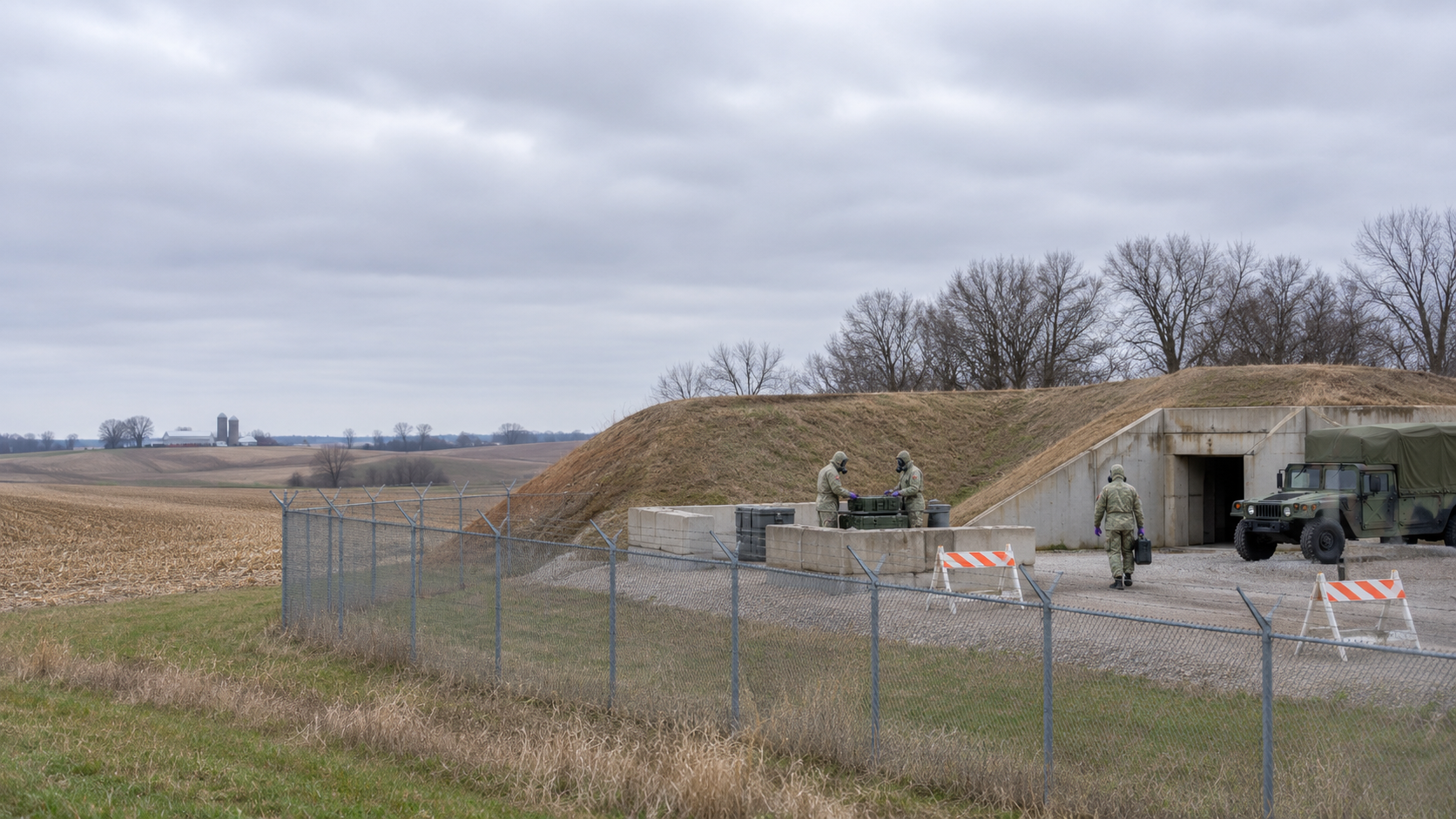
The U.S. Army planned to use emergency provisions to destroy approximately five tons of bomb-making chemicals in Iowa, but safety and environmental concerns delayed the proposed detonation. Reports identified lead azide among the materials, a sensitive initiating explosive used in explosive systems.
The planned operation raised concerns about blast hazards, airborne lead dust, soil contamination, water pollution, and public exposure. Officials reportedly delayed the detonation while evaluating a safer disposal method. Two environmental agencies also sought an emergency court stay to block the operation.
The available reporting does not establish whether a court granted the request, whether the chemicals have been moved, or when another disposal operation might occur. The material has not been reported as detonated.
What the Army Planned to Do
The reported operation involved destroying chemicals associated with explosive production, not conducting a weapons test. One report identified lead azide, while PBS reporting described the total quantity as approximately five tons of bomb-making chemicals Source 7.
The supplied sources do not provide a complete chemical inventory, the exact Iowa location, the Army facility involved, the proposed date, the blast design, or the planned containment system. Those details are important because disposal risks depend on the material’s composition, quantity, physical condition, storage environment, and proximity to populated areas and waterways.
Why Emergency Provisions Were Considered
Emergency provisions can allow agencies to act quickly when hazardous materials present an urgent risk. Officials may consider accelerated action when chemicals are unstable, difficult to store, or unsafe to transport through ordinary procedures.
The supplied reports do not identify the specific emergency authority, statute, administrative order, or legal rationale behind the proposed operation Source 1. Emergency authority does not automatically eliminate environmental safeguards, public-safety duties, or judicial oversight.
Risks Associated With Lead Azide
Lead azide is an initiating explosive designed to start a stronger explosive reaction. Its sensitivity makes storage, transport, handling, and disposal matters for qualified hazardous-material and explosive-ordnance professionals.
A detonation might reduce the immediate danger from stored explosive material, but it could create additional hazards, including:
- Blast pressure and flying debris.
- Fire and heat effects.
- Airborne dust and chemical particles.
- Lead contamination in soil.
- Pollution of drainage systems or surface water.
- Residual explosive or chemical byproducts.
- Long-term cleanup and monitoring requirements.
The actual risk would depend on site conditions, containment, weather, distance from populated areas, the condition of the material, and the monitoring and cleanup plans. The supplied sources do not include a technical risk assessment, dispersal model, air-monitoring results, or environmental sampling data.
Safety Concerns Delayed the Operation
Multiple supplied summaries reported that the Army delayed the planned detonation after safety concerns were raised Source 3. Officials were expected to assess a safer disposal approach before proceeding.
PBS reporting described concerns about a potential lead-dust cloud if the chemicals were detonated Source 7. This describes a potential hazard, not a confirmed release or contamination event.
The sources do not provide a modeled dispersal area, expected lead concentrations, exposure estimates, evacuation boundaries, air-monitoring plans, or soil and water sampling results. It is therefore not possible to determine how far contamination might travel or what exposure levels residents would face.
Environmental Agencies Sought a Court Stay
Two environmental agencies reportedly sought an emergency court stay to block the planned detonation of lead azide Source 5.
A court stay temporarily pauses government action while a judge reviews the dispute. It does not necessarily resolve the case’s merits. The supplied information does not identify the agencies or establish whether the court granted, denied, or continued the request.
Potential legal issues could include environmental review, public-health protections, emergency authority, consideration of safer alternatives, resident notification, and monitoring or cleanup commitments. These are possible issues, not confirmed findings from the supplied reports.
What Happens Next?
Officials are expected to evaluate a safer disposal method before proceeding Source 3. Possible approaches include specialized treatment, controlled removal to an authorized facility, stabilization, secure storage, or a redesigned operation with stronger containment and monitoring. None of these alternatives has been confirmed as the Army’s plan.
Authorities should clarify whether the operation is delayed, canceled, or rescheduled. Public information should address the material and estimated quantity, location, safety perimeter, notification procedures, protective instructions, environmental monitoring, cleanup responsibilities, and any compensation process.
Residents should follow official emergency-management and public-health guidance. They should not approach the site, handle suspected material, or investigate the chemicals independently.
Confirmed and Unclear Details
The supplied reporting indicates that the Army planned to destroy bomb-making chemicals in Iowa, that one report described approximately five tons of material, and that lead azide was identified. The reports also indicate that safety and environmental concerns delayed the operation and that two environmental agencies sought an emergency court stay.
The sources do not establish the exact location, the identity of the agencies, the specific emergency authority, the planned date, the final court decision, the complete chemical composition, the Army’s technical risk assessment, the alternative disposal method, or the scope of environmental monitoring.
Conclusion
The U.S. Army’s proposed Iowa detonation of bomb-making chemicals was delayed after safety and environmental concerns emerged. Reports identified approximately five tons of material, including lead azide, and described concerns about a potential lead-dust cloud and other public-health effects.
The supplied reporting does not confirm that the material was detonated. It also does not identify the final disposal plan, a new operation date, or the exact location. The next developments to watch are the Army’s revised proposal, any court ruling, public-health guidance, environmental monitoring plans, and official notices to affected communities.
Frequently Asked Questions
Why did the Army plan to detonate chemicals in Iowa?
The supplied reports indicate that the Army planned to destroy bomb-making chemicals, including lead azide, as part of a disposal operation. They do not explain why detonation was selected over other methods or provide the complete legal and technical justification.
How much material was involved?
One supplied report described approximately five tons of bomb-making chemicals Source 7. The sources do not provide a complete inventory or confirm that all five tons consisted of lead azide.
Was the detonation completed?
The supplied reports say the operation was delayed after safety concerns were raised Source 9. They do not indicate that the material was detonated or provide a new date.
What risks concerned residents?
Reported concerns included a potential lead-dust cloud, blast effects, airborne particles, soil contamination, water contamination, and exposure near the disposal site. The sources do not provide a confirmed contamination map or exposure estimate.
Why did environmental agencies seek a court stay?
The agencies reportedly sought to pause the planned detonation because of environmental and public-health concerns Source 5. The available information does not identify the agencies or state whether the court granted the request.
What happens next?
Officials are expected to evaluate a safer disposal method. The next developments should include the Army’s revised plan, any court ruling, public-safety guidance, and environmental monitoring details.
Related Articles
-
 COP31 Climate Talks End Without Agreement
-
 Suspected Drone Attack Hits Russian Ship Near Benghazi
-
 Ukraine Threatens Russia’s Crimea Supply Lifeline
-
 Genocide Rulings: Legal Significance and Global Impact
-
 Democrats Reportedly Win Largest House Majority Since 1992
-
 ICE Airport Detention Video Sparks Seattle Protests
-
 Chicago Park Rat Infestation: What the Evidence Shows
-
 COP31: Six Key Takeaways on Climate Action
-
 Russian Vessel Hit by Suspected Drone in Benghazi
-
 Can Trump Deliver Security for Ukraine?
-
 Lebanese Villagers Return to Damaged Homes
-
 Chuck Hubbard Victory: What Reports Confirm, What's Unclear
-
 Bay Area Flood Threat: Airport and Travel Safety Guide
-
 El-Sayed’s View on Private Insurance Under Medicare for All
-
 U.S. Army Iowa Lead Azide Disposal Plan Faces Court Stay
-
 COP31 Talks Collapse in Turkey Over Fossil Fuels