Why Police Departments Keep Posting Corny “GTA VI” Content
Why Police Departments Keep Posting Corny “GTA VI” Content
Police departments are borrowing the visual language of Grand Theft Auto VI for social media posts. The results often look less like clever satire than institutional content teams trying to force their way into a cultural moment.
The problem is not simply that police departments mention a video game. Government agencies can use popular culture to communicate with the public. The problem begins when a department adopts a game’s posters, slang, crime imagery, or trailer-style presentation without a clear public-service purpose. The post may earn attention, but attention is not the same as trust, clarity, or accountability.
The trend raises three questions: Why are law-enforcement agencies reaching for GTA VI references? Why does the content feel so forced? What does the strategy reveal about how institutions compete for attention online?
A WIRED report describes police promotion of low-quality GTA VI-related content and characterizes it as “extremely corny.” The broader pattern matters even when individual posts differ: police accounts are adopting entertainment aesthetics to make official communication feel current.
What Police Departments Are Doing With “GTA VI” Content
Borrowing the Game’s Visual Language
The Grand Theft Auto brand has a recognizable visual grammar: character-poster layouts, dramatic portraits, bold typography, exaggerated captions, crime-related framing, and promotional language associated with major game trailers.
A police social media account can imitate that grammar without using official game assets. A department might present an arrest announcement like a character reveal, frame a suspect as a “wanted” figure, or package a traffic-enforcement campaign as if it were a game promotion. Florida-inspired imagery can make the connection more immediate because GTA VI is associated with the fictional state of Leonida, a satirical version of Florida.
The format works because viewers recognize the reference quickly. A color palette, caption style, or joke about crime may be enough to signal the franchise. These posts can take several forms: original parodies, graphics using copyrighted imagery or branding, or ordinary police announcements that mention the game in text. Those differences matter. A recognizable joke is not automatically authorized use, and a post that resembles a game advertisement can create confusion about its source.
Turning Routine Police Messaging Into Entertainment
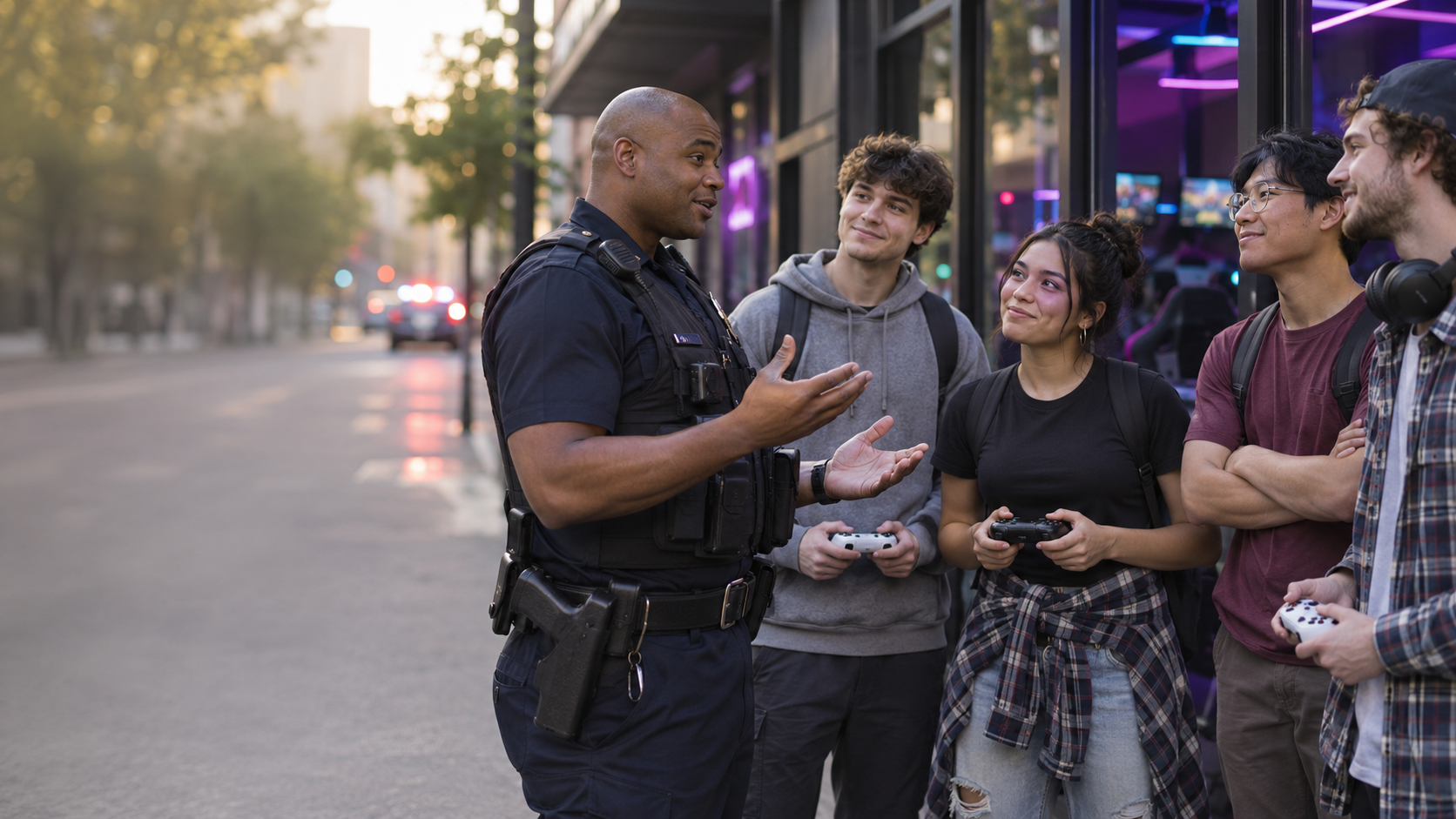
Police accounts regularly announce arrests, traffic campaigns, community events, safety reminders, and warnings about criminal behavior. Social media teams increasingly package these messages as memes, short videos, or pop-culture references.
The incentive is straightforward. Gaming references can attract younger audiences, generate comments, and encourage users to share content beyond the department’s existing followers. A routine announcement may receive little attention in formal language but perform better when presented through a familiar internet format.
That strategy can make an agency seem more approachable. Humor may reduce the distance between a department and the people it serves, and a creative post can make a practical warning easier to remember.
The risk is that entertainment framing can trivialize the underlying subject. An arrest is not a fictional mission. A victim is not a supporting character. A serious investigation should not become a promotional asset simply because a gaming reference increases engagement.
Why the Posts Feel “Extremely Corny”
The audience discomfort usually comes from a mismatch between institution and culture.
Internet users may see police accounts adopting youth slang after a meme has already peaked. They may notice captions that sound copied from marketing templates rather than written by people who understand the community. They may also reject the combination of playful crime imagery and real-world law enforcement.
The difference between intentional parody and manufactured virality is important. A self-aware joke can acknowledge the absurdity of an institution using a video-game format. A brand account that treats the reference as a shortcut to relevance may appear to be wearing internet culture as a costume.
“Corny” describes an audience reaction. It does not, by itself, establish a legal violation or ethical breach. A post can be embarrassing without being unlawful. It can also be popular while raising serious concerns about privacy, due process, or the treatment of victims.
Why Police Are Chasing the “GTA VI” Moment
The Game’s Cultural Visibility
GTA VI is one of the most anticipated entertainment releases in years. That visibility creates an opportunity for unrelated organizations to attach themselves to the conversation.
The game’s title functions as a search term, a meme reference, and a cultural signal. An account that includes “GTA VI” may reach people who would never search for a local police department. The reference can also make a post attractive to news sites and larger social accounts that track unusual institutional behavior online.
This does not mean every police department is participating in a coordinated campaign. More likely, social media teams observe successful posts and imitate the format. Online trends spread through repetition, especially when they appear to produce easy attention.
The relevant point is cultural visibility. GTA VI is prominent enough that many organizations may view it as a useful attention hook.
Social Media Rewards Recognition
Platforms reward content that produces immediate reactions. A familiar reference can generate recognition before a user reads the full caption, leading to more comments, reposts, search visibility, media coverage, and followers.
Those outcomes can make a post look successful internally. A communications team may report reach, impressions, or engagement as evidence that its strategy worked.
But attention does not prove effective public communication. A post can receive thousands of reactions while leaving viewers confused about what happened. It may spread because people are mocking it, or make a department more recognizable without making it more trusted.
Public-service communication should measure more than visibility. Did residents understand the safety instruction? Did the post direct them to useful resources? Did it avoid misleading language? Did it improve access to information? Likes cannot answer those questions.
The “Relatable Police” Strategy
Police departments, like other public institutions, have moved from formal announcements toward personality-driven social media. The desired image is approachable, humorous, culturally aware, and comfortable with online communities.
That shift reflects a broader change in public communication. Residents no longer encounter agencies only through press conferences, official websites, or local news. They see them in short videos, comment sections, memes, and algorithmic feeds.
The strategy can backfire when an institution uses a popular reference as a costume. Police departments hold legal authority, carry weapons, make arrests, and exercise power over ordinary people. That power imbalance makes audiences judge their attempts at humor more critically than they might judge a private brand.
An awkward corporate account may be annoying. An awkward police account can appear to be using state authority to chase attention.
The Disconnect Between “GTA” and Real-World Policing
A Crime Game Is Not a Police Public-Relations Template
The Grand Theft Auto series uses crime, corruption, violence, policing, media, and politics as material for satire. Players enter a fictional world built around criminal escapism and exaggerated social criticism.
Police departments operate in a different environment. Their announcements concern real arrests, real victims, real investigations, and real consequences. The fictional game invites players to create chaos. A law-enforcement agency is responsible for reducing harm and explaining its actions to the public.
Borrowing the game’s visual style can blur those roles. A department may intend to make an arrest announcement memorable, but the format can make the event appear to be entertainment. It can also suggest that policing is a game of characters, missions, and scorekeeping.
The contradiction becomes sharper because Grand Theft Auto has long mocked institutions, including law enforcement. When police accounts borrow its aesthetics, they may be using the language of a franchise that was never designed to promote them.
The Risk of Turning Arrests Into Content
Arrest announcements require precision. Agencies should distinguish allegations from established facts and avoid language that implies guilt before a court reaches a decision.
Entertainment-driven presentation creates several risks:
- Humiliating suspects for the sake of engagement.
- Overshadowing victims and their needs.
- Simplifying complex investigations.
- Encouraging public assumptions of guilt.
- Revealing sensitive information.
- Exposing minors or vulnerable people.
- Creating complications in ongoing cases.
A meme cannot replace neutral wording. If an arrest is announced, the public needs verified information, relevant charges, legal status, and a clear explanation of why the information matters.
Departments must also follow applicable privacy rules, professional standards, and due-process requirements. A post’s humor or visual effectiveness does not remove those obligations.
Humor Can Build Trust—or Damage It
Humor has a place in public communication. A department may use a light joke for a low-stakes safety reminder, a community event, or a basic traffic warning. Clear, self-aware parody can also help an agency communicate without pretending that every post is a formal statement.
The subject and tone must match. Humor is more dangerous when a post concerns a death, serious injury, use of force, domestic violence, sexual violence, a missing person, or an active investigation. A joke aimed at a marginalized group can cause additional harm and undermine the department’s duty to serve the entire community.
Trust comes from transparency and accountability, not from sounding current. A police account does not become trustworthy because it uses the same meme format as a gaming community.
“GTA VI” as a Political and Satirical Reference
Polygon’s analysis argues that the GTA VI trailer reflects a change in Rockstar Games’ political approach compared with earlier entries in the series. The analysis does not constitute a formal statement of Rockstar Games’ complete ideology. The trailer remains open to interpretation.
That context matters because the franchise is not politically neutral in the way a generic visual template might be. Its imagery carries associations with institutional criticism, media spectacle, corruption, and social absurdity. When a police department uses that imagery, the reference can be read as parody, promotion, criticism, or accidental self-satire.
Earlier GTA games became known for broad satire directed at American culture, politics, consumerism, celebrity, and institutions. Today, audiences encounter satire through a more polarized and accelerated media system. A joke may leave its original context within minutes and become a political statement, promotional tool, or subject of online criticism.
The central irony is simple: a franchise known for mocking institutions is being used by institutions to promote themselves. A department may intend to control the joke by adapting the format. Instead, the post may become the joke.
Why the Trend Keeps Spreading
Virality Encourages Imitation
The cycle is predictable. One unusual post attracts attention. News coverage increases its reach. Other departments notice the response and reproduce the format. The reference then becomes more common and less authentic.
Copying is easy because the template is recognizable. A communications team does not need to build a new visual language. It can adapt an existing one and attach it to an arrest, warning, or campaign.
Repetition eventually exposes the strategy. What first appears spontaneous begins to look like an effort to exploit a trending keyword.
Departments Compete for Attention
Public-sector communications teams face pressure to demonstrate reach and engagement. Viral posts can become informal performance metrics, even when those metrics do not reflect public-safety outcomes.
Attention-driven communication may prioritize reactions over clarity, personality over information, and novelty over long-term trust. A department may celebrate a post because it outperformed a routine announcement without asking whether the audience understood the message or viewed the agency more favorably.
The better standard is public-service value. A post should help residents navigate an emergency, avoid a scam, understand a traffic change, access a resource, or evaluate verified information.
Internet Culture Moves Faster Than Institutions
Internet humor changes quickly. A reference that seems current to an institutional team may already feel dated to its audience. Late adoption, incorrect slang, overexplaining, and forced enthusiasm all expose the gap.
The deeper problem is treating online communities as marketing demographics rather than participants. Authentic communication requires context: understanding why a reference matters, how people use it, and what changes when an institution adopts it.
A department cannot manufacture familiarity by inserting a game title into a caption.
What Police Social Media Should Do Instead
Lead With Useful Information
Cultural references should support a clear public-service purpose. Departments should prioritize:
- Emergency instructions.
- Safety guidance.
- Scam warnings.
- Traffic updates.
- Weather information.
- Community resources.
- Explanations of public procedures.
If a GTA VI reference helps people notice a safety message, it should remain secondary to that message. The information must still be understandable without recognizing the joke.
Avoid Exploiting Serious Cases for Engagement
Posts involving arrests or investigations should use precise, neutral language. Agencies should avoid declaring guilt, humiliating suspects, exposing confidential information, or turning sensitive cases into entertainment.
A department should explain the public-safety relevance of an announcement rather than treating an arrest as a trophy. Communications and legal teams should review high-risk posts where appropriate, especially when minors, victims, ongoing investigations, or protected information are involved.
Let the Audience Decide Whether the Joke Works
Restraint is a communication skill. Departments should not force slang, manufacture viral moments, or respond defensively when users criticize a post.
Self-awareness can reduce institutional embarrassment, but it cannot solve every mismatch. Some entertainment properties are simply not appropriate branding opportunities for a police agency.
Conclusion: The Corniness Is the Symptom
Police use of GTA VI references reflects a larger shift in institutional communication. Departments are competing in an attention economy where recognition, novelty, and humor can spread faster than formal public information.
The content feels awkward because copying entertainment aesthetics does not automatically create authenticity. A police department remains a government agency with legal authority and public responsibilities. It cannot become a gaming community by reproducing a poster style or adding a meme caption to an arrest announcement.
The trend also exposes the irony of institutions borrowing imagery from a franchise associated with satire and institutional criticism. The attempt to control a popular reference can create a new joke at the institution’s expense.
Police departments can use popular culture carefully. The reference should support accurate, useful, and respectful communication. Public-service value must come before virality. A meme cannot replace transparency, fairness, due process, or accountability.
FAQ
Why are police departments using “GTA VI” references?
Police departments may use GTA VI references to reach younger audiences, increase engagement, and make routine public-safety messaging feel familiar. The strategy can attract attention, but it may appear forced when the reference serves no clear informational purpose.
What makes police “GTA VI” content seem corny?
The content can seem corny when institutions copy gaming language, visual styles, or memes without understanding the culture behind them. The mismatch between a fictional crime game and real-world law enforcement can make the posts feel especially performative.
Is it appropriate for police to use video-game memes?
It can be appropriate for low-stakes outreach if the post is accurate, respectful, and useful. Agencies should avoid using memes to trivialize arrests, victims, deaths, investigations, use of force, or other serious matters.
What does GTA VI’s political approach have to do with the trend?
Polygon’s analysis argues that the GTA VI trailer signals a change in Rockstar Games’ political approach compared with earlier entries. That context matters because police departments are borrowing imagery from a series known for satire and institutional criticism, creating tension between the source material and the institutions using it.
Do viral police posts improve public trust?
High engagement does not prove increased public trust. A post can receive attention while confusing audiences, appearing exploitative, or damaging credibility. Trust depends more on accurate information, transparency, fairness, and consistent accountability.
Can these posts create legal or ethical problems?
They can create risks involving copyright, privacy, defamation, due process, and the treatment of suspects or victims. Departments should verify facts, avoid prejudging cases, protect sensitive information, and ensure that entertainment references do not obscure public-service responsibilities.
Related Articles
-
 GTA 6 Live Updates: Sales, Viral Clips and Leonida Secrets
-
 GTA 6 First Person, DLSS 5, and 60 FPS Explained
-
 Google Is Phasing Out the Nest App: What Comes Next
-
 Clicks Communicator Supply Issue Is Not About RAM
-
 GTA VI PC Requirements: Expected RAM, GPU, and CPU
-
 GTA VI’s Reported $3.79B Debut Remains Unverified
-
 iPhone Air 2 Dummy Shows Possible Dual-Camera Design
-
 Why Signal Blocks Screenshots on iPhone and Android
-
 Valve Warns Steam Machine Prices Could Rise
-
 How to Stream GTA 6 on iPhone, iPad, or Mac
-
 GTA VI: A Visual Tour of Its Fictional Miami
-
 GTA 6 Reportedly Made $3.79 Billion in One Day
-
 Apple Black Friday Deals: AirPods, MacBooks and More
-
 GTA 6 Police Warn Fans to Keep Crime in the Game
-
 Google Assistant May Leave Nest Speakers in 2027
-
 GTA 6 Release Updates: Reviews, Memes and Leonida