See the 2025 Leonid Meteor Shower Before Dawn
See the 2025 Leonid Meteor Shower Before Dawn
The Leonid meteor shower returns every November with fast, bright streaks across the night sky. In 2025, the shower is expected to peak around November 15–16, although Leonid meteors may appear for several nights before and after the maximum.
The best viewing usually comes after midnight and before dawn, when Leo is higher in the sky and Earth’s nighttime side faces into the stream of debris left by Comet 55P/Tempel-Tuttle Source 7.
The Leonids are famous for the extraordinary meteor storm of 1833. That display helped launch the modern scientific study of meteor showers, earning the Leonids the nickname “the shower that started it all.”
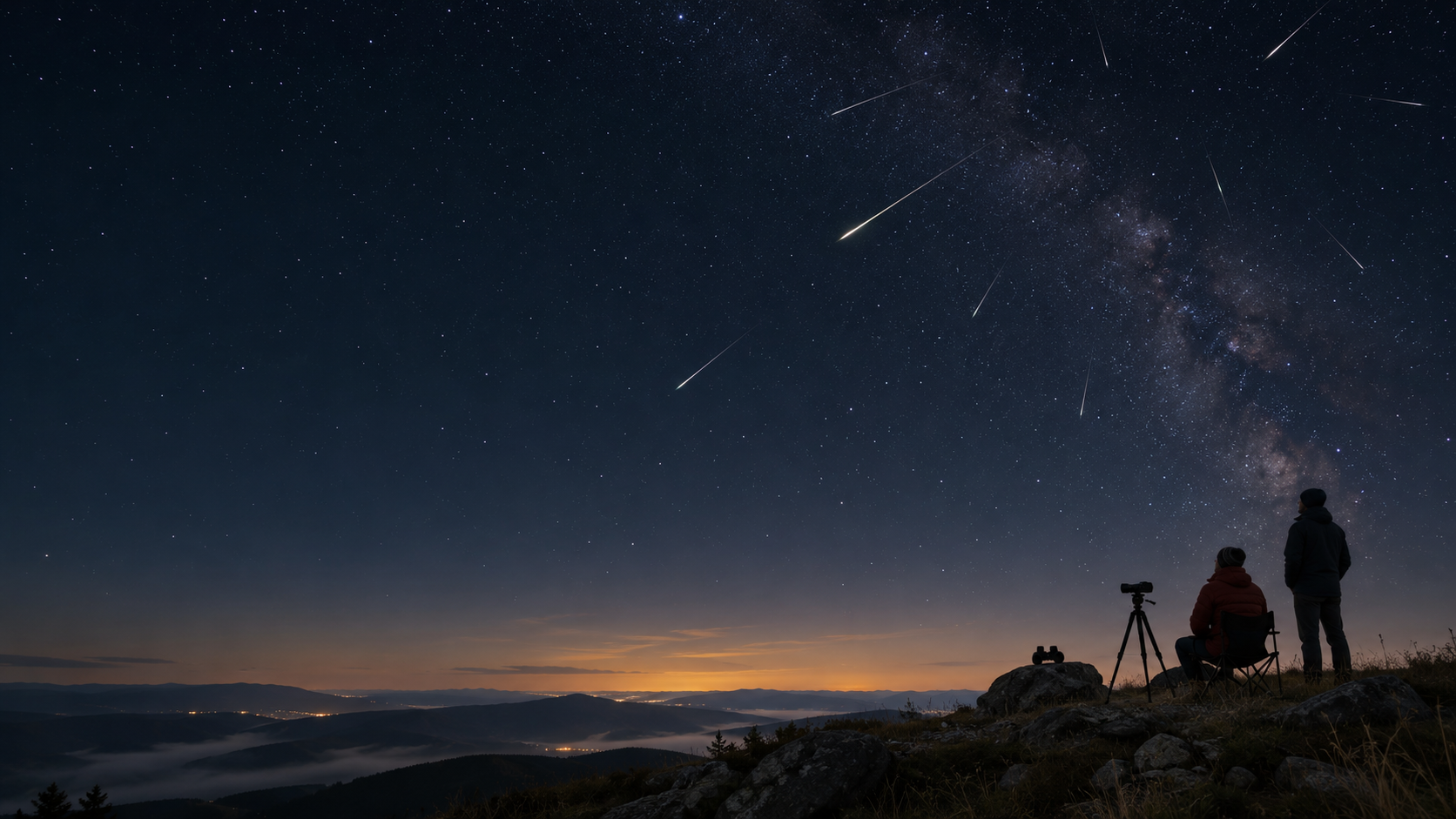
For the best chance of seeing meteors, leave bright city centers, find an open view of the sky, check the forecast, and allow your eyes at least 20–30 minutes to adjust to darkness. No telescope is necessary.
When to Watch the Leonids
Peak dates and viewing window
The 2025 Leonids are expected to peak around November 15–16. Activity is not limited to one night, but rates generally decline farther from the predicted maximum Source 7.
Three periods matter:
- The activity period: The weeks when Earth passes through the Leonid debris stream.
- The peak: The short interval when the expected hourly rate is highest.
- The best local viewing hours: Usually the pre-dawn hours, when Leo is higher and the sky is darkest.
Arrive before midnight, set up in darkness, and continue watching into the hours before dawn if conditions remain clear. Early-evening viewing is possible but usually less productive.
The best time of night
The Leonids are generally strongest after midnight. During the hours before sunrise, Earth rotates into the direction of its orbital motion and encounters more incoming particles. The shower’s radiant also rises higher as the night progresses.
The radiant is the point from which the meteors appear to originate. For the Leonids, it lies in Leo. When Leo is low on the horizon, some meteors remain hidden below the horizon. As Leo rises, more of the debris stream becomes visible.
How many meteors should you expect?
Published meteor rates describe ideal conditions. They assume dark skies, a clear horizon, excellent visibility, and a high radiant. They do not guarantee that every observer will see the same number.
Your actual count depends on:
- Light pollution.
- Moon brightness.
- Cloud cover, haze, and humidity.
- Leo’s altitude above the horizon.
- How much sky is visible.
- How long you remain outside.
- Whether you watch continuously or check a phone.
An annual Leonid display may produce only occasional meteors from an urban location. Under dark rural skies, the experience can be much better. Rare Leonid storms have produced extraordinary rates, but a historic storm is not expected every year.
Where to Watch the Leonids
Choose the darkest practical location
City lights erase faint meteors first. Move away from downtown districts, streetlights, stadiums, shopping centers, parking lots, and brightly lit homes whenever possible.
Good options include:
- Rural roads with safe pull-off areas.
- Public parks that permit nighttime access.
- Designated dark-sky locations.
- Open countryside away from direct lighting.
- Private property with permission.
Check opening hours, access rules, wildlife warnings, and local regulations before leaving. A dark location is useful only if it is safe and legally accessible.
In North Texas, observers can improve their chances by driving beyond the strongest Dallas–Fort Worth sky glow and avoiding views toward the brightest part of the metropolitan area. A safe site with an open horizon will reveal more meteors than an urban neighborhood Source 1.
The same principle applies elsewhere. Use a light-pollution map to compare nearby rural areas, then confirm that overnight observation is permitted.
Find a wide, unobstructed view
Choose a site with minimal trees, buildings, hills, and nearby lights. A reclining chair, blanket, or sleeping bag makes it easier to watch the sky for an hour or more.
Do not look only at Leo. Meteors can appear anywhere across the sky, and the brightest or longest trails may occur far from the radiant. Face the darkest part of the sky while keeping a broad view that includes Leo if possible.
How to Find the Leonid Radiant
Leo is recognizable by its backward question-mark pattern, known as the Sickle of Leo. The bright star Regulus marks part of the pattern. A star chart or planetarium app can help you locate it.
The radiant is a perspective effect. Leonid particles travel along roughly parallel paths, but from Earth those paths appear to converge near Leo, much like parallel railway tracks seem to meet in the distance.
Finding Leo is helpful but not essential. Lie back and scan a broad section of sky. Keep the radiant within your field of view, but look slightly away from it. Meteors near the radiant may appear short, while those farther away can cross more of the sky and leave longer trails.
What Makes the Leonids Special?
Debris from Comet Tempel-Tuttle
The Leonids come from Comet 55P/Tempel-Tuttle. As the comet travels around the Sun, heat releases dust and rocky particles. Earth crosses this debris stream every November.
When the particles enter the atmosphere, they collide with air molecules at high speed. Friction and compression heat the surrounding gas, producing the glowing streak called a meteor.
Most Leonid-producing meteoroids are no larger than grains of sand or small stones. They usually burn up high in the atmosphere and do not reach the ground.
Why Leonids are so fast
Leonid particles enter the atmosphere at roughly 71 kilometers per second, making them among the fastest meteors visible from Earth. Their speed produces sharp, rapid streaks.
Larger particles can create fireballs: exceptionally bright meteors visible across a wide area. Some may fragment, cast shadows, or leave a persistent glowing train. Most Leonids are fainter, so dark skies are important.
The 1833 Leonid meteor storm
The Leonid storm of 1833 is one of astronomy’s most important historical events. Observers reported extraordinary numbers of meteors apparently falling from the sky and radiating from Leo.
The display challenged older explanations and encouraged systematic observation. Scientists began to recognize that meteor showers were recurring astronomical events rather than random atmospheric phenomena. Later research connected the Leonids with Comet Tempel-Tuttle and established the relationship between the shower and the comet’s orbit.
The 1833 storm created the Leonids’ legendary reputation, but it does not mean another storm will occur this week. Exceptional storms require Earth to pass through especially dense portions of the comet’s debris stream.
Moonlight, Weather, and Dark Adaptation
Moonlight brightens the sky and washes out faint meteors. It does not stop the Leonid shower, but it can substantially reduce the number visible to the unaided eye. During the 2024 Leonids, a bright supermoon was expected to make faint meteors harder to see, although darker locations still offered a chance to see brighter streaks Source 5.
Keep the Moon behind you or blocked by a building or hill. Check the forecast for cloud cover, visibility, humidity, haze, wind, temperature, and fog. Thin clouds can hide faint meteors even when the sky appears partly clear.
Allow your eyes at least 20–30 minutes to adjust to darkness. Use a phone’s red-light setting or a dim red flashlight, keep screen brightness low, and prepare navigation before beginning your observation session.
What to Bring
You do not need a telescope. Bring:
- A reclining chair, blanket, or sleeping bag.
- Several warm layers.
- Water and snacks.
- A dim red flashlight.
- A fully charged phone for navigation and emergencies.
- Insect protection where necessary.
- A friend or family member for remote locations.
Dress more warmly than expected. Sitting still for an hour can feel colder than walking outdoors.
Telescopes are usually unsuitable for meteor showers because their narrow field of view makes fast streaks easy to miss. Binoculars are optional, but unaided vision provides the widest view and is the best tool for most observers.
Photography tips
Meteor photography requires patience and many exposures. Use a stable tripod, a wide-angle lens, manual focus near infinity, and repeated long exposures. Point the camera toward a broad, dark section of sky and avoid the Moon and city glow.
A phone may record fewer meteors than the human eye, especially under moonlight or light pollution. Watch the sky rather than the camera screen.
A Simple Viewing Plan
- Confirm the November 15–16, 2025, peak period and check the local forecast.
- Choose the darkest safe location within practical travel distance.
- Confirm opening hours, overnight access, and local rules.
- Arrive before the best viewing window.
- Set up facing the darkest part of the sky.
- Minimize direct lights and phone brightness.
- Allow your eyes 20–30 minutes to adapt.
- Watch a broad area instead of focusing only on Leo.
- Remain outside for at least an hour because activity is uneven.
- Record notable fireballs, persistent trains, or unusual activity.
- Leave safely and take all belongings with you.
Common Misconceptions
“Every Leonid meteor comes from Leo”
Leo marks the apparent radiant, not the location of every meteor. Leonid paths can cross any part of the sky because their parallel paths create a perspective effect.
“A meteor shower requires special equipment”
It does not. The naked eye is usually best because meteors can appear across a wide area. A reclining chair, warm clothing, and a dark location are more useful than a telescope.
“A predicted hourly rate guarantees that many meteors”
Hourly rates are idealized estimates. Light pollution, moonlight, cloud cover, radiant altitude, and personal visibility can produce a much lower count.
“The 1833 storm will happen again this week”
The 1833 storm was exceptional. Annual Leonid activity is normally much more modest. Future storms depend on Earth’s position relative to dense sections of Comet Tempel-Tuttle’s debris stream.
FAQ
When is the best time to see the Leonids in 2025?
The predicted peak is November 15–16, 2025. The best local viewing window is generally after midnight and before dawn. Several surrounding nights may also offer activity.
Where should I watch the Leonids?
Choose a dark, safe location away from city lights, with a wide and unobstructed view. Rural areas, designated dark-sky sites, and open countryside usually provide better conditions than urban neighborhoods.
Do I need a telescope?
No. The naked eye is best because meteors can appear across a wide section of the sky.
Will moonlight make the Leonids impossible to see?
No. Moonlight hides faint meteors but does not eliminate the shower. Bright meteors may remain visible. Keep the Moon behind you and use the darkest available location.
Why are the Leonids called “the shower that started it all”?
The phrase refers to the 1833 Leonid meteor storm. Its extraordinary display helped launch modern scientific study of meteor showers and demonstrated that these events have predictable celestial origins.
How many Leonid meteors will I see?
The number varies with the year, location, moonlight, weather, light pollution, and observing time. Published rates assume ideal conditions and are not guaranteed personal totals.
Look Up Before Dawn
The Leonids connect a modern November night with the 1833 meteor storm that transformed the study of meteors. Watch near the November 15–16 peak, choose the darkest practical location, and stay outside through the pre-dawn hours.
Check the forecast, wear warm clothing, reduce phone use, and find a safe place with an open view. The best equipment is patience, darkness, and time.