NFL Week 10 Overreactions: Vikings, Patriots and Browns
Judging NFL Week 10 Overreactions: Playoff Outlooks for the Vikings, Patriots, Browns and More
Introduction: Separate Reality From Overreaction
NFL Week 10 often creates a divide between what happened on the field and what the football world says happened afterward. One dramatic win can turn a fringe playoff team into a supposed Super Bowl contender. One ugly loss can make a respected roster look irreparably broken.
The better question is narrower: Which Week 10 results revealed a genuine playoff trend, and which produced reactions larger than the evidence justified?
A single game should update expectations, not replace them. Evaluating a result requires more than reading the final score. Opponent quality, game script, turnover margin, explosive plays, injuries, remaining schedule and sustainable strengths all matter.
This review focuses on the Vikings, Patriots, Browns and other playoff-relevant teams. The goal is not to dismiss major wins or minimize damaging losses, but to place them in the proper context.
How to Judge a Week 10 Reaction
One Result Is Evidence, Not a Complete Diagnosis
A Week 10 game provides new information, but it does not erase everything that came before it. A team’s record, efficiency profile, injuries and schedule still matter after the final whistle.
The key distinction is whether the game confirmed an existing strength, exposed a recurring weakness or resulted from unusual variance. A team that wins by protecting its quarterback, controlling the line of scrimmage and finishing drives may have demonstrated a repeatable formula. A team that wins through four takeaways, broken coverage plays and a late special-teams touchdown may have benefited from events unlikely to recur.
The same principle applies to a loss. A poor performance can reveal a structural problem, but it can also result from a bad matchup, an early injury or an extreme turnover sequence.
Evaluate the Process Behind the Score
The final score matters, but the process behind it often provides a stronger projection. Key questions include:
- Which team controlled the line of scrimmage?
- Did the offense remain efficient on early downs?
- Which team won third downs?
- How often did each offense reach the red zone?
- Did turnovers decide the game?
- Which team created more explosive plays?
- Did either defense consistently pressure the quarterback?
- Was the margin built gradually or through a short burst?
A narrow win can indicate strong late-game execution, but it can also show that a team repeatedly allowed an opponent to remain within one possession. A dominant score can reflect superior talent, turnovers, short fields or an opponent’s injuries.
Account for Schedule and Conference Context
Playoff probability depends on a team’s path through the standings, not only its current record. Conference victories affect both the standings and potential tiebreakers, while head-to-head results, division record, conference record and common-opponent performance can determine postseason qualification.
Week 10 should prompt a schedule review. The important question is not simply, “How good did this team look?” It is also, “What games remain, and how realistic is the path to qualification?”
The Vikings: Contender or Close-Game Success Story?
The Case for Minnesota
The Vikings deserve playoff attention when their performance reflects repeatable advantages rather than isolated fortune. Effective quarterback play, reliable late-game decision-making and offensive balance are meaningful indicators.
Minnesota’s case strengthens if it limits explosive plays, creates pressure without constant blitzing and closes drives in the red zone. These traits travel well across opponents and game environments.
Close victories should not automatically be dismissed. Repeatedly winning one-score games can reflect composure, coaching, quarterback confidence and execution in high-leverage situations. Those qualities matter in the postseason.
The Case Against a Super Bowl-Favorite Label
Close-game success also carries risks. A team that repeatedly depends on fourth-quarter comebacks may have an offense capable of late surges, but it may also struggle to start games or protect leads. Defensive inconsistency becomes more dangerous in the playoffs, when opponents are better equipped to exploit weaknesses.
Turnover luck can distort a record. Analysts should examine whether takeaways came from sustained pressure and disciplined coverage or from plays that are difficult to reproduce.
The Vikings also need to show that they can handle strong defenses. Road performance, injury availability and the remaining schedule should influence the projection.
Verdict
The correct judgment is measured optimism. Minnesota deserves playoff consideration if its quarterback play, late-game execution and offensive balance remain consistent. Week 10 alone does not establish that the Vikings are an automatic championship favorite.
The next evaluation should focus on performance against strong defenses, road results, one-score efficiency, lead protection, player health and conference games.
The Patriots: How Much Should One Loss Matter?
What a Heavy Defeat Can Reveal
A heavy defeat can expose problems that a narrow loss might conceal. The Patriots’ reported loss to the Lions prompted emphatic criticism, but the useful analysis begins after the headline.
A lopsided loss may reveal:
- Inadequate offensive-line protection
- Inefficient early-down offense
- Few explosive passing plays
- Defensive communication breakdowns
- Poor tackling or run fits
- Inability to adjust after halftime
- Difficulty responding after falling behind
The key question is whether those problems are structural. If the Patriots showed the same weaknesses earlier in the season, the loss is stronger evidence of a broader roster or coaching problem. If the issues appeared for the first time against an especially difficult opponent, the result may represent a bad matchup rather than a complete diagnosis.
Why One Loss Does Not End the Season
One blowout can damage playoff odds without eliminating a team. Opponent quality, player availability and the remaining schedule all matter. An offensive line missing starters may struggle against an elite pass rush, while a defense without key communication leaders may produce unusual coverage errors.
The following week provides important evidence. A bounce-back win does not erase the loss, but it can show that the team identified and corrected its problems. Another disorganized performance would make the defeat look more like a trend.
Path Back Into the Playoff Race
New England needs sustained improvement in several areas:
- Quarterback consistency: Efficient decisions and accurate throws on schedule.
- Pass protection: Reduced pressure, especially on early downs.
- Early-down efficiency: Fewer third-and-long situations.
- Explosive-play creation: More chunk gains without relying on perfect drives.
- Defensive communication: Fewer coverage errors and missed assignments.
- AFC performance: Wins against conference opponents with direct playoff value.
Verdict
The appropriate conclusion is concern, not definitive elimination. The loss may have weakened New England’s outlook, particularly if it confirmed existing problems. However, “not good enough on that day” is different from “incapable of reaching the postseason.” The Patriots should be judged by their response, divisional position and remaining conference schedule.
The Browns: Can Defense Carry Cleveland?
The Argument for Cleveland
Cleveland’s playoff case can rest on defense, physicality and situational football. A strong pass rush can change games without constant blitzing. Reliable run defense can force predictable passing situations, while red-zone stops can compensate for an offense that struggles to finish drives.
This formula gives Cleveland a chance to remain competitive when its offense is inconsistent. A defense that controls tempo and field position can keep games close, create late opportunities and produce wins in difficult conditions.
The Limits of a Defense-First Formula
Defense cannot eliminate every offensive problem. Cleveland may struggle if it produces limited passing efficiency, fails on third down or relies too heavily on field position. The team becomes more vulnerable when it falls behind and must throw against a defense prepared for obvious passing situations.
Health is another concern. The Browns depend heavily on their pass rushers, interior linemen, linebackers and secondary. The offense must also avoid penalties, sacks, turnovers and red-zone failures.
Verdict
Cleveland remains a plausible playoff team if its defense stays healthy and its offense avoids damaging mistakes. The Browns should not be labeled a complete contender until they demonstrate more consistent quarterback efficiency, third-down production and red-zone finishing.
Other Teams Receiving Excessive Week 10 Attention
An impressive win does not automatically establish a team as a contender. The result may have reflected a favorable matchup, unusual turnover luck, special-teams production, explosive plays or an opponent’s injuries. The test is repeatability: Can the offense sustain efficient drives, and can the defense pressure quarterbacks against different blocking schemes?
A loss can also reflect a narrow set of circumstances, including a short week, travel, injuries, missed field goals or critical turnovers. Analysts should review several games before assigning a permanent label. Fixable issues and structural weaknesses require different projections.
The next two or three games often provide more useful evidence than the Week 10 headline, particularly when they involve division rivals, conference opponents, teams with similar records or current playoff contenders.
What Week 10 Actually Changed
Playoff Position Is Not Playoff Quality
A team can occupy a playoff position without playing at a championship level. A division leader may control its path while carrying major weaknesses. A wild-card contender may be more balanced but face a difficult schedule. Standings describe position; they do not fully describe quality.
Tiebreakers Matter
Conference victories gain importance as the season progresses because they affect both record and tiebreaker position. Head-to-head results, division record, common-opponent results and conference winning percentage can separate teams with similar records.
Remaining Schedule Should Drive the Projection
Schedule difficulty includes more than opponents’ current records. Home and road splits, quarterback availability, divisional familiarity, opponent defensive quality, short weeks, travel and games against direct playoff competitors all matter.
A favorable schedule can keep a flawed team alive, while a difficult schedule can expose a fragile contender.
Avoiding Common NFL Overreactions
“This Team Is a Super Bowl Contender Now”
One dominant performance is not enough. A serious contender should win in multiple ways and perform against different styles of opponents. The correct response to a major win is to raise expectations while preserving uncertainty.
“This Team Is Finished”
Elimination claims should wait until the standings and schedule support them. A team remains relevant if it is within realistic reach of a wild-card position, owns useful tiebreakers or has games remaining against direct rivals.
“The Quarterback Is the Entire Story”
Quarterback performance matters, but it operates within the rest of the roster. Protection, receiver separation, play-calling, the run game and defensive field position all shape offensive results.
Final Takeaways
Week 10 should update playoff expectations, not dictate them.
The Vikings warrant confidence as a playoff contender, but close-game success alone does not make them elite. The Patriots need a response and sustained improvement after a damaging loss, but one defeat does not automatically eliminate them. The Browns can remain relevant through defensive reliability, although their offense must become more consistent.
Every Week 10 narrative should be tested against opponent quality, matchup, injuries, turnover variance and schedule. Review the quality of the opponent, examine how the game was won or lost, check injuries and turnovers, study the remaining schedule and reassess after two or three more games.
Frequently Asked Questions
Did Week 10 prove that the Vikings are a playoff team?
No. Week 10 can strengthen Minnesota’s case without proving postseason qualification. The remaining schedule, conference position, injuries and performance against stronger opponents still matter.
Are the Patriots out of the playoff race after a heavy loss?
No. One loss can significantly reduce playoff odds without eliminating a team. New England’s outlook depends on its conference record, divisional schedule, health and ability to correct recurring weaknesses.
Why do NFL fans overreact to one week?
National coverage, betting markets and social media reward certainty. Dramatic scores and visible mistakes often dominate discussion even when the underlying evidence is mixed.
Can the Browns reach the playoffs with a defense-led identity?
Yes, if the defense remains healthy and the offense avoids repeated self-inflicted mistakes. Cleveland still needs reliable quarterback play, better offensive efficiency and enough red-zone production to survive against stronger AFC teams.
Which statistics are most useful for evaluating Week 10 results?
Useful statistics include success rate, turnover margin, third-down performance, red-zone efficiency, explosive plays, pressure rate, penalty yardage, sack rate and early-down efficiency. No single statistic should replace game-context analysis.
How many games should analysts wait before revising a playoff prediction?
The next two or three games provide stronger evidence, especially when they involve comparable conference opponents, division rivals or current playoff contenders. A sustained trend is more informative than one result.
Artikel Terkait
-
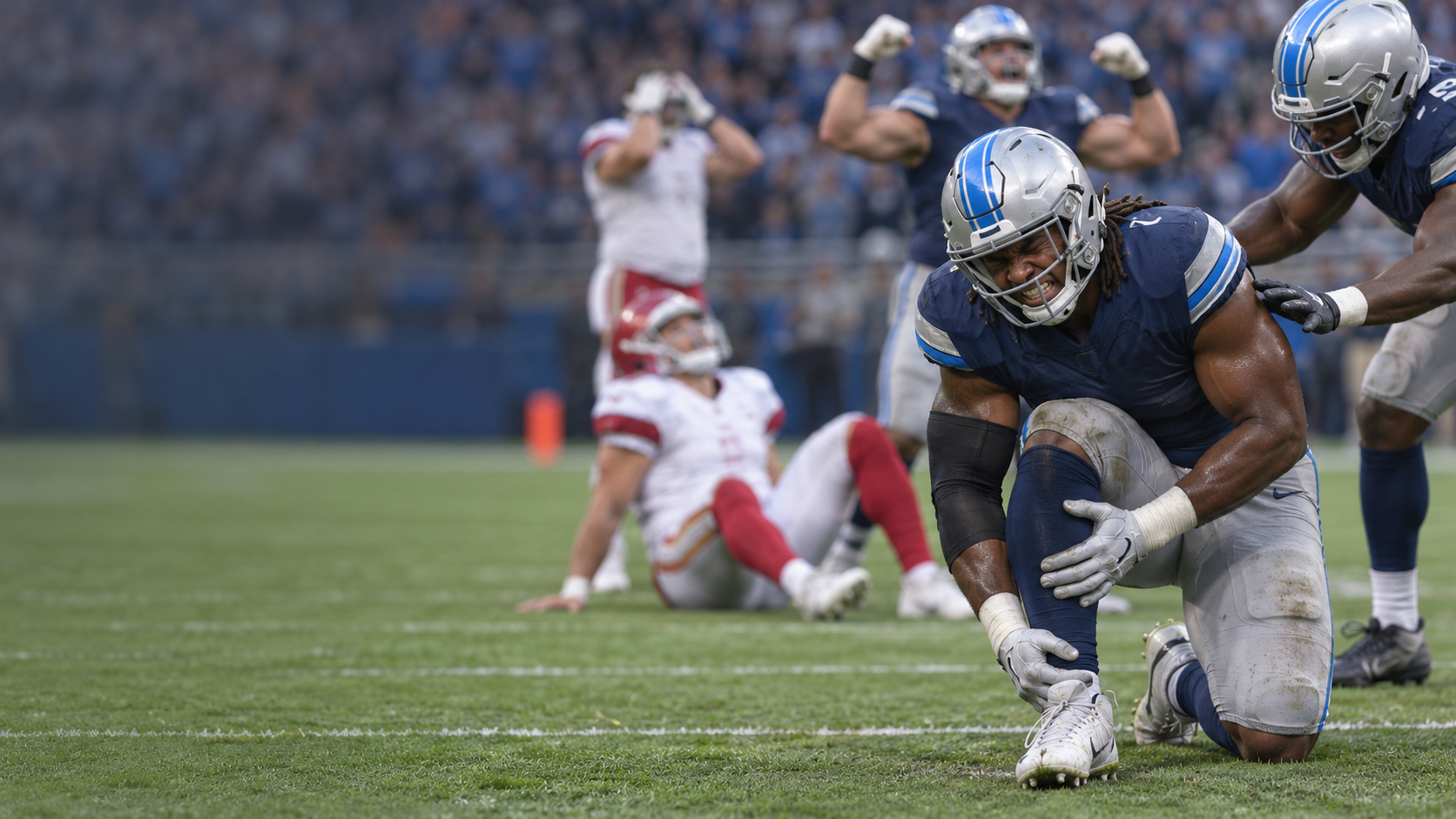 Aidan Hutchinson ACL Injury Report: What We Know
-
 How Harbaugh and Minter Can Revive Their Teams
-
 Ronaldinho and Ravenna: Could the Brazil Icon Play Again?
-
 Bengals Beat Steelers 38–18 Behind Burrow and Chase
-
 Aidan Hutchinson Out for Season With Right Knee Injury
-
 Burrow, McCaffrey Elevate Fantasy Outlooks in Week 10