Kerch Bridge Attack: Strategic Context and Verified Facts
Kerch Bridge Attack: Strategic Context and Verified Facts
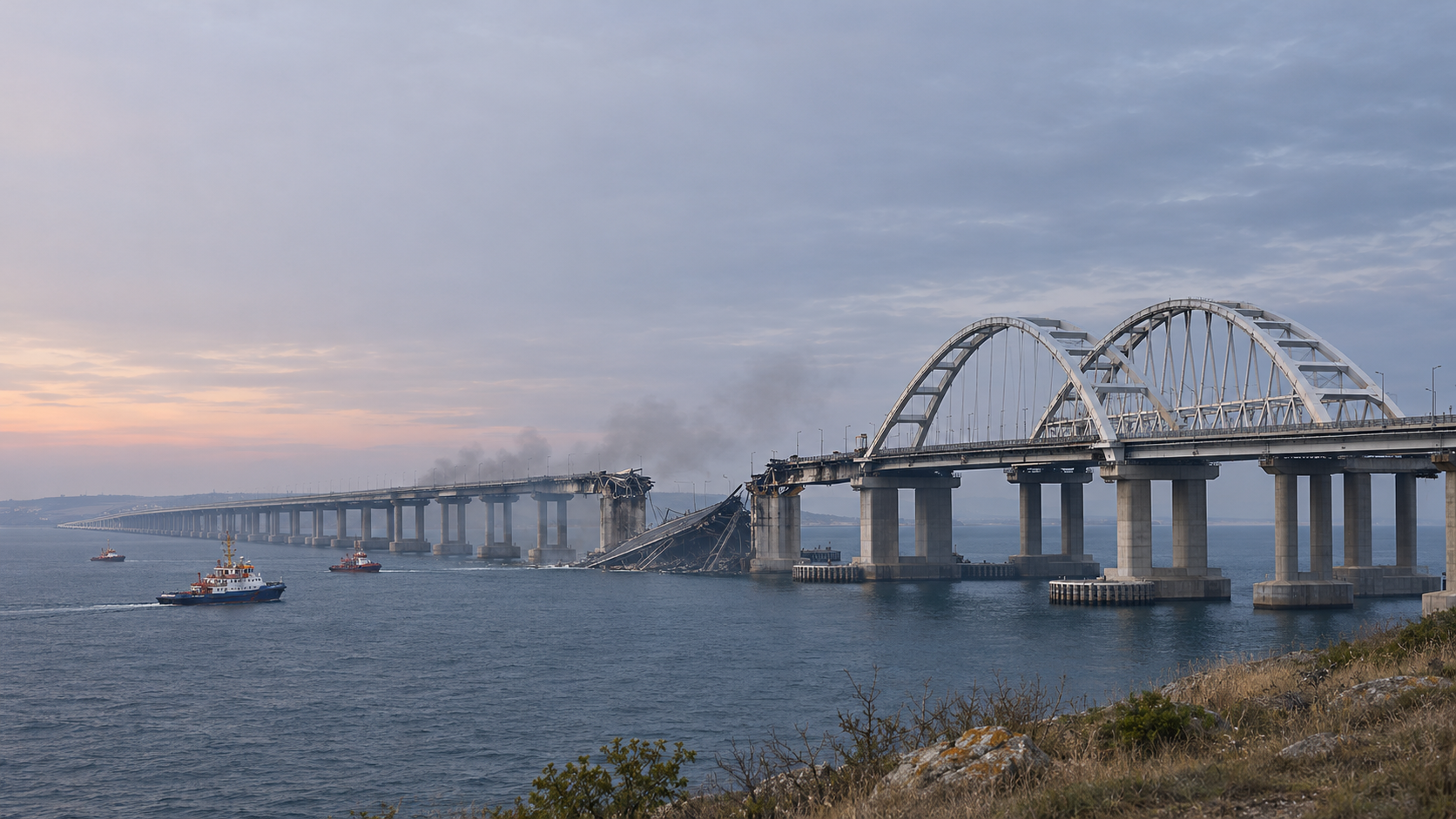
The Kerch Bridge is one of the most important transport links between Russia and occupied Crimea. It crosses the Kerch Strait and carries road and rail traffic between Russia’s Krasnodar region and the Crimean Peninsula.
The supplied materials do not establish the latest incident’s date, method, damage, casualties, traffic effects, or responsibility. Claims about the event should therefore remain attributed and should be updated only after confirmation from authoritative sources and independent evidence.
Key Facts
- Location: Kerch Strait, between Russia’s Krasnodar region and occupied Crimea
- Structure: Combined road and rail bridge
- Reported incident: An attack or disruption affecting the bridge; details require confirmation
- Responsibility: Must be attributed to official claims unless independently verified
- Damage and casualties: No verified assessment is available from the supplied materials
- Traffic status: Current road, rail, and ferry conditions require confirmation from official authorities
- Event date: Not provided in the supplied materials
What Is the Kerch Bridge?
The Kerch Bridge crosses the narrow waterway separating Russia’s Taman Peninsula from Crimea. It consists of separate road and rail sections that carry vehicles, trains, commercial goods, and passengers.
Russia controls Crimea, but Ukraine and most of the international community recognize the peninsula as Ukrainian territory under Russian occupation. The bridge connects Russia with Crimea in practical terms, while Crimea remains internationally recognized as part of Ukraine. The United Nations has repeatedly affirmed Ukraine’s territorial integrity and rejected Russia’s annexation claim. United Nations source
The bridge is also known as the Crimean Bridge in Russian official communications. Both names refer to the same infrastructure.
Civilian and Military Importance
The bridge provides a direct surface connection between mainland Russia and Crimea. Its civilian functions include passenger travel, commercial deliveries, tourism, and the movement of fuel, construction materials, and public-service supplies.
The bridge also has potential military value because it can support the movement of fuel, equipment, personnel, and other supplies toward Crimea. Russia uses Crimea as a military base, naval position, air-defense zone, and staging area in its war against Ukraine.
A disruption would not necessarily cut off all supplies. Russia has other options, including maritime shipping, ferries, roads, railways, and land corridors through areas under Russian control in southern Ukraine. The effect of a closure depends on its duration, the affected bridge section, alternative-route capacity, security conditions, weather, and repair requirements.
Earlier Incidents
The bridge has previously experienced major incidents and temporary closures. A reliable timeline requires event-specific reporting from official authorities, established news organizations, technical experts, and verified visual evidence.
- October 2022: An explosion damaged part of the road section and caused a fire involving a fuel train. Russia blamed Ukraine, while Ukrainian officials made statements that were interpreted as acknowledging the operation without immediately providing a complete account. Traffic restrictions and repairs continued for months.
- July 2023: Russian authorities reported another incident affecting the bridge and said an attack had damaged the road section. One road span was seriously damaged, and traffic was suspended before limited service resumed.
- Later alerts and closures: Russian authorities have periodically announced temporary closures because of security alerts, suspected threats, inspections, or possible drone activity. A traffic stoppage alone does not prove structural damage.
Photographs can establish that smoke, debris, or a damaged roadway existed, but they do not necessarily identify the weapon, attacker, or military purpose.
How to Verify a Developing Report
Initial reports should be traced to a named authority, bridge operator, emergency service, transport agency, or established news organization. Social media posts can provide leads but should not be treated as confirmation.
Verification should establish:
- When the alert was issued.
- Which bridge section was affected.
- Whether officials reported an explosion, fire, strike, structural failure, or precautionary closure.
- Whether road and rail traffic were suspended.
- Whether emergency services were deployed.
- Whether casualties or structural damage were confirmed.
Visual evidence should be checked for recognizable bridge sections, road markings, barriers, weather, lighting, emergency vehicles, and fixed landmarks. Geolocation is essential because old footage has repeatedly circulated after new incidents. Commercial satellite imagery may show changes to a road span, rail section, or nearby facility, but it may not identify the cause of damage or reveal conditions beneath the bridge.
Traffic notices should distinguish between a temporary precaution, an inspection, partial damage, closure of both road and rail sections, restricted crossings, and long-term repairs. Ferry schedules and alternative-route information should also be checked.
Responsibility and Official Claims
Ukrainian officials may describe the bridge as a legitimate military target because it supports Russia’s occupation and military operations in Crimea. They may also decline to confirm specific operations. A Ukrainian statement can establish Kyiv’s position or claim, but it does not alone prove the extent of physical damage or responsibility.
Russian authorities may characterize an incident as terrorism, sabotage, a drone attack, a missile strike, or another hostile action. They may also announce arrests, investigations, air-defense activity, maritime restrictions, or security measures. These claims should remain attributed and should not automatically be treated as independently established facts.
Independent assessment should compare official statements with geolocated images, satellite imagery, road and rail notices, ferry schedules, maritime data, engineering assessments, and reporting from established news organizations.
Strategic Consequences
The consequences depend on the level and duration of disruption.
- A temporary traffic suspension may cause queues and inconvenience with limited military impact.
- Partial structural damage may reduce capacity and require traffic controls.
- A long-term closure may force Russia to use slower or more exposed routes.
- Extensive destruction would create a larger logistical and political challenge but would not automatically isolate Crimea.
The bridge’s symbolic importance is also significant. It represents Russia’s physical connection with Crimea and Moscow’s claim that the peninsula is permanently integrated into Russia. An attack or closure may affect public confidence, domestic messaging, and perceptions of infrastructure security even if repairs restore traffic quickly.
Analysts should not describe an incident as a decisive military blow without evidence of sustained effects on military operations.
Impact on Civilians and Crimea
A disruption can affect private vehicles, buses, passenger trains, freight trains, ferries, tourism, and commercial deliveries. Longer closures may increase delivery times and transport costs for food, fuel, construction materials, and consumer goods.
The scale of any economic effect depends on the closure’s duration and the capacity of alternative routes. An initial attack report does not by itself establish shortages, price increases, or major economic disruption.
Residents and travelers should monitor official transport announcements, emergency-service notices, ferry schedules, road and rail operators, checkpoint guidance, and maritime warnings. They should avoid restricted areas and refrain from sharing sensitive images that could reveal security deployments or military movements.
International and Legal Context
Russia has controlled Crimea since 2014 and claims to have annexed it. Ukraine and most of the international community reject that claim and recognize Crimea as Ukrainian territory. The United Nations General Assembly has called on states not to recognize changes to Crimea’s status resulting from Russia’s actions. United Nations source
Whether the bridge is a lawful military target depends on verified facts. Relevant questions include whether it was being used for military purposes, whether it qualified as a military objective at the time, the expected military advantage, foreseeable civilian harm, and the precautions taken.
Because the bridge has both civilian and potential military uses, any legal assessment must be fact-specific. A definitive conclusion cannot be reached without reliable evidence about the operation, damage, casualties, and intended target.
What Cannot Yet Be Determined
Without verified event reporting, it is not possible to establish:
- Whether the bridge suffered structural damage
- How long repairs would take
- Whether military operations were materially affected
- Whether Ukraine was responsible
- Whether additional attacks will occur
- Whether the incident will cause broader escalation
Conclusion
The Kerch Bridge is a major road-and-rail link between Russia and occupied Crimea. It supports civilian movement and commercial transport while also carrying potential military value. Its political symbolism makes every major closure or attack significant.
The supplied materials do not verify the latest incident’s date, method, damage, casualties, traffic effects, or responsibility. Those details should be added only after confirmation from authoritative sources and independent evidence.
Readers should rely on current official transport, emergency, and safety notices. Developing claims should be labeled as confirmed, reported, claimed, or unclear rather than presented as established fact.
FAQ
What is the Kerch Bridge?
The Kerch Bridge is a combined road and rail bridge across the Kerch Strait. It connects Russia’s Krasnodar region with Crimea, a peninsula internationally recognized as part of Ukraine and controlled by Russia.
Why is the Kerch Bridge important?
It supports civilian travel, commercial transport, and Russia’s logistical connection with Crimea. It also symbolizes Russia’s claimed integration of the peninsula.
Who attacked the Kerch Bridge?
Responsibility should be reported through attributed statements unless independent evidence confirms the perpetrator. Russian and Ukrainian authorities may provide conflicting accounts.
Is the Kerch Bridge open?
Traffic conditions can change quickly after a security alert or attack. Check current announcements from transport authorities, bridge operators, ferry services, and emergency agencies.
How could an attack affect Crimea?
A disruption could delay road and rail traffic, increase pressure on ferries and alternative routes, and affect deliveries or travel. The scale depends on the extent and duration of any damage.
Could the attack lead to further escalation?
Further escalation is possible but cannot be established without current military and diplomatic analysis. Potential responses include additional strikes, tighter security, transport restrictions, or public threats.
Related Articles
-
 Trump’s Late Arrival Looms Over Southeast Asia Summit
-
 Trump’s Asia Trip and Nvidia’s Leadership Stakes
-
 Trump’s Pax Silica AI Plan in the Philippines
-
 Why Miller’s Rise Could Open an Immigration Debate
-
 California Families Challenge Newsom Death-Sentence Commutations
-
 Nvidia Turmoil Tests Trump’s Technology Strategy
-
 Trump Says U.S. Takes Iran Dirty Bomb Report Seriously
-
 Crimean Bridge Partially Damaged in Ukrainian Strike
-
 Trump Begins Asia Trip in the Philippines
-
 Why Young People in France Want Change
-
 PNG Leader Tells Xi Taiwan Office Closure Was Not Easy
-
 Trump’s $50 Billion Air Traffic Plan Faces Senate Resistance
-
 New York Plans to Disband NYPD Strategic Response Group
-
 Senate Democrats Reject Quick Schumer–Van Hollen Settlement
-
 What Democratic Midterm Wins Mean for Trump’s ICE Crackdown
-
 APEC, ASEAN and the Trump–Xi–Putin Diplomacy Test