COP31 Collapse: What Happens After the Climate Talks?
COP31 Collapse: What Happens After the Climate Talks?
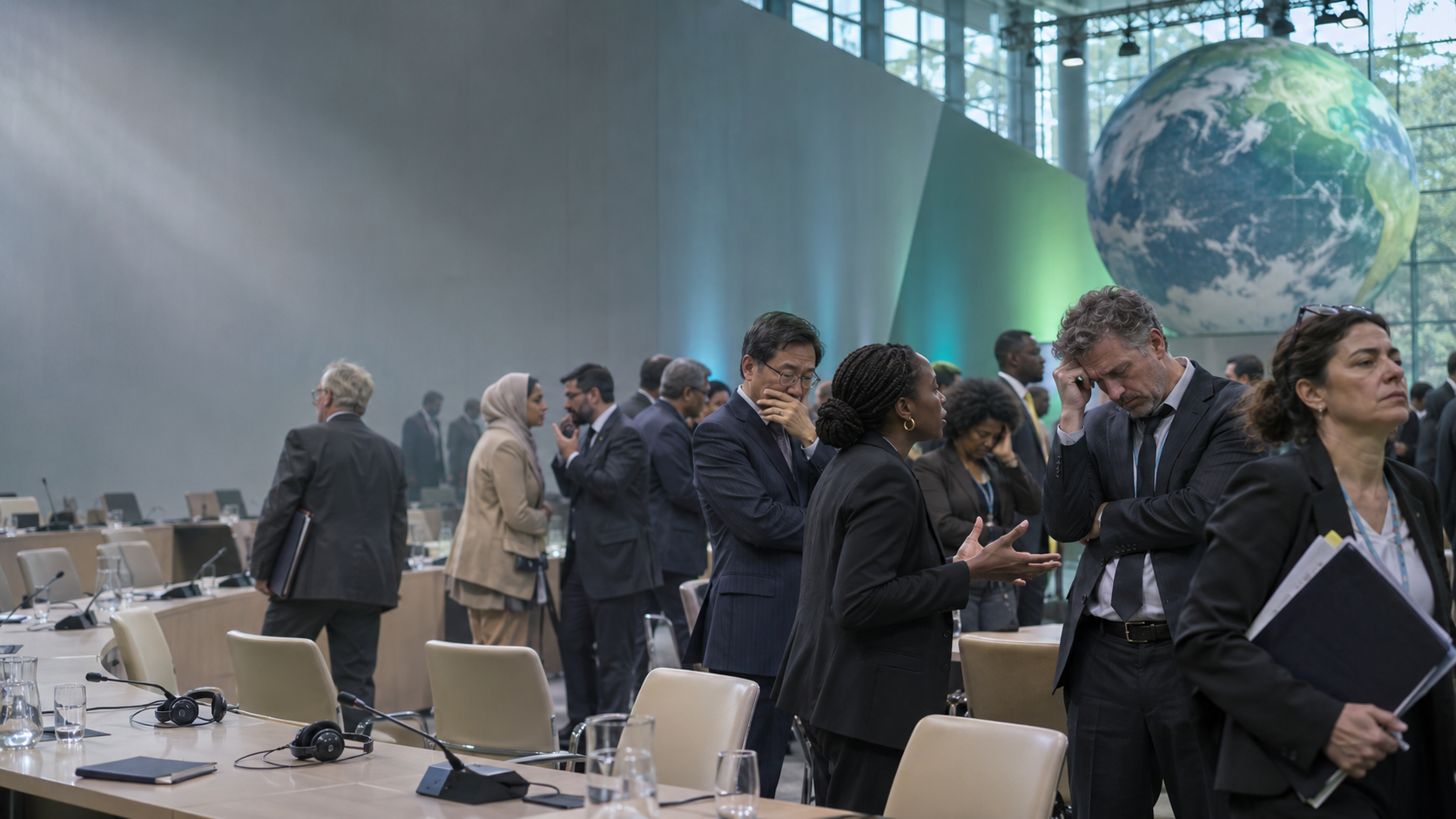
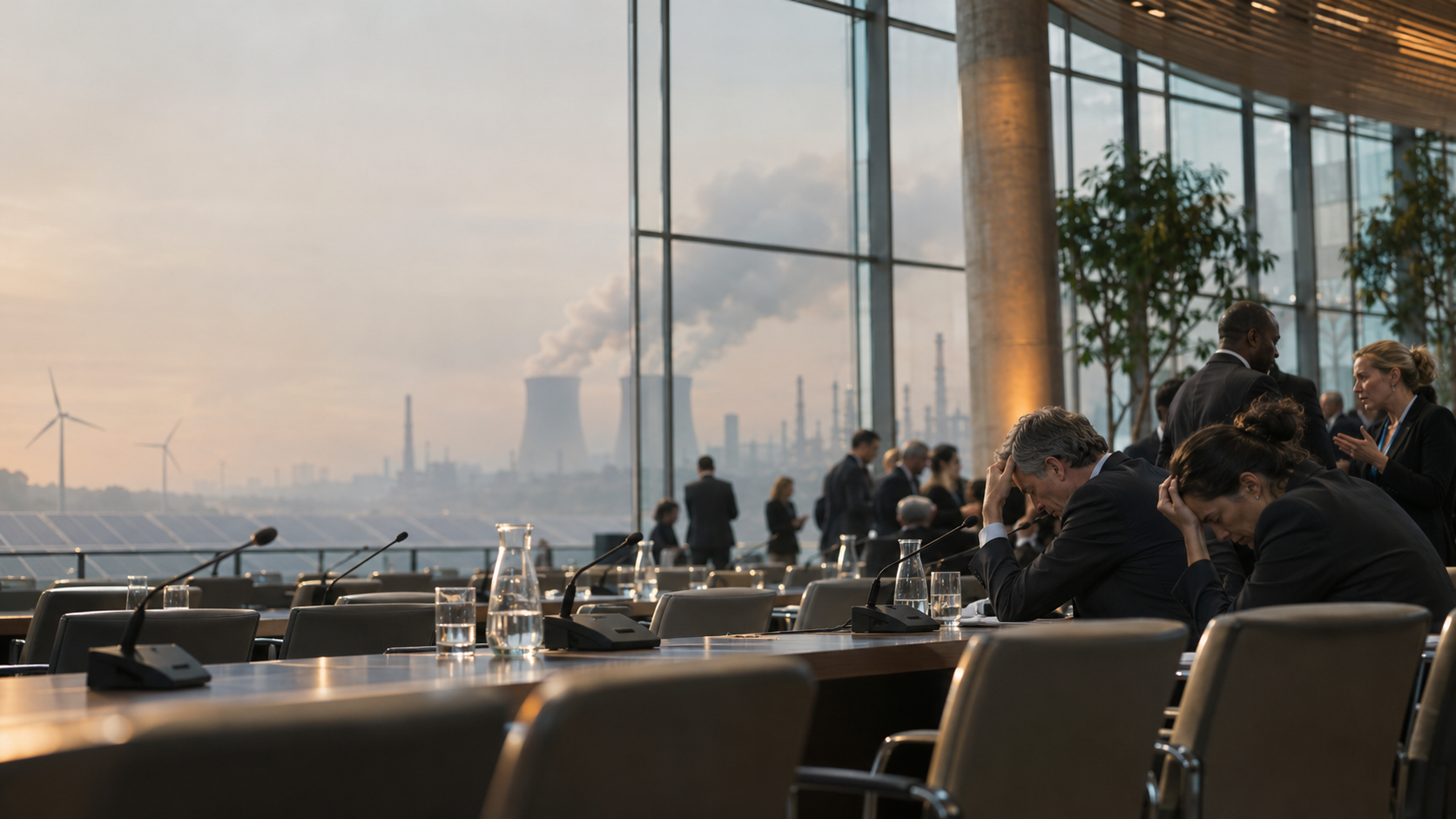
COP31 climate talks ended without a final agreement after negotiators failed to resolve disputes over fossil fuels and climate finance. The breakdown centered on two unresolved questions: how directly countries should address fossil-fuel use and how much financial support wealthier nations should provide to developing countries. Source 7
The failure matters because the talks were expected to advance international climate cooperation. Instead, a reported draft omitted explicit commitments to phase out fossil fuels, while negotiators could not agree on stronger language. Source 9
What Happened at COP31?
Negotiators Failed to Reach Consensus
COP31 ended without a deal. Consensus is central to major decisions under the United Nations climate process: governments must accept the negotiated text, so disagreement over one politically sensitive section can prevent adoption of the entire agreement. Source 3
A draft text is not the same as an adopted decision. A draft can propose language without creating a final international commitment. At COP31, the reported draft did not include explicit commitments to phase out fossil fuels, and negotiators failed to agree on stronger wording. Source 9
The failed agreement does not prevent governments from adopting domestic emissions targets, renewable-energy programs or restrictions on fossil-fuel development. It means only that negotiators did not create new consensus at the summit.
Fossil Fuels Remained the Central Dispute
Fossil fuels were the defining political issue. Reporting identified disagreement over fossil-fuel language as a longstanding obstacle in the UN process. Source 1
The dispute concerned how explicitly the final text should address the transition away from coal, oil and gas. Possible formulations included phasing out fossil fuels, reducing consumption, ending new development or expanding renewable energy. Each carries different political implications.
“Phase out” suggests a direct decline in fossil-fuel use. “Transition away” allows more flexibility, while general references to emissions reduction avoid naming fossil fuels. The wording therefore affects both diplomatic symbolism and pressure on national governments.
Countries may support climate action in principle while resisting language that directly affects energy production, energy security, trade or economic planning.
Climate Finance Added to the Deadlock
Climate finance was the second major source of disagreement. The talks ended without resolving how much financial support wealthier nations should provide or how quickly countries should reduce fossil-fuel use. Source 7
The finance dispute involves several questions:
- How much funding should be provided?
- Which countries should contribute and receive support?
- How much should come as grants rather than loans?
- What role should private finance play?
- How should funding be divided among mitigation, adaptation, and loss and damage?
For developing countries, predictable finance can determine whether stronger climate plans are economically and politically feasible. These countries face pressure to reduce emissions and prepare for climate impacts while often having less access to affordable capital.
Wealthier countries may resist open-ended obligations or disagree over how contributions should be calculated. Without agreement on the scale and structure of finance, negotiations on emissions become more difficult.
Why Did the UN Climate Talks Collapse?
The collapse followed years of disagreement over whether the UN climate process should identify fossil fuels directly. Negotiators must balance ambition, flexibility and political acceptability. Strong language can demonstrate urgency but risk rejection by governments that view it as incompatible with their economic or energy interests. Broad language may win support but create weaker obligations. Source 1
Different national economic interests made compromise harder. Fossil-fuel-producing economies may be concerned about export revenue, employment and existing infrastructure. Energy-importing countries may prioritize affordability and supply security. Vulnerable countries may demand faster emissions cuts and greater support, while industrial economies weigh climate policy against competitiveness and domestic politics.
Finance also created a trust gap. Developing countries may seek support from nations with greater financial capacity and larger historical contributions to global emissions. Wealthier countries may seek broader participation, spending limits and detailed reporting. Disagreement over finance can therefore undermine compromise on emissions.
The supplied reporting does not establish that a specific government or bloc caused the collapse. The narrower conclusion is that longstanding disagreement over fossil-fuel language and unresolved financial support contributed to the failure.
What Does the Collapse Mean for Fossil-Fuel Policy?
A failed COP agreement does not cancel existing climate commitments or prevent governments from implementing policies already adopted. National climate plans, domestic legislation and regional cooperation can continue unless governments formally change them.
Pressure may now shift toward national and regional policy. Governments can pursue:
- Renewable-energy targets.
- Clean-energy investment.
- Methane controls.
- Vehicle-emissions standards.
- Restrictions on new fossil-fuel projects.
- Energy-efficiency programs.
- Carbon pricing.
- Industrial policies supporting low-carbon production.
These measures can reduce fossil-fuel demand even without a universal statement. Their limitation is uneven implementation: businesses may face different standards, and governments may dispute effects on trade and competitiveness.
Market responses may also differ. Fossil-fuel producers may view the absence of stronger language as reduced near-term diplomatic pressure, while clean-energy companies may seek clearer signals from national governments. Investors may place more weight on domestic regulation, project economics and country-specific targets. These are analytical possibilities, not confirmed market reactions.
What Happens After COP31?
Future negotiations are likely to revisit:
- Explicit fossil-fuel language.
- Emissions-reduction pathways.
- Climate-finance targets.
- Accountability and implementation.
- Support for vulnerable countries.
- The relationship between grants, loans and private finance.
Countries may also form smaller coalitions focused on renewable power, coal reduction, methane abatement, clean manufacturing, shipping, aviation or climate finance. Smaller groups can move faster, but they cannot replace universal rules. Such agreements should complement the UN process rather than substitute for it.
The next COP must restore confidence through early consultations, transparent finance proposals and a clear explanation of why COP31 failed. Trust cannot be rebuilt through a final-week negotiation alone.
What Should Governments Do Before the Next Climate Summit?
Governments should publish national climate plans covering power generation, transport, buildings, industry, agriculture, methane emissions and land use. Plans should include timelines, funding mechanisms and monitoring systems.
They should also clarify how they will reduce fossil-fuel demand, expand clean-energy capacity and manage energy-security risks. A credible strategy must address infrastructure, investment, workers, affected communities and regional economies.
Donor countries should provide clearer information about funding sources, delivery schedules, grant and loan conditions, adaptation support, loss-and-damage funding and private-finance mobilization. Recipient countries should identify investment priorities and strengthen reporting where appropriate.
Climate diplomacy should continue between summits. Progress reviews should include governments, cities, regions, businesses, civil-society organizations, Indigenous communities and scientific institutions. Useful indicators include emissions trends, renewable-energy deployment, energy efficiency, methane reductions, adaptation investment and finance delivered.
Can Climate Action Continue Without a Global Deal?
Yes. Countries, companies and subnational governments can continue deploying solar and wind power, modernizing grids, improving energy efficiency, expanding battery storage, electrifying transport, reducing methane and building climate-resilient infrastructure.
However, weaker international coordination can produce uneven standards, trade disputes, carbon leakage, higher financing costs and duplicated reporting requirements. National action complements international cooperation but cannot fully replace it.
Diplomatic failure does not remove the physical climate risk. Emissions continue to accumulate, extreme-weather risks remain and delayed action can increase transition costs. Delayed finance can also worsen vulnerability in countries with fewer resources.
Conclusion: The Next Test Is Implementation
COP31 ended without agreement. Fossil-fuel language remained unresolved, and disputes over climate finance continued. Reporting described the collapse as the result of longstanding disagreements rather than a single procedural failure. Source 1
The next test is implementation between summits. Progress will be measured through national emissions cuts, clean-energy investment, reduced fossil-fuel dependence, reliable climate finance and transparent reporting.
COP31 created a diplomatic setback, but it did not prevent governments from acting. Countries can continue domestic policies, build smaller coalitions and begin rebuilding consensus before the next climate summit.
Frequently Asked Questions
What happened at COP31?
COP31 ended without a final agreement after negotiators failed to resolve disputes over fossil fuels and climate finance. A reported draft did not include explicit commitments to phase out fossil fuels. Source 9
Why did the talks collapse?
Countries could not agree on how strongly to address fossil-fuel use or how much climate finance wealthier nations should provide. The dispute reflected longstanding political and economic tensions within the UN climate process.
Did COP31 create a fossil-fuel phaseout agreement?
No. The supplied reporting indicates that the draft text did not contain explicit commitments to phase out fossil fuels, and negotiators failed to reach consensus on stronger language.
What does the failure mean for climate finance?
It leaves unresolved how much funding wealthier countries should provide and how that money should be delivered. The dispute may complicate efforts by developing countries to strengthen their climate plans.
Can countries still reduce emissions?
Yes. Governments can continue adopting renewable-energy programs, energy-efficiency standards, methane controls and fossil-fuel reduction measures without a new global agreement.
What should happen before the next COP?
Countries should publish clearer climate plans, improve finance proposals, address fossil-fuel language directly and establish measurable implementation reviews. Early diplomatic work will be necessary to prevent the same disputes from blocking the next summit.
Related Articles
-
 Ukraine Confirms Naval Drone Strike Near Libya
-
 Don Toliver U.K. Concert Evacuated After Substance Report
-
 Tajikistan Has Not Withdrawn From the ICC
-
 The Bloc Wants Power. Can It Govern Effectively?
-
 NATO Warns Russia May Launch Nuclear-Armed Satellite
-
 Iran Warns of ‘All Means’ Against Reported U.S. Blockade
-
 Thanksgiving Travel Weather: Storms Threaten Both Coasts
-
 Russian Ship Sparta II Leaves Finnish Waters After Drone Strike
-
 COP31 Talks Collapse Over Fossil Fuel Dispute
-
 Zelenskyy’s Libya Warship Strike Claim Remains Unverified
-
 What Kim Jong Un’s Envoy Welcome Signals
-
 Thanksgiving Travel Threatened by Two Major Storms
-
 How Disasters Complicate Medicaid Work Requirements
-
 Bay Area Prepares for Flooding Near SFO
-
 Army’s Iowa Lead Explosive Detonation Raises Permit Questions
-
 COP31 Climate Talks End Without Agreement