Brock Purdy Beats Vikings’ Blitz in Mexico City
Brock Purdy Beats Vikings’ Blitz in Mexico City
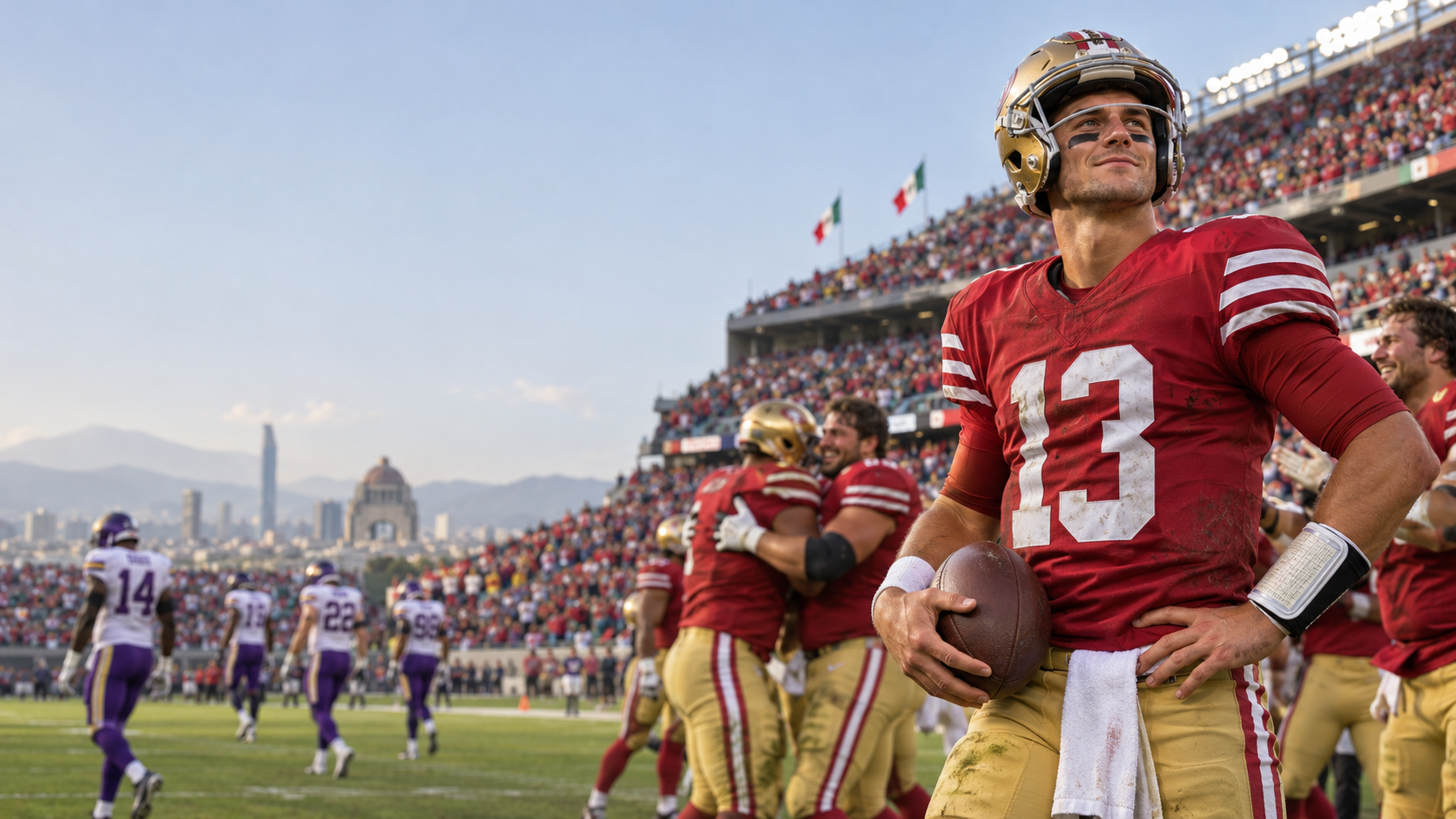
Brock Purdy turned a demanding matchup against the Minnesota Vikings into one of the defining performances of his season. In Mexico City, the San Francisco 49ers quarterback handled Minnesota’s aggressive defensive approach, moved the offense with poise, and earned “MVP” chants from the crowd.
The chants captured the emotion of the night. Purdy’s performance supplied the football substance.
Minnesota entered the game with one of the NFL’s most highly regarded defenses. Its pressure packages were designed to disrupt San Francisco’s timing-based offense and force Purdy into rushed decisions. Instead, Purdy identified pressure, delivered the ball on schedule, and prevented the Vikings’ blitz from controlling the game.
The performance strengthened the Brock Purdy MVP conversation. It did not settle the award, which depends on a full-season body of work, but it gave Purdy a significant signature performance against a respected opponent. Yahoo Sports described him as the game’s best player after he picked apart Minnesota’s defense (Source 3).
Why Minnesota’s Defense Presented a Major Test
The Vikings’ defense challenged San Francisco with talent, pressure, and uncertainty. Minnesota could show one alignment before the snap and change its coverage after the play began. Purdy had to recognize the pressure, locate the available throwing lane, and choose among a quick completion, a protection adjustment, or a deeper attack.
The blitz was intended to speed up Purdy’s internal clock, disrupt route timing, and force him to abandon his progressions. However, sending extra rushers also left fewer defenders in coverage. If Purdy recognized the pressure, he could find open receivers behind the rush.
That was Minnesota’s dilemma. The Vikings needed pressure to challenge Purdy, but their aggressive approach increased the importance of his processing and accuracy.
How Brock Purdy Neutralized the Blitz
Fast Processing Reduced the Rush’s Impact
Purdy did not need to defeat every blitz with a spectacular deep throw. His most important achievement was reducing the value of the pressure itself.
He recognized when Minnesota was threatening to send extra rushers, identified where the pressure was likely to come from, and delivered the ball before the rush could fully develop. Those decisions helped the 49ers stay on schedule and prevented the Vikings from consistently creating negative plays.
A quarterback beats the blitz through decisions as much as arm strength. A short completion can be the correct answer if it reaches the right player, arrives on time, and produces a manageable down. Purdy showed that understanding throughout the game.
Accuracy and Timing Kept San Francisco Moving
Purdy’s accuracy complemented his quick processing. He delivered throws within the structure of the offense and placed the ball where receivers could continue their routes instead of stopping to adjust.
Timing is critical against pressure. A late throw gives the pass rush time to arrive and allows coverage defenders to close. An on-time throw can turn the same defensive call into a productive offensive play.
Purdy sustained drives, maintained offensive pressure, and made it harder for Minnesota to rely on aggressive pressure as a dependable solution. He trusted his reads without forcing a dramatic play on every snap.
Controlled Aggression Defined His Performance
Purdy remained aggressive without becoming reckless. He avoided becoming too conservative, but he also did not force throws into coverage merely because the defense was applying pressure.
That balance helped explain why observers viewed him as the game’s best player. He combined aggression with restraint and confidence with control. Against a highly regarded defense, those traits carried greater significance than an isolated highlight.
The Mexico City Atmosphere Added to the Moment
The “MVP” chants became the defining crowd response of the 49ers-Vikings Mexico City game. They reflected Purdy’s immediate impact and gave the performance a memorable emotional setting.
Crowd reaction does not determine the NFL MVP award. Official voting considers a player’s complete season, including production, consistency, team success, and overall impact. Still, the chants showed how strongly the performance resonated in real time.
The international setting gave the matchup a broader platform. The 49ers Webzone reported that San Francisco players praised their Mexico City experience while highlighting Purdy’s strengthening MVP case and Mike Evans’ return (Source 9).
The Supporting Cast Helped Purdy
Purdy’s performance did not happen in isolation. George Kittle was among the 49ers standouts identified in The Mercury News’ “Studs and Duds” coverage (Source 7).
Kittle provided a reliable option over the middle, helped convert difficult downs, and drew defensive attention that created space elsewhere. Mike Evans added another proven outside threat, giving San Francisco greater flexibility against Minnesota’s coverage and pressure packages.
Fred Warner was another 49ers standout identified by The Mercury News (Source 7). Defensive success created additional possessions, improved field position, and reduced the offense’s need to produce on every series.
Purdy remained the central story because he handled Minnesota’s defensive plan, but the victory reflected contributions throughout the roster.
Why the Performance Strengthened Purdy’s MVP Case
The game included several elements of an MVP moment. Purdy excelled against a respected defense, managed a pressure-heavy plan, and became the defining player in a significant 49ers victory.
The Mercury News described Purdy’s showing as MVP-caliber while naming Kittle, Warner, and Evans among San Francisco’s leading performers (Source 7).
That description does not mean Purdy has won the award. It means the performance provided the type of evidence voters and analysts consider: efficiency, leadership, execution against quality opposition, and direct influence on winning.
Quarterbacks are judged closely on how they handle pressure. Purdy showed he could win without relying exclusively on a clean pocket or a favorable defensive alignment. He identified Minnesota’s pressure, selected the correct response, and executed under difficult conditions.
The MVP race remains a season-long debate. Purdy must continue to perform efficiently as opponents study the Vikings game and design similar pressure situations.
What the Game Says About Purdy’s Development
Purdy looked comfortable recognizing pressure before the snap, identifying coverage after the snap, managing the pocket, and making decisions without unnecessary hesitation. Those traits suggest growth against defensive complexity.
Minnesota used the blitz to disrupt San Francisco, but Purdy’s responses turned that aggression into vulnerability. Quick throws, route adjustments, and accurate placement allowed the 49ers to exploit space behind extra rushers.
That strategic reversal matters for San Francisco’s postseason outlook. Defensive coordinators may continue to blitz, but they must weigh the risks more carefully against a quarterback who consistently punishes pressure.
What Comes Next
Purdy’s performance will increase attention on his MVP candidacy and influence how opponents prepare for San Francisco. Teams may vary their pressure packages, disguise coverage longer, or force Purdy to make decisions from less comfortable pockets.
The 49ers must maintain protection, route precision, defensive consistency, and execution. A strong Mexico City performance can become a foundation, but continued production will determine whether it becomes a repeatable formula.
Conclusion
Brock Purdy beat the Vikings’ pressure plan through recognition, timing, accuracy, and composure. Minnesota’s aggressive defense did not overwhelm San Francisco’s quarterback.
George Kittle, Mike Evans, Fred Warner, and the rest of the 49ers also played important roles, but Purdy remained the central figure. The crowd’s “MVP” chants gave the performance its most memorable image without deciding the award.
The game strengthened, rather than settled, Purdy’s MVP case. More importantly, it showed him dictating terms against an elite defense in a global spotlight.
Frequently Asked Questions
Why were fans chanting “MVP” for Brock Purdy in Mexico City?
Fans chanted “MVP” after Purdy delivered a standout performance against Minnesota’s highly regarded defense. The chants reflected the crowd’s reaction, not an official MVP result (Source 1).
How did Brock Purdy beat the Vikings’ blitz?
He processed pressure quickly, made timely decisions, and delivered accurate throws before Minnesota’s rush could disrupt the offense.
Did the game improve Purdy’s MVP case?
Yes. Purdy strengthened his case by playing at a high level against one of the NFL’s strongest defenses and becoming the central factor in the 49ers’ victory. The award still depends on his complete season.
Which 49ers players also stood out?
The supplied Mercury News summary identified George Kittle, Fred Warner, and Mike Evans as additional standouts. Their contributions supported Purdy and helped San Francisco perform as a team (Source 7).
Why was the Mexico City game important?
The game gave the 49ers an international stage and increased the visibility of Purdy’s performance. Players also praised their Mexico City experience (Source 9).
Can one game determine the NFL MVP?
No. One game can influence the conversation, but MVP voting considers a player’s full-season production, consistency, team success, and impact.
Related Articles
-
 Levitan’s Week 11 DFS Cash Lineup Review
-
 49ers vs. Vikings Recap: Purdy Was Not Involved
-
 Dylan Larkin to Canadiens Trade Report Remains Unverified
-
 Mets Reportedly Agree to $450M Tarik Skubal Deal
-
 Dylan Larkin Trade Request to Montreal: No Evidence
-
 How to Watch Vikings vs. 49ers on November 22
-
 Vikings vs. 49ers Live Score and Stats
-
 Tarik Skubal Reportedly Joins Mets on $450M Deal
-
 AP Top 25: Texas Rises to No. 5 as UCLA, Indiana Fall
-
 Jaguars vs. Giants Live Updates and Score
-
 Alcaraz Beats Zverev to Win First ATP Finals Title
-
 How the Vikings Prepared for Mexico City's Altitude
-
 Big Ten Playoff Picture: Overtime Creates Chaos
-
 ATP Finals Final: Zverev vs Alcaraz Preview
-
 Navajo Stirling Stops Jiri Prochazka at UFC Qatar
-
 KC Current Win First NWSL Championship in 2026