Big Ten Ranking Pressure: Ohio State, Indiana and UCLA
Big Ten Ranking Pressure: Ohio State, Indiana and UCLA
The next college football rankings could change significantly after a turbulent stretch in the Big Ten. Ohio State, Indiana and UCLA face heightened scrutiny, while teams outside the current Top 25 could gain ground with strong conference wins.
The exact changes cannot be confirmed until the relevant games, ballots and official releases are available. This article offers a projection framework, not a confirmed poll. Final positions will depend on team records, opponent quality, margins, injuries, remaining schedules and results elsewhere in the country.
The Associated Press Top 25 and the College Football Playoff rankings serve different purposes. The AP poll reflects media voting, while the playoff rankings are produced by the selection committee and focus on postseason evaluation. Both influence national perception, but neither should be treated as interchangeable. Source 1
How the Next College Football Top 25 Could Change
Ranking Movement Depends on More Than the Final Score
A win or loss provides the starting point, not the complete ranking argument. Voters consider the opponent, location, margin, game control and season-long résumé.
A narrow loss to an elite opponent may cause only a modest decline. An unexpected defeat against an unranked team usually creates greater damage because it challenges assumptions about consistency. A close win can also produce movement if the opponent was considered clearly inferior.
Late-season results receive additional attention because they often affect conference championships and playoff access. A team that improves against stronger opposition can rise quickly, while a highly ranked program that struggles against a weaker opponent may lose several places.
Key variables include:
- Overall record
- Conference record
- Ranked wins
- Road performance
- Strength of schedule
- Margin and quality of victory
- Head-to-head results
- Injuries and player availability
- Remaining championship opportunities
The playoff committee evaluates a broad résumé rather than relying on one result. Its published criteria include strength of schedule, head-to-head outcomes, common opponents and other comparative factors. Source 2
The Big Ten’s Depth Is Creating Volatility
The Big Ten contains multiple teams capable of affecting the national rankings. That depth creates a chain reaction whenever one contender loses.
A major Big Ten upset can produce four immediate effects:
- The winning team moves closer to the Top 25.
- The losing team drops, sometimes sharply.
- Other ranked teams gain positions without playing.
- The conference title race becomes harder to predict.
Head-to-head results become particularly important when teams finish with similar records. A conference win over a ranked opponent strengthens one résumé while weakening the opponent’s national standing.
The remaining schedule matters as well. A team that loses but still controls its path to the Big Ten Championship Game may remain a serious postseason contender. Another team with a similar record may face a steeper route if it needs several outside results to go its way.
Projected Ranking Versus Official Ranking
“Tomorrow’s Top 25” is an informed projection, not an official poll. The final rankings may differ because voters weigh results differently and late games can change the national picture.
The most accurate language before release is conditional:
- Ohio State could move down.
- Indiana is likely to face scrutiny.
- UCLA may need help to remain ranked.
- A Big Ten winner could enter the Top 25.
- A strong finish could preserve playoff contention.
No projected list should present an unconfirmed ranking as an official result.
Ohio State: A Major Brand Facing Ranking Pressure
Why Ohio State Could Fall
Ohio State’s national profile provides visibility, not automatic protection. If the Buckeyes suffered a loss or delivered an underwhelming performance against a strong opponent, voters would assess whether the result reflected a temporary setback or a deeper weakness.
The size of any decline would depend on several factors:
- Whether the opponent was ranked
- Whether the game was played on the road
- How competitive Ohio State remained
- Whether the offense created enough explosive plays
- Whether the defense controlled critical downs
- Whether turnovers or special teams changed the result
- How other top teams performed
A narrow road loss to a highly ranked Big Ten opponent would carry a different meaning from a home defeat against an unranked team. The first could be viewed as a competitive result in a difficult conference. The second could expose a résumé problem that voters cannot easily overlook.
Ohio State also faces the standard that comes with elite-program status. Voters expect the Buckeyes to compete for the Big Ten title and the College Football Playoff every season. A performance acceptable for a lower-ranked team may be judged more harshly when expectations are at the national championship level.
What Ohio State Still Has Working in Its Favor
A single setback does not erase a strong season. Ohio State can remain near the top of the Ohio State football ranking discussion if it has a strong record, quality wins and a favorable remaining schedule.
The program’s depth can also matter over a long season. Strong recruiting, experienced coaching and the ability to correct mistakes provide reasons for voters to keep Ohio State above teams with weaker résumés.
The key distinction is between falling in the poll and falling out of playoff contention. Ohio State could lose several ranking positions while maintaining a viable postseason case. That case would depend on its record, conference position, quality victories and remaining opportunities.
Ohio State’s Path Back Up
The clearest recovery plan is straightforward:
- Win the remaining games.
- Beat strong conference opponents.
- Improve offensive efficiency.
- Limit turnovers.
- Finish close games with greater control.
- Avoid another damaging loss.
A convincing win over a quality opponent can restore confidence quickly. If Ohio State controls the line of scrimmage, creates explosive plays and limits defensive breakdowns, voters may treat the previous result as a correction rather than a collapse.
Indiana: From Breakthrough Contender to Ranking Uncertainty
Why Indiana Could Slide
Indiana’s position in the Indiana football ranking conversation may be more sensitive to recent results than that of a traditional national power. A loss, narrow victory or poor performance against a Big Ten opponent could reduce confidence even if the season résumé remains strong.
Teams attempting to establish themselves nationally often receive closer scrutiny after a setback. Voters want to know whether the program has sustained quality or benefited from a favorable stretch of games.
Schedule strength becomes central. A narrow win over a strong opponent may preserve Indiana’s standing. A poor showing against a lower-ranked team could create doubts about whether the team can compete consistently against the Big Ten’s best programs.
Indiana’s Season Still Matters
One difficult result should not erase a breakthrough season. Indiana can maintain a strong ranking case if it has accumulated evidence such as:
- Wins over ranked opponents
- Consistent offensive production
- Improved defensive performance
- Strong road results
- A positive turnover margin
- Competitive play against the conference’s top teams
A team’s full résumé remains more important than one weekly reaction. Indiana can fall in the rankings and still remain a major factor in the Big Ten championship race.
Continued success could also improve recruiting momentum, attract greater media attention and establish Indiana as a consistent conference contender rather than a one-season surprise.
The Stakes for Indiana
Indiana’s next game carries importance beyond its immediate ranking. A decisive win could stabilize the season and preserve a playoff argument. Another setback could push the team behind several one-loss contenders from other conferences.
The ideal response is a complete performance rather than a narrow escape. Indiana needs to handle pressure in the red zone, defend efficiently on third down and maintain execution late in games.
A strong finish may matter more than the exact position in the next poll. If Indiana wins its remaining games, its final résumé could outweigh a temporary ranking decline.
UCLA: A Team Trying to Stabilize Its Position
Why UCLA Could Drop
UCLA faces a potentially difficult UCLA football ranking outlook if its latest result raised questions about consistency. Teams near the middle or bottom of the Top 25 are especially vulnerable because several unranked programs may have comparable records and stronger recent results.
The severity of a UCLA decline would depend on the opponent. A competitive loss to a highly ranked team may be manageable. A defeat against a lower-ranked or unranked opponent could cause a much steeper drop.
Voters may focus on:
- Quarterback decision-making
- Turnovers
- Offensive consistency
- Run defense
- Offensive line play
- Red-zone execution
- Fourth-quarter performance
A team can survive one weakness, but several problems appearing in the same game often create a broader ranking concern.
UCLA’s Ranking Case
UCLA can remain in or near the Top 25 if its overall résumé includes quality wins, a respectable schedule and competitive performances against strong opponents.
Recent form may determine the immediate outcome. If other ranked teams lose, UCLA could hold its position despite an imperfect result. If the rest of the national field performs well, the Bruins may slide several places or leave the poll.
That volatility is common for teams outside the top tier. The difference between No. 20 and No. 30 can be small when multiple teams have similar records.
What UCLA Must Fix Next
UCLA needs a convincing response in its next game. The priority areas are clear:
- Improve red-zone efficiency.
- Protect the football.
- Strengthen third-down defense.
- Stabilize offensive line performance.
- Finish drives.
- Close tight games in the fourth quarter.
A decisive win could reverse the ranking decline. Another uneven performance would make it difficult for voters to view the previous result as an isolated problem.
Other Teams That Could Benefit From Big Ten Chaos
Big Ten Winners With a Chance to Rise
The biggest beneficiary may be the Big Ten team that defeats a ranked opponent while controlling the game statistically. A road win carries added value, particularly if the winner performs well in the second half and avoids turnovers.
The strongest ranking candidates will likely include teams that:
- Defeated a ranked opponent
- Won away from home
- Controlled the line of scrimmage
- Produced a strong turnover margin
- Improved their conference record
- Remain in contention for the league championship
A victory over Ohio State, Indiana or UCLA would carry direct résumé value because it changes the evaluation of both programs. The winner gains a signature result, while the loser must explain the setback.
National Contenders Outside the Big Ten
Teams outside the Big Ten can move up without playing when several teams above them lose. Undefeated programs and one-loss teams with strong schedules are best positioned to benefit.
Voters will compare:
- Conference championship positioning
- Strength of schedule
- Ranked victories
- Loss quality
- Consistency from week to week
- Performance against common opponents
A team that wins convincingly against a strong opponent has a better claim than one that merely moves upward because of losses elsewhere.
Potential New Entries Into the Top 25
The most likely new entries are teams with recent wins over ranked opponents, undefeated records in strong conferences or one-loss résumés supported by quality victories.
Previously ranked programs can also return if they recover from an early loss and build momentum late in the season. The final decision will depend on the number of open positions and the quality of competing résumés.
Projected Top 25 Framework
Teams Most Likely to Hold Their Positions
Teams with undefeated records, dominant wins and efficient quarterback play are most likely to remain stable. A favorable remaining schedule also helps because voters can project continued success.
Stability is not guaranteed. A team that wins narrowly against weak opposition may hold its place only if the teams behind it also struggle.
Teams Most Likely to Move Up
The priority order is usually:
- Unbeaten teams that won convincingly.
- Teams with fresh victories over ranked opponents.
- Programs improving late in the season.
- Teams benefiting from multiple losses above them.
A team can rise several places after a strong performance when the national field experiences widespread disruption.
Teams Most Likely to Move Down
Ohio State, Indiana and UCLA are the primary ranking stories because each faces a different form of pressure.
Ohio State could receive a modest correction after a competitive loss but remain near the top. Indiana’s movement may depend on whether its full résumé supports the breakthrough narrative. UCLA could face a sharper decline if its result exposed unresolved consistency problems.
The appropriate drop should reflect opponent quality, margin, prior ranking and voter expectations. A modest correction is not the same as a collapse.
Teams at Risk of Leaving the Top 25
Teams near the bottom of the poll have the least margin for error. A loss can push them out even when the performance was respectable because strong teams outside the rankings may have better recent wins.
One loss does not produce a fixed ranking outcome. The result must be compared with the entire national field.
Big Ten Championship and College Football Playoff Implications
The Conference Race Is More Difficult to Predict
The latest results could reshape the Big Ten standings through head-to-head tiebreakers, remaining conference games and championship qualification.
A team may fall in the national rankings while remaining alive in the conference race. Conversely, a team can rise nationally after an upset but still need help to reach the championship game.
The schedule must be examined before making definitive claims. Record, tiebreaker rules and remaining opponents determine the practical path.
What the Results Mean for the Playoff Picture
The College Football Playoff evaluates the complete résumé. Important factors include record, conference championships, strength of schedule, quality wins, loss quality and performance against ranked opponents.
Ohio State, Indiana or UCLA may remain in playoff contention after a ranking decline if the team responds with strong victories. A second consecutive setback would create a much more serious obstacle.
A team’s playoff position should therefore not be determined solely by its place in the next AP poll. The polls provide context, but the committee’s evaluation controls playoff selection. Source 3
Why the Next Week Matters
The immediate response will define the significance of the latest result.
A ranked team can recover with a high-quality win. A second loss can remove it from serious playoff consideration, especially if other contenders continue winning. The next opponent’s quality matters as much as the final score.
What Voters and Committees Will Watch Next
Performance Quality
Winning alone may not be enough for teams trying to move upward. Voters will examine offensive efficiency, defensive control, turnovers and game management.
Opponent Strength
A win over a strong opponent can outweigh a narrow victory over a weaker team. A loss to an unranked opponent can cause a larger decline because it damages both the record and expectations.
Recent Momentum
Late-season improvement can change a team’s national profile quickly. Programs that dominate their final games may rise if higher-ranked teams lose.
Injury and Availability Context
Significant injuries can affect how a result is interpreted, but injury claims should rely on verified team or news reports. Unconfirmed speculation should not be used to explain ranking movement.
Final Projected Takeaways
Ohio State remains a major national contender but needs an immediate response to protect its position. Indiana’s ranking will depend on whether its season-long résumé outweighs a recent setback. UCLA needs greater consistency to prevent one difficult result from becoming a sustained decline.
Big Ten chaos creates opportunities for teams outside the current Top 25. The winner of the next major conference matchup could gain a signature victory, while the loser may face a sharp ranking correction.
The official college football rankings may differ from any projection because voter ballots, committee discussions and late results are not fully known. The next round of games will show whether the latest movement represents a temporary correction or a broader change in the Big Ten hierarchy.
FAQ
Will Ohio State fall in the next college football rankings?
Ohio State could fall after a loss or an underwhelming performance against a strong opponent. The size of the decline will depend on the result, opponent quality, margin and the performance of other ranked teams.
Why could Indiana drop despite having a strong season?
Rankings reflect recent results as well as the full-season record. A loss, narrow win or weak performance against a conference opponent may reduce voter confidence, particularly if other contenders win convincingly.
Why is UCLA vulnerable to a major ranking drop?
UCLA is vulnerable if its latest result exposed consistency problems or came against a lower-ranked opponent. Teams near the bottom of the Top 25 can lose several places when unranked programs earn quality wins.
Can a team fall in the rankings and remain in College Football Playoff contention?
Yes. A ranking decline does not automatically eliminate a team from playoff consideration. A strong record, quality wins, championship opportunity and impressive finish can preserve its postseason case.
How does Big Ten chaos affect the national Top 25?
Big Ten upsets can move several teams at once. The winner may rise, the loser may fall and teams from other conferences may climb because ranking positions open above them.
When will the official college football rankings be released?
The official rankings are released according to the schedule of the relevant poll or College Football Playoff selection committee. Confirmed rankings should replace this projection once they become available.
Related Articles
-
 KC Current Win First NWSL Championship in 2026
-
 Lane Kiffin Calls Neyland Stadium the Loudest Road Venue
-
 Verstappen Reportedly Criticizes Russell After Las Vegas Win
-
 Kansas City Current Win First NWSL Championship
-
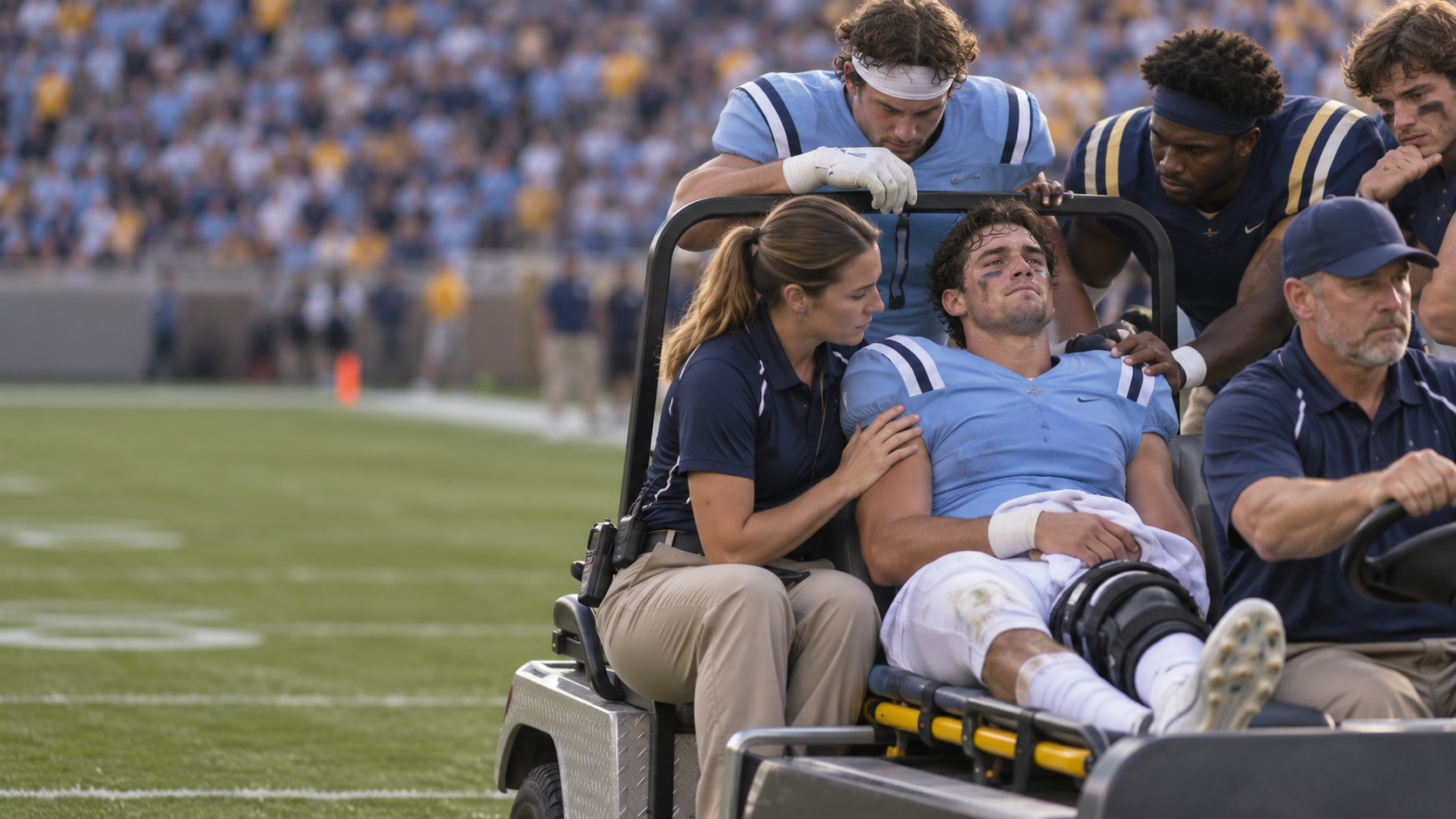 Ty Dieffenbach Carted Off as UCLA Falls to Michigan
-
 Tennessee 27-13 LSU Recap: Vols Boost CFP Case
-
 CFP Bubble Shakeup: UCLA, Indiana Stumble in Week 12
-
 Nebraska Ends 31-Game Ranked Opponent Losing Streak
-
 BYU Beats Kansas in Triple OT, Keeps CFP Hopes Alive
-
 UFC Qatar: Stirling Knocks Out Prochazka
-
 Michigan vs. UCLA Overtime Recap: Week 12 Live Updates
-
 CFP Bubble Drama in Week 12: Tight Spreads and Underdogs
-
 Puka Nacua Suspension, Cowboys Pressure and Daniel Jones Release
-
 Why Las Vegas Qualifying Left Toto Wolff Unsure
-
 Manchester United’s Pochettino Payment to U.S. Soccer
-
 Toto Wolff Seeks Answers After Russell Misses Las Vegas Pole